
Helicopter Crash 5 Marines Dead
Tragic Helicopter Crash Claims Lives of Five U.S. Marines During Training Exercise
A devastating helicopter crash has resulted in the deaths of five United States Marines during a routine training exercise in Imperial County, California, on Wednesday, June 5, 2024. The U.S. Marine Corps confirmed the fatalities and identified the aircraft as an MV-22B Osprey belonging to the 3rd Marine Aircraft Wing stationed at Marine Corps Air Station Miramar in San Diego. The incident occurred near Glamis, an unincorporated community in the southern portion of Imperial County, a popular off-road vehicle destination, raising immediate concerns about the potential for civilian casualties, though initial reports indicated no civilian injuries. The exact cause of the crash remains under investigation by a dedicated team from the Naval Air Systems Command (NAVAIR), with preliminary findings expected to take weeks, if not months, to be fully released. The loss of these five service members represents a significant blow to their families, their units, and the Marine Corps as a whole, underscoring the inherent dangers associated with military aviation training.
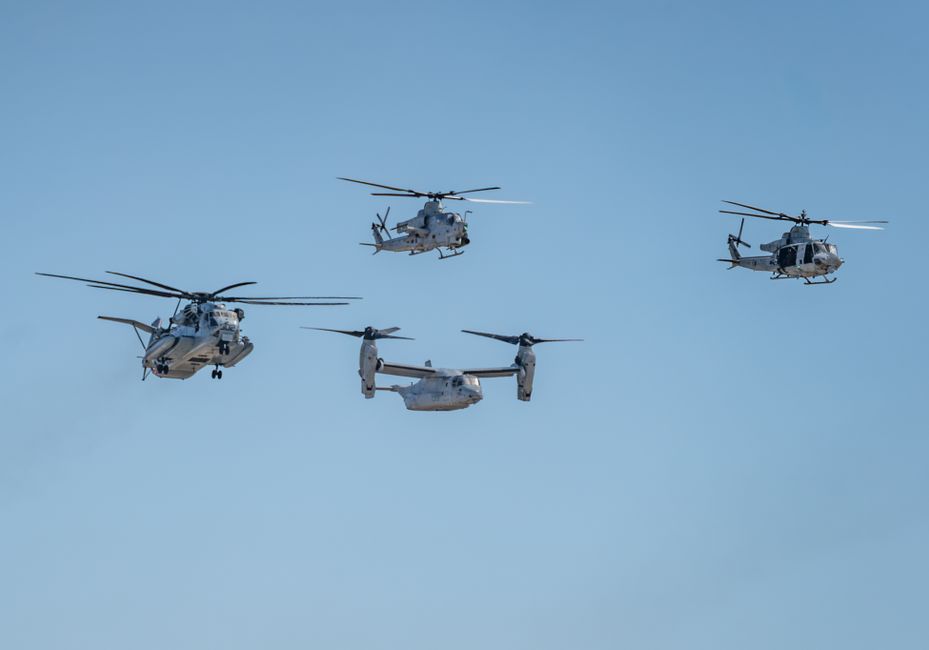
The MV-22B Osprey, a tiltrotor aircraft, is a versatile platform capable of vertical takeoff and landing like a helicopter, but also capable of transitioning to forward, airplane-like flight, offering extended range and speed. Its unique design allows for operations from a variety of locations, including ships and undeveloped landing zones, making it a critical asset for troop transport, cargo delivery, and assault support missions. However, the Osprey has a history of operational challenges and accidents since its introduction. The aircraft involved in the crash was reportedly participating in a larger training exercise involving multiple units from the Marine Corps and potentially other branches of the U.S. military. These exercises are designed to simulate combat scenarios and ensure readiness for deployment in complex operational environments. The specific nature of the training exercise, including its objectives and the maneuvers being performed at the time of the incident, will be a key focus of the ongoing investigation. The harsh desert terrain of Imperial County, while often used for military training due to its vast open spaces and challenging conditions, can also present unique environmental factors that may have played a role.
The immediate aftermath of the crash saw a massive response from emergency services, including local law enforcement, fire departments, and military personnel. Search and rescue operations were initiated promptly, though the remote and rugged nature of the crash site posed significant logistical challenges. The area was cordoned off to secure the scene and allow investigators to begin their work without interference. The remoteness of the location, combined with the significant debris field typical of an aircraft crash of this magnitude, complicated the recovery efforts and the initial assessment of the situation. Initial reports of the crash emerged from civilian witnesses in the area, many of whom were engaged in recreational activities in the vast desert landscape. Their accounts provided the first indication of the unfolding tragedy, highlighting the speed at which events can transpire in such environments. The swift mobilization of military assets, including helicopters and specialized recovery teams, was crucial in establishing control over the incident scene.
The identities of the five fallen Marines are being withheld pending notification of next of kin, a standard procedure in such tragic circumstances. However, the U.S. Marine Corps has pledged to release their names and provide further details about their service once families have been fully informed and have had time to grieve. The loss of any service member is a profound tragedy, and the loss of five in a single incident sends ripples of grief through the entire military community. Each Marine represents years of training, dedication, and sacrifice, and their absence will be deeply felt by their fellow service members, their commanders, and their loved ones. The impact on their respective units will also be significant, as they will need to absorb the loss and continue their operational readiness with fewer personnel. The Marine Corps is known for its strong sense of camaraderie and family, and the death of unit members is a shared burden of sorrow.
The investigation into the crash will meticulously examine all contributing factors, including mechanical failure, pilot error, environmental conditions, and the operational procedures in place at the time. Aircraft accident investigations are complex and involve a multidisciplinary team of experts who analyze flight recorders, wreckage, maintenance records, witness statements, and weather data. The MV-22B Osprey has undergone extensive scrutiny throughout its development and operational life, and this investigation will undoubtedly draw upon that existing knowledge base. Past incidents involving the Osprey, while not directly predictive of this specific crash, are likely to be reviewed for any patterns or recurring issues. The findings of the investigation will be crucial not only for understanding what happened on this tragic day but also for implementing any necessary corrective actions to prevent future accidents. The U.S. military places a high priority on aviation safety, and a thorough and transparent investigation is paramount to maintaining the trust and confidence of the public and its own personnel.
The socio-economic impact of military training exercises in regions like Imperial County is often a complex issue. While these exercises provide vital training opportunities for the armed forces, they also raise concerns among local communities regarding safety, noise pollution, and environmental impact. The crash, occurring in an area popular with recreational users, highlights the need for robust communication and coordination between military installations and civilian populations. Ensuring that training areas are appropriately managed and that risks to the public are minimized is an ongoing challenge for military planners. The remoteness of the Glamis area, while beneficial for large-scale exercises, also means that emergency response times can be longer, a factor that may have influenced the initial response to the crash. The economic benefits of military presence and training for some rural communities are also a consideration, but they are often balanced against the potential risks and disruptions.
The psychological toll of such an incident on the surviving crew members of other aircraft involved in the exercise, as well as the command staff and the wider Marine Corps community, cannot be understated. Military aviation is an inherently dangerous profession, and the loss of colleagues in training incidents can be profoundly traumatic. Support services are typically made available to those affected by such events, including counseling and psychological assistance. The resilience of military personnel is well-documented, but it is important to acknowledge the emotional burden that accompanies such tragedies. The ceremonies and memorials that will likely follow will serve as important outlets for grief and remembrance, allowing the Marine Corps to honor the fallen and to begin the process of healing.
The geopolitical implications, while not directly tied to the cause of the crash itself, underscore the importance of maintaining a highly trained and capable military force. The MV-22B Osprey plays a vital role in power projection and rapid deployment capabilities for the U.S. Marine Corps, enabling them to respond to crises across the globe. The loss of five highly trained aviators and the aircraft they operated represents a temporary reduction in that capability. However, the Marine Corps is renowned for its adaptability and its ability to overcome challenges. The focus will now shift to supporting the families of the deceased, completing the investigation, and ensuring that lessons learned are incorporated into future training and operational procedures. The commitment to maintaining combat readiness remains a constant, even in the face of such profound loss. The dedication of the remaining personnel within the 3rd Marine Aircraft Wing will be crucial in the coming weeks and months.
The investigation will likely consider various potential failure points. For the MV-22B Osprey, these could include issues with the proprotor gearboxes, the complex flight control systems, or even the hydraulic systems that control the tiltrotor mechanisms. The transition from vertical to horizontal flight is a particularly demanding phase for the aircraft, and any anomalies during this phase could have catastrophic consequences. Weather conditions, while not immediately identified as a primary factor, can also play a significant role in aviation accidents, especially in the desert environment where sudden dust storms or microbursts can occur. The presence of terrain features and potential obstacles in the training area will also be examined to ensure that flight paths and altitudes were appropriate for the maneuvers being conducted. The maintenance history of the specific aircraft involved will be a critical component of the investigation, as will the training records and flight experience of the aircrew.
The wider implications for military aviation safety programs are also significant. Each accident serves as a stark reminder of the risks involved in military operations and the constant need for vigilance in safety protocols. The findings of this investigation will undoubtedly be reviewed by aviation safety boards across all branches of the U.S. military and potentially by international partners who operate similar aircraft. The commitment to learning from mistakes and continuously improving safety measures is a hallmark of effective military organizations. The process of investigation and the subsequent implementation of changes are essential to honoring the sacrifice of those who have been lost and to ensuring the safety of those who continue to serve. The memory of the five Marines will be preserved through their actions and through the dedication of their fellow service members to the principles they upheld.