
Category Food Science Molecular Gastronomy
The Culinary Science Revolution: Unlocking Flavor and Texture with Molecular Gastronomy
Molecular gastronomy, often misconstrued as purely scientific experimentation devoid of taste, is fundamentally the application of scientific principles to understand and improve culinary practices. It delves into the molecular transformations that occur during cooking and eating, aiming to unlock novel flavors, textures, and sensory experiences. This interdisciplinary field bridges the gap between the kitchen and the laboratory, empowering chefs and food enthusiasts alike to deconstruct, understand, and ultimately innovate within the realm of food. At its core, molecular gastronomy seeks to answer the "why" behind culinary phenomena: why does meat brown? Why does an emulsion hold? Why does a certain aroma evoke a specific memory? By understanding these fundamental chemical and physical processes, a new level of control and creativity emerges. This isn’t about replacing traditional cooking methods but rather augmenting them with scientific insights, leading to a deeper appreciation for the ingredients and techniques used.
The history of molecular gastronomy traces its roots back to the late 1980s and early 1990s, with pioneers like Hervé This, a French physical chemist, and Nicholas Kurti, a Hungarian-born physicist. Their collaborative efforts and influential writings laid the groundwork for the scientific exploration of cooking. They coined the term "molecular and physical gastronomy" to describe their investigations into the physical and chemical transformations of food. Their early work focused on demystifying common cooking practices, explaining phenomena like the Maillard reaction or the formation of meringues from a scientific perspective. This academic foundation gradually permeated the culinary world, influencing chefs who began to embrace scientific tools and methodologies in their kitchens. Restaurants like elBulli, under the visionary leadership of Ferran Adrià, became synonymous with the avant-garde application of molecular gastronomy principles, showcasing dishes that challenged conventional perceptions of food.
Key scientific principles underpinning molecular gastronomy are diverse and span various scientific disciplines. Thermodynamics plays a crucial role in understanding heat transfer, energy changes, and the states of matter as food is cooked. Chemical kinetics explains the rates of reactions, such as enzymatic browning or the breakdown of starches. Physical chemistry governs phenomena like emulsification, gelation, and the behavior of gases in food. Biochemistry is essential for understanding the role of proteins, carbohydrates, fats, and enzymes in flavor development and textural changes. Understanding these principles allows for precise control over cooking processes. For example, knowing the specific temperature at which proteins denature in an egg allows for techniques like sous vide cooking to achieve perfect, consistent results, preventing overcooking and preserving delicate textures.
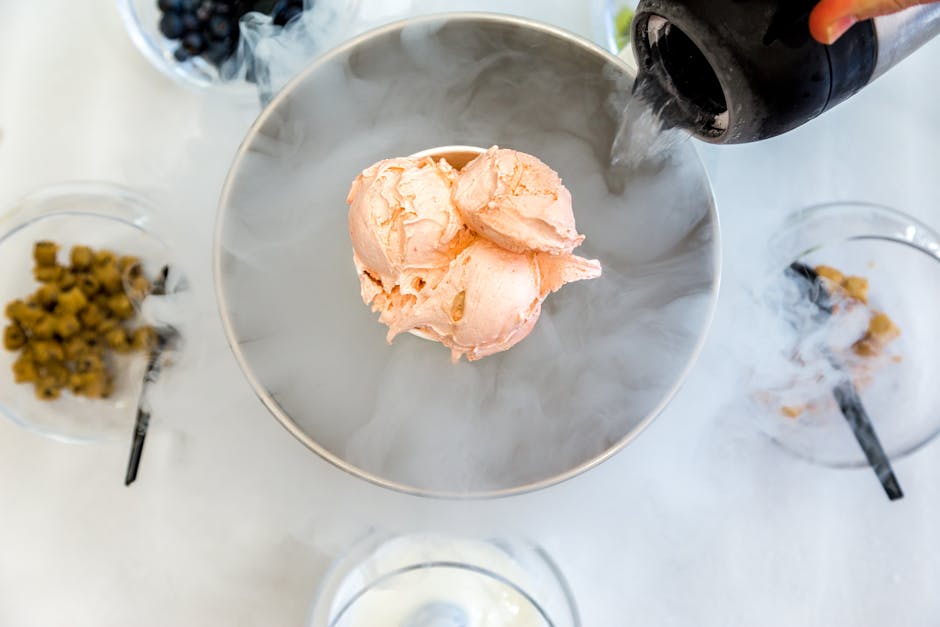
Several core techniques are central to the practice of molecular gastronomy, allowing for the manipulation of food’s texture and form. Spherification, perhaps the most iconic technique, involves the creation of liquid spheres that burst in the mouth, delivering concentrated flavor. This is achieved through the reaction of sodium alginate (derived from seaweed) with calcium chloride or calcium lactate, creating a gelled membrane around a liquid. Reverse spherification, a variation, allows for the creation of spheres with a liquid center and a solid outer shell. Emulsification, the process of combining two immiscible liquids like oil and water, is enhanced through techniques that create more stable emulsions. This can involve using hydrocolloids like lecithin or xanthan gum to stabilize oil-in-water or water-in-oil mixtures, resulting in smoother sauces and dressings. Gelation, the process of forming a gel, is achieved by heating gelling agents like agar-agar or carrageenan, which then set upon cooling to create stable, often translucent matrices. Foaming, the incorporation of air into liquids, can be achieved through mechanical means or with the aid of emulsifiers like soy lecithin, creating light and airy textures. Cryo-cooking, using liquid nitrogen (-196°C or -321°F), allows for rapid freezing, creating unique textures like instant ice creams or frozen powders, and is also used for visually dramatic presentations like frozen meringues or edible vapor.
Hydrocolloids are indispensable ingredients in the molecular gastronomist’s arsenal. These are typically polysaccharides extracted from natural sources like seaweed, plants, or bacteria, which, when dispersed in water, form viscous solutions or gels. Examples include agar-agar, which forms firm, brittle gels; carrageenan, offering a range of textures from soft gels to elastic ones; alginates, used in spherification; xanthan gum, a powerful thickener and stabilizer; and guar gum, similar to xanthan but often providing a smoother texture. Each hydrocolloid possesses unique gelling and thickening properties, allowing for precise control over viscosity, texture, and stability. For instance, agar-agar is excellent for creating firm jellies that hold their shape, while xanthan gum is ideal for stabilizing sauces and preventing separation.
The Maillard reaction and caramelization are fundamental chemical processes that molecular gastronomy seeks to understand and optimize for enhanced flavor development. The Maillard reaction, a complex series of reactions between amino acids and reducing sugars, occurs when food is heated, leading to the formation of hundreds of new flavor compounds responsible for the browning and savory aromas of cooked meats, baked goods, and roasted vegetables. Factors influencing the Maillard reaction include temperature, pH, and the presence of water. Molecular gastronomy explores ways to control these factors to maximize desirable flavor compounds. Caramelization, the browning of sugars when heated, produces sweet, nutty, and slightly bitter flavors, distinct from the Maillard reaction. Understanding the specific sugar profiles and temperatures involved allows for precise control over the depth and complexity of caramel flavors in dishes.
The impact of molecular gastronomy on modern cuisine is profound and far-reaching. It has democratized culinary innovation, equipping chefs with a scientific understanding that transcends traditional recipe following. This has led to the development of entirely new dishes and dining experiences, characterized by unexpected textures, surprising flavor combinations, and visually stunning presentations. The emphasis on precision and control has also contributed to improved consistency and quality in restaurant kitchens. Beyond fine dining, molecular gastronomy principles are finding their way into everyday cooking, with home cooks becoming more adventurous and experimental. The availability of specialized ingredients and equipment has made these techniques more accessible, fostering a new wave of culinary exploration.
Nutritional science and food safety are integral to molecular gastronomy, despite the focus on novelty. Understanding the biochemical composition of food allows for the manipulation of nutrient profiles and the enhancement of digestibility. For example, breaking down complex carbohydrates or proteins into simpler forms can make them more bioavailable. Furthermore, scientific principles are crucial for ensuring food safety. Techniques like sous vide, when performed correctly, can achieve safe internal temperatures for a wide range of foods, while rapid freezing with liquid nitrogen can inhibit microbial growth. Research into the stability of emulsifications and gels also contributes to the shelf-life and safety of processed foods.
The future of molecular gastronomy is characterized by continued innovation and integration with emerging technologies. Advances in food printing, allowing for the creation of intricate food structures with customized nutritional content, represent a significant frontier. The development of new sensory technologies, capable of measuring and even stimulating taste and smell, promises to further deepen our understanding and manipulation of the culinary experience. Computational food science, using algorithms and data analysis to predict flavor interactions and optimize cooking parameters, is also poised to play a larger role. As the lines between science, technology, and culinary arts continue to blur, molecular gastronomy will undoubtedly remain at the forefront of shaping the way we eat and experience food. The ongoing exploration of new hydrocolloids, enzymes, and other functional ingredients will further expand the palette of possibilities for chefs and food scientists.
Ethical considerations are increasingly important in the discourse surrounding molecular gastronomy. While the pursuit of novel culinary experiences is valuable, questions arise regarding the sustainability of certain ingredients and processes, the potential for food waste, and the accessibility of these techniques to a wider population. Responsible application of molecular gastronomy principles emphasizes minimizing environmental impact, utilizing locally sourced ingredients where possible, and ensuring that the pursuit of innovation does not come at the expense of fundamental culinary values or ethical practices. The focus is shifting from mere novelty to creating dishes that are not only innovative but also delicious, sustainable, and accessible.
In conclusion, molecular gastronomy represents a paradigm shift in our understanding and practice of cooking. By applying scientific rigor to culinary arts, it unlocks a universe of possibilities for flavor, texture, and sensory exploration. This field is not a fleeting trend but a fundamental evolution in how we approach food, promising to continue shaping the future of cuisine for generations to come. The ongoing research and development within this domain will undoubtedly lead to even more exciting and impactful advancements in the way we produce, prepare, and consume food, ultimately enriching our lives and our palates.