Samsung Redefines Premium Foldable Experience with AI-Powered Galaxy Z Fold 8, Setting New Industry Benchmarks

Jakarta, Indonesia (ANTARA) – Samsung Electronics has once again asserted its dominance in the premium foldable smartphone segment with the global launch of the Samsung Galaxy Z Fold 8. This latest iteration of the pioneering Fold series represents a significant leap forward, integrating a host of groundbreaking enhancements ranging from a remarkably thinner and lighter design, an expansive and optimized display, to cutting-edge artificial intelligence (AI)-driven performance and an impressive battery life promising up to 26 hours of video playback on a single charge. The unveiling of the Galaxy Z Fold 8 marks a pivotal moment for Samsung, further solidifying its position as an innovator in mobile technology and signaling a new era where the sophisticated blend of hardware and AI intelligence will redefine user interaction with their devices.
Samsung’s Vision: Ushering in an AI-Driven Mobile Future
At the heart of the Galaxy Z Fold 8’s innovation lies the integration of the latest Snapdragon 8 Elite Gen 5 for Galaxy chipset, meticulously optimized with the newest generation of Samsung’s One UI to deliver an unparalleled multitasking experience tailored for the unique foldable form factor. TM Roh, Chief Executive Officer, President, and Head of Device eXperience (DX) Division at Samsung Electronics, underscored the strategic importance of this launch. "The Galaxy Z Fold 8 is more than just a new smartphone; it represents a bold new chapter for Samsung in delivering increasingly intelligent premium foldable devices," Roh stated during the official announcement. He added, "By setting new standards for foldable devices, we are once again delivering a leap in premium mobile experiences while simultaneously unlocking a new, smarter era of AI for a broader user base." This statement encapsulates Samsung’s ambitious vision: to democratize advanced AI capabilities through intuitive and powerful devices, starting with its flagship foldable. The company’s commitment to pushing the boundaries of what a smartphone can be is evident in every aspect of the Z Fold 8, from its physical resilience to its intelligent software capabilities.
A Legacy of Innovation: The Evolution of Samsung’s Foldables
Samsung’s journey into the foldable smartphone market began with the ambitious launch of the original Galaxy Fold in 2019, a device that, despite initial hurdles, laid the groundwork for an entirely new category of mobile technology. Over the years, Samsung has consistently refined its foldable design and technology, learning from each generation to enhance durability, user experience, and aesthetic appeal. The Galaxy Z Fold series, alongside the Z Flip line, has become synonymous with innovation, with Samsung holding a significant market share in the nascent but rapidly growing foldable segment. Each subsequent model, from the Z Fold 2 to the Z Fold 7, introduced incremental yet crucial improvements, addressing early concerns about hinge robustness, display longevity, and software optimization for the unique screen ratios.
The Galaxy Z Fold 8 builds upon this rich heritage, representing the culmination of years of research and development. It arrives in a competitive landscape where other tech giants like Google (with the Pixel Fold), OnePlus (Open), and various Chinese manufacturers have also introduced their foldable offerings. However, Samsung continues to differentiate itself through its mature ecosystem, extensive software optimizations, and a relentless pursuit of hardware perfection. The Z Fold 8 is not merely an upgrade; it is a statement of Samsung’s continued leadership and its vision for the future of mobile computing, where the lines between smartphone, tablet, and personal AI assistant blur.
Redefining Form Factor: Thinner, Lighter, and More Resilient Design
One of the most striking improvements in the Galaxy Z Fold 8 is its redesigned physical form. Samsung proudly introduces this device as the lightest Fold series phone ever, tipping the scales at a mere 201 grams. This significant weight reduction, compared to its predecessors (e.g., the Z Fold 7 typically weighed around 250 grams), drastically enhances the device’s ergonomics, making it considerably more comfortable for extended daily use, whether for professional tasks or casual consumption. The reduction in weight is a critical factor in user adoption, addressing a common critique of earlier foldable models.
Beyond just lightness, Samsung has engineered the Z Fold 8 with a focus on enhanced durability and a premium feel. The device incorporates cutting-edge Flex Titanium technology, a sophisticated screen structure based on titanium. This innovative approach integrates a titanium alloy layer with a refined titanium plate, resulting in a significantly thinner body without compromising the device’s structural integrity. This engineering marvel ensures that the Galaxy Z Fold 8 not only boasts a more svelte profile but also feels remarkably robust and premium in hand, surpassing the build quality of previous generations. This combination of reduced weight and increased durability through advanced materials technology positions the Z Fold 8 as a benchmark for foldable design.
Expansive and Adaptive Displays for Unparalleled Productivity and Entertainment
The display experience on the Galaxy Z Fold 8 has been meticulously optimized to cater to a diverse range of user needs, seamlessly transitioning between compact usability and expansive immersion. When folded, the external display adopts a practical 10:16 aspect ratio, making it ideal for typical smartphone interactions. This ratio is specifically designed for quick, everyday tasks such as checking notifications, responding to messages, browsing social media feeds, or making calls without the need to unfold the device. Its comfortable one-handed operation ensures convenience for users on the go.
Upon unfolding, the main internal screen transforms into a vast 4:3 aspect ratio display, providing a significantly larger viewing area. This expansive canvas is engineered to maximize productivity and entertainment. Users can effortlessly engage in demanding multitasking scenarios, run multiple applications side-by-side, create detailed presentations, or immerse themselves in high-resolution video content and graphically intensive games. The larger screen real estate also enhances the experience of reading e-books, editing documents, and engaging in video conferences, offering a tablet-like experience in a pocketable form factor. Samsung’s expertise in display technology ensures that both screens feature vibrant Dynamic AMOLED 2X panels, offering stunning color accuracy, deep blacks, and exceptional brightness, further enhanced by adaptive refresh rates for smooth scrolling and responsive interactions.
Pioneering Performance with Snapdragon 8 Elite Gen 5 for Galaxy
Underpinning the Galaxy Z Fold 8’s advanced capabilities is the formidable Snapdragon 8 Elite Gen 5 for Galaxy mobile platform. This bespoke chipset from Qualcomm, specifically optimized for Samsung’s flagship devices, integrates a new generation CPU, GPU, and Neural Processing Unit (NPU) to deliver an unprecedented fusion of raw power and energy efficiency. The "for Galaxy" designation implies custom optimizations and potentially higher clock speeds, allowing Samsung to extract maximum performance tailored to its devices.
The most significant upgrade lies in the enhanced NPU, which is the engine behind the Z Fold 8’s smarter AI capabilities. This advanced NPU significantly accelerates on-device AI processing for a multitude of tasks, including real-time live translation during calls or messages, sophisticated image enhancement and generative AI photo editing, intelligent content summarization, and personalized digital assistant features that learn from user behavior. These AI functions are processed locally, ensuring faster responses and enhanced privacy. Concurrently, the latest generation GPU guarantees an exceptionally smooth visual experience, whether users are engaged in demanding mobile gaming titles with high frame rates or streaming ultra-high-definition video content, all without experiencing lag or stutter. This powerful combination of processing units ensures that the Z Fold 8 is not just a phone, but a highly intelligent mobile computing hub.
Enduring Power: A Battery Designed for All-Day Use
A crucial area of improvement in the Galaxy Z Fold 8 is its enhanced battery performance. Samsung has equipped the device with a robust 4,800 mAh battery, a substantial capacity designed to keep pace with the demands of its powerful hardware and expansive display. This battery is engineered for endurance, with Samsung claiming up to an impressive 26 hours of video playback on a single charge. This figure represents a significant boost, providing users with the freedom to enjoy prolonged entertainment, engage in extensive productivity sessions, or stay connected throughout their day without the constant worry of needing to recharge.
The substantial battery capacity allows users to comfortably stream multiple movies, navigate through intensive work schedules, conduct numerous video calls, or embark on extended gaming sessions. Despite its large capacity, the battery has been meticulously integrated into the Z Fold 8’s svelte and refined body, ensuring that the device maintains its comfortable and ergonomic profile. Furthermore, it is expected to support advanced fast charging capabilities, wireless charging, and reverse wireless charging, offering flexible power options for users on the go and enabling them to power other compatible accessories.
Advanced Imaging System: Capturing Every Angle
For photography enthusiasts, the Galaxy Z Fold 8 features a versatile and advanced camera system designed to capture stunning photos and videos from virtually any perspective. The rear camera array comprises a powerful 50MP main sensor with Optical Image Stabilization (OIS) for crisp, detailed shots even in challenging conditions, a 12MP ultrawide lens for expansive landscape and group shots, and a 10MP telephoto lens with OIS offering 3x optical zoom for clear, distant subjects. For selfies and video calls, the device includes a 10MP camera on the cover screen and a 4MP under-display camera on the main foldable screen, designed to be unobtrusive.
Leveraging its unique foldable form factor, Samsung has introduced innovative camera features. Dual Recording allows users to simultaneously capture video using both sides of the device, utilizing the external screen as a real-time monitor, ideal for content creators. My FanCam feature further enhances creative possibilities by enabling users to record from multiple perspectives simultaneously and effortlessly generate short, dynamic video clips, perfect for social media sharing. These features underscore how the Z Fold 8’s design is not just about aesthetics but also about unlocking new functionalities that traditional slab phones cannot offer.
Integrated AI and Productivity with Now Nudge and One UI 9
The Galaxy Z Fold 8 is a testament to Samsung’s commitment to intelligent software. It introduces a suite of AI-powered features through Now Nudge, designed to enhance user productivity and streamline workflows without the need to constantly switch between applications. Now Nudge can intelligently summarize lengthy web articles, generate concise replies to emails or messages based on context, and identify key information within documents or conversations, presenting it to the user proactively. This functionality aims to minimize digital fatigue and optimize information consumption, making daily tasks more efficient.
Running on the optimized One UI 9, specifically tailored for foldable devices, the Z Fold 8 offers an intuitive and highly efficient user experience. This latest iteration of Samsung’s custom Android overlay brings significant enhancements to multitasking, including improved multi-active window management, allowing users to open and interact with multiple applications simultaneously with greater fluidity. Seamless app switching and enhanced drag-and-drop functionalities further boost productivity, enabling users to effortlessly move content between different applications. One UI 9 also refines App Continuity, ensuring a smooth transition of apps from the cover screen to the main display when unfolded, maintaining user context. This sophisticated software ecosystem, combined with the power of DeX for a desktop-like experience, makes the Z Fold 8 an unparalleled productivity powerhouse.
Flexible Storage Options and Premium Color Palette
Understanding the diverse needs of its user base, Samsung offers the Galaxy Z Fold 8 with three generous internal storage options: 256GB, 512GB, and a capacious 1TB. These choices ensure ample space for storing an extensive collection of high-resolution photos and videos, numerous documents, a wide array of applications, and large files without concerns about running out of space, catering to both casual users and power users alike.
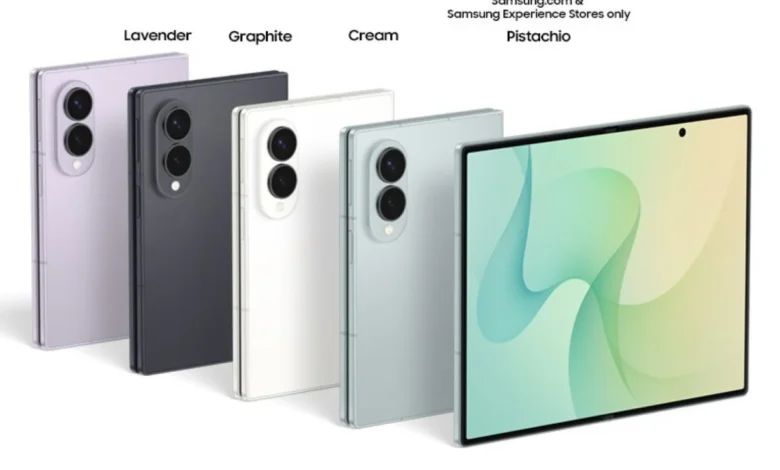
Aesthetically, the Galaxy Z Fold 8 is available in a sophisticated range of colors designed to appeal to varying tastes. Users can choose from the classic and elegant Phantom Black, the serene and understated Cream, the vibrant Icy Blue, or the rich and distinctive Burgundy. Each color option is meticulously applied to complement the device’s premium design and finish, adding a touch of personal style to this cutting-edge technology.
Broader Market Implications and Future Outlook
The launch of the Samsung Galaxy Z Fold 8 carries significant implications for both Samsung’s market position and the broader mobile industry. As the undisputed leader in the foldable segment, Samsung’s continuous innovation with the Z Fold 8, particularly its focus on AI integration, lighter design, and enhanced durability, reinforces its competitive edge. This device sets a new benchmark for what consumers can expect from premium foldable smartphones, potentially accelerating the adoption rate of this innovative form factor.
Industry analysts anticipate that the Z Fold 8 will further drive the trend of on-device AI, where more complex computational tasks are performed locally rather than relying solely on cloud processing. This shift has implications for user privacy, speed, and personalization, making smartphones more intuitive and responsive. Competitors will undoubtedly be watching closely, compelled to innovate further in their own foldable and AI offerings to keep pace. While the premium price point of the Z Fold 8 ensures it remains a niche product for early adopters and tech enthusiasts, its advancements gradually trickle down to more mainstream devices, influencing future smartphone designs and functionalities. Samsung’s commitment to sustainability, often highlighted in its product development cycles, is also expected to be a subtle yet integral part of the Z Fold 8’s lifecycle, from manufacturing to end-of-life recycling initiatives.
In conclusion, the Samsung Galaxy Z Fold 8 is more than just an incremental upgrade; it is a bold statement from Samsung, showcasing a harmonious blend of cutting-edge hardware design and intelligent software. With its revolutionary AI capabilities, refined form factor, and unparalleled user experience, the Z Fold 8 is poised to not only set new industry benchmarks but also to define the next generation of premium mobile computing, making smarter technology more accessible and intuitive than ever before.
Pewarta: Raihan Fadilah
Editor: Suryanto
Copyright © ANTARA 2026
Dilarang keras mengambil konten, melakukan crawling atau pengindeksan otomatis untuk AI di situs web ini tanpa izin tertulis dari Kantor Berita ANTARA.
Related posts: