
Mujaddara Arabic Lentil Rice
Mujaddara: A Comprehensive Guide to Authentic Arabic Lentil and Rice
Mujaddara, a staple across the Levant and beyond, is a deceptively simple yet profoundly satisfying dish of lentils and rice, often crowned with deeply caramelized onions. Its origins are ancient, with variations found in cuisines spanning from Egypt to the Middle East, reflecting its enduring appeal as a nutritious, economical, and incredibly flavorful meal. At its core, mujaddara is a testament to the power of humble ingredients transformed through skillful preparation. The dish’s simplicity belies a complex interplay of textures and tastes: the earthy, soft lentils, the fluffy, absorbent rice, and the sweet, savory crunch of fried onions. This synergy makes mujaddara a cornerstone of vegetarian and vegan diets, offering complete protein and essential nutrients in every comforting bite. Understanding the nuances of its preparation, from selecting the right lentils and rice to achieving perfectly caramelized onions, is key to unlocking its full potential. This comprehensive guide delves into the history, variations, essential ingredients, step-by-step cooking methods, serving suggestions, and the nutritional benefits that have cemented mujaddara’s place as an indispensable part of Arabic culinary heritage.
The cornerstone of authentic mujaddara lies in the quality and type of lentils used. Brown or green lentils are the traditional choice, prized for their ability to hold their shape while becoming tender when cooked. Unlike red lentils, which tend to disintegrate into a mushy consistency, brown and green varieties provide a pleasing texture that contrasts beautifully with the rice. The specific type of brown or green lentil can subtly influence the final dish. For instance, French green lentils (Puy lentils) are renowned for their firm texture and peppery notes, while more common brown lentils offer a slightly milder flavor. The lentils must be thoroughly rinsed to remove any debris and then inspected for small stones or imperfections. Soaking the lentils is often an optional step. While not strictly necessary for brown and green varieties, a brief soak (30 minutes to an hour) can reduce cooking time and improve digestibility for some individuals. However, over-soaking can lead to mushy lentils, so it’s a delicate balance. The ratio of lentils to rice is also crucial, typically leaning towards a higher proportion of lentils to rice, or an equal measure, to ensure the lentil flavor dominates and provides substantial protein. The earthy, slightly nutty flavor of well-cooked lentils is the soul of mujaddara, and achieving their perfect tenderness without becoming paste-like is a primary objective in its preparation.
The choice of rice significantly impacts the final texture and mouthfeel of mujaddara. Medium-grain rice is generally preferred for its ability to absorb the lentil cooking liquid and expand, creating a fluffy yet slightly cohesive texture. Varieties like Calrose or Arborio rice work well. Long-grain rice, such as Basmati or Jasmine, can also be used, but they tend to yield a looser, more separated grain, which some may find less traditional. Regardless of the variety, the rice must be thoroughly rinsed under cold running water until the water runs clear. This process removes excess starch, preventing the rice from becoming gummy or clumpy. Some recipes advocate for toasting the rice briefly in the pot before adding the liquid, which can add a subtle depth of flavor and contribute to a fluffier outcome. The way the rice absorbs the cooking liquid is paramount; it should be tender and distinct, not mushy or undercooked, embodying the ideal balance that makes mujaddara so satisfying.
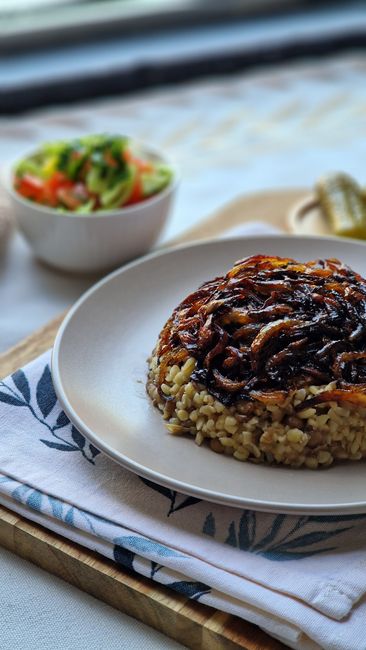
The defining element that elevates mujaddara from a simple lentil and rice dish to an iconic creation is the generously applied, deeply caramelized onions. This component requires patience and a keen eye. Yellow or Spanish onions are ideal due to their natural sweetness, which intensifies as they cook down. The onions are typically sliced thinly, either into rings or half-moons. The cooking process involves slowly sautéing these onions in a generous amount of oil, usually olive oil or a neutral vegetable oil, over medium-low heat. The goal is not to brown them quickly, but to coax out their inherent sugars, allowing them to soften, turn golden, and eventually deepen to a rich, mahogany brown. This slow caramelization can take anywhere from 30 minutes to an hour, or even longer, depending on the quantity of onions and the heat. Stirring is essential to prevent sticking and ensure even cooking. Some chefs remove a portion of the caramelized onions to use as a garnish while others cook all of them with the lentils and rice. The resulting onions are incredibly sweet, savory, and possess a delightful crispy texture, providing a critical textural contrast and a burst of concentrated flavor that is synonymous with authentic mujaddara.
The foundational cooking method for mujaddara involves combining the prepared lentils and rice with liquid and aromatics, then simmering them until tender. The process typically begins by cooking the lentils in water or broth until they are almost tender but still retain a slight bite. This initial cooking step ensures the lentils are properly hydrated and begin to soften. Following this, the rinsed rice is added to the pot with the partially cooked lentils. The ratio of liquid to rice and lentils is crucial; it should be sufficient to cook both thoroughly without becoming soupy. Water or a light vegetable broth are common choices for the cooking liquid, as they allow the lentil and onion flavors to shine. Some cooks incorporate spices at this stage, though many prefer to keep the flavor profile clean and rely on the natural tastes of the ingredients. Common additions can include a bay leaf, a pinch of cumin, or a small amount of coriander. Once the liquid is added, the pot is brought to a boil, then reduced to a gentle simmer, covered tightly, and cooked until the rice is fully tender and the liquid is absorbed. This slow simmering allows the flavors to meld and the grains to cook evenly. The crucial step of incorporating the caramelized onions, either partially or entirely, often happens towards the end of the cooking process or as a finishing touch.
A well-executed mujaddara is not merely a mix of lentils and rice; it’s a symphony of textures and flavors. The soft, yielding lentils should be distinct from the fluffy, absorbent rice. The caramelized onions provide a sweet, savory counterpoint and a satisfying crunch that is essential to the dish. The aroma alone, a fragrant blend of earthiness from the lentils, the subtle sweetness of the rice, and the rich, sweet perfume of caramelized onions, is incredibly enticing. When served, mujaddara is often topped with additional crispy fried onions, magnifying the textural delight. The simple seasoning, typically salt and pepper, allows the inherent flavors of the ingredients to be the stars. Some variations might include a hint of allspice or cinnamon for warmth, but the purest forms emphasize the unadulterated tastes. The dish is hearty and filling, providing sustained energy and satisfaction. The perfect mujaddara is moist but not wet, with each grain of rice and lentil clearly defined, offering a delightful chewiness and softness that is both comforting and complex.
Mujaddara exhibits remarkable versatility in its presentation and accompanying dishes, a testament to its adaptability within diverse culinary traditions. It is frequently served as a main course, particularly in its more substantial variations enriched with plenty of caramelized onions. As a side dish, it complements grilled meats, roasted vegetables, and stews exceptionally well, offering a grounding, nutrient-dense element to the meal. The most classic accompaniment is a refreshing Arabic salad, such as a Tabbouleh or Fattoush, whose bright, acidic flavors cut through the richness of the mujaddara. Plain yogurt or a simple cucumber and mint salad are also popular choices, providing a cooling contrast. Additionally, a dollop of tahini sauce or a squeeze of fresh lemon juice can add another layer of complexity and zest. The crispy fried onions, a signature element of the dish, are almost always served generously on top, providing both visual appeal and essential textural contrast. Some regional variations might include a sprinkling of chopped parsley or mint for freshness, or even a small amount of toasted pine nuts for added richness and crunch. The simplicity of mujaddara means it pairs beautifully with a wide range of flavors, making it a flexible addition to any meal.
The nutritional profile of mujaddara is a significant factor in its enduring popularity. As a plant-based dish, it is naturally rich in dietary fiber, which is essential for digestive health and can contribute to feelings of fullness, aiding in weight management. Lentils themselves are powerhouses of protein, offering a complete amino acid profile, making mujaddara an excellent option for vegetarians and vegans seeking adequate protein intake. They are also an exceptional source of iron, a crucial mineral for energy production and oxygen transport. The B vitamins, particularly folate, are abundant in lentils, playing vital roles in cell growth and metabolism. Rice, while primarily a source of carbohydrates for energy, also contributes some protein and B vitamins. The generous use of olive oil, a healthy monounsaturated fat, adds beneficial fatty acids and antioxidants. Furthermore, onions, the sweet stars of the dish, contain flavonoids and sulfur compounds, which are known for their antioxidant and anti-inflammatory properties. When prepared with minimal oil and without excessive salt, mujaddara is a wholesome, balanced meal that can be a cornerstone of a healthy diet, providing sustained energy and essential nutrients.
The variations of mujaddara are as diverse as the regions it graces. While the core concept of lentils and rice remains constant, regional adaptations introduce subtle yet significant differences. In some parts of the Levant, particularly in Jordan and Palestine, a more rustic and hearty version known as "Mujaddara Mfalfaleh" is popular. This style often features a higher ratio of rice to lentils and is cooked until the grains are more distinct and less mashed. The onions are typically fried separately and piled generously on top. In Lebanon, "Mujaddara Hamra" or "Red Mujaddara" is a distinct variation that utilizes red lentils and a significant amount of tomato paste or purée, lending it a vibrant color and a slightly tangy, sweeter profile. This version often has a softer, more porridge-like consistency due to the nature of red lentils. Another notable variation is "Mujaddara Safra" or "Yellow Mujaddara," which often incorporates turmeric or saffron, giving the dish a golden hue and a subtle earthy or floral aroma. Some recipes might also include a small amount of bulgur wheat alongside the rice for added texture and nutty flavor. The type of oil used can also vary, with some preferring the distinct flavor of olive oil, while others opt for more neutral vegetable oils for a cleaner taste, especially when deep-frying the onions. These diverse interpretations highlight the inherent flexibility of the dish, allowing it to be adapted to local ingredients and palate preferences while retaining its fundamental comforting and nourishing essence.
The journey of mujaddara from its humble origins to its status as a beloved staple is a testament to the power of simple, wholesome ingredients prepared with care. Its enduring appeal lies not just in its nutritional value and affordability, but in its profound capacity to comfort and satisfy. The earthy notes of lentils, the fluffy embrace of rice, and the sweet, savory crunch of caramelized onions create a culinary experience that is both grounding and exhilarating. Whether served as a hearty main course or a flavorful side, mujaddara embodies the spirit of Arabic cuisine: generous, nourishing, and deeply delicious. Understanding the intricacies of its preparation, from selecting the perfect lentils and rice to achieving transcendent caramelized onions, unlocks the full potential of this iconic dish. Its adaptability to various regional interpretations and its impressive nutritional profile further solidify its position as a timeless and indispensable culinary creation. As a dish that has nourished generations, mujaddara continues to be a beacon of flavor, simplicity, and wholesome goodness in kitchens around the world.
