
Indian Okra In The Air Fryer Kurkuri Bhindi
Kurkuri Bhindi: Crispy Okra Perfection in Your Air Fryer
Kurkuri bhindi, often translated as crispy okra, represents a culinary transformation. What some perceive as a slimy vegetable is, when prepared correctly, capable of achieving a delightful crunch and savory flavor. The air fryer has emerged as a revolutionary tool for achieving this texture with minimal oil, making kurkuri bhindi a healthier and more convenient option than its traditionally fried counterparts. This article delves deep into the art and science of making perfect kurkuri bhindi in an air fryer, exploring ingredient selection, preparation techniques, crucial cooking parameters, and troubleshooting common issues to ensure restaurant-quality results in your home kitchen.
The foundation of exceptional kurkuri bhindi lies in the quality of the okra itself. Freshness is paramount. Look for firm, bright green pods that are free from blemishes or soft spots. Smaller okra tend to be more tender and less fibrous, making them ideal for achieving that desired crispness. Avoid overripe okra, which can develop a tougher texture and a more pronounced mucilaginous quality. When selecting okra, it’s also helpful to give them a gentle squeeze; they should snap slightly rather than bend. Washing the okra thoroughly is essential to remove any dirt or residue. Crucially, the okra must be completely dry before proceeding. Moisture is the enemy of crispness in any fried or air-fried preparation. Any residual water will steam the okra, hindering the development of a crispy exterior and potentially leading to a soggy outcome. Patting the okra dry with paper towels or a clean kitchen towel is a critical step that cannot be overlooked. Some cooks prefer to air-dry the washed okra for an hour or two on a clean surface before preparation, especially if time allows.
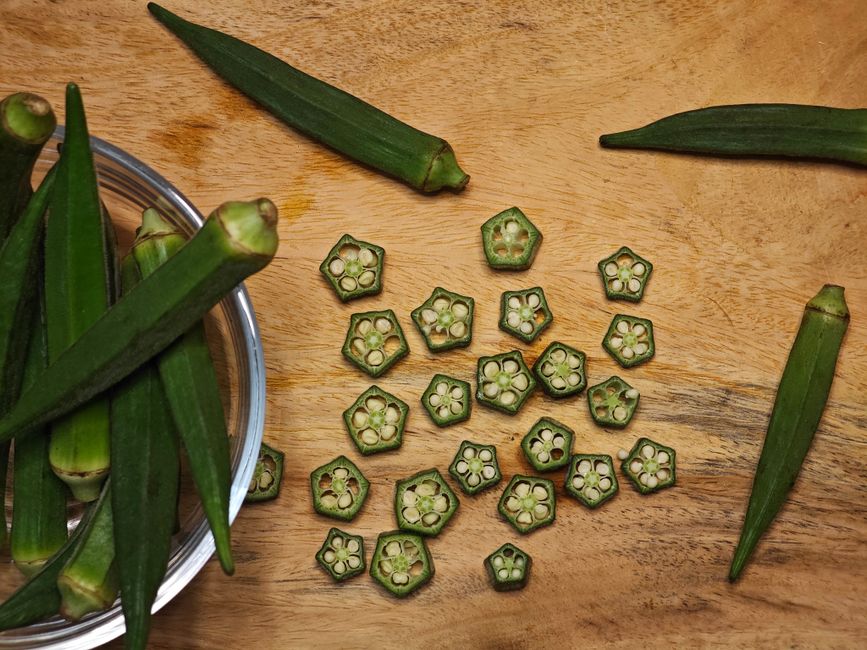
The preparation of the okra for air frying involves two key elements: slicing and coating. The slicing method significantly impacts the final texture. Thinly sliced okra, typically about 1/8 to 1/4 inch thick, allows for maximum surface area to crisp up. Circular slices are common and create visually appealing results. Alternatively, some recipes suggest lengthwise slicing, which can also yield excellent crispiness. Experimentation with both methods can lead to personal preference. Regardless of the slicing method, it’s important to achieve uniformity. Inconsistent slice thickness will lead to uneven cooking, with some pieces becoming perfectly crisp while others remain undercooked or burn. After slicing, the okra is ready for its flavor transformation. The coating is what imparts the characteristic taste and contributes to the crispiness. A simple yet effective coating often involves a combination of gram flour (besan), cornstarch, and a medley of spices. Gram flour provides a traditional Indian flavor profile and acts as a binder. Cornstarch is the secret weapon for achieving superior crispiness, as it absorbs moisture and contributes to a lighter, more brittle coating.
The spice blend is where personalization and regional variations shine. A basic yet flavorful mix typically includes turmeric powder for its vibrant color and earthy notes, red chili powder for heat, coriander powder for its citrusy warmth, and cumin powder for its aromatic depth. Salt is, of course, indispensable for enhancing all the flavors. Many variations include a pinch of garam masala for a complex aromatic boost, asafoetida (hing) for its pungent umami flavor, or amchur (dried mango powder) for a subtle tang. A touch of ginger-garlic paste can also elevate the flavor profile. The key to a successful coating is to ensure it adheres well to the okra. The slightly moist surface of the cut okra, even after thorough drying, is usually sufficient to hold the dry ingredients. However, some recipes recommend a very light spritz of water or oil just before adding the dry coating to ensure a more even and robust adhesion. The goal is to create a thin, even layer of the spiced flour mixture that clings to each piece of okra without being excessively thick, which can lead to a doughy or burnt coating. Over-coating is a common pitfall.
The air frying process for kurkuri bhindi requires careful attention to temperature and time. The ideal temperature for achieving crispiness without burning is generally between 375°F (190°C) and 400°F (200°C). Preheating the air fryer is a crucial step, just as it is for most air fryer recipes. A preheated basket ensures that the okra begins to crisp up immediately upon contact, rather than slowly steaming. Once preheated, the coated okra should be arranged in a single layer in the air fryer basket. Overcrowding the basket is a cardinal sin when aiming for crispiness. If the okra is piled too high, hot air cannot circulate effectively around each piece, resulting in uneven cooking and soggy sections. It is far better to cook the okra in batches, even if it means a slightly longer overall cooking time. This ensures that each piece has adequate space for optimal air circulation and uniform browning.
The cooking time will vary depending on the air fryer model, the thickness of the okra slices, and the desired level of crispiness. A typical cooking time ranges from 10 to 15 minutes. It is essential to shake or toss the okra halfway through the cooking process. This gentle agitation ensures that all sides of the okra are exposed to the hot air and promotes even browning and crisping. Many air fryer baskets have a perforated design that facilitates this. Observing the okra during the final few minutes of cooking is crucial. Look for a golden-brown hue and a visibly crisp texture. A gentle prod with a fork can confirm the desired crispness. If some pieces are browning faster than others, you can carefully remove the perfectly crisp ones and continue cooking the remaining batch. The goal is to achieve a delightful crunch with every bite. Overcooked okra can become dry and bitter, while undercooked okra will remain limp and potentially slimy.
The role of oil in air fryer kurkuri bhindi is often misunderstood. While the air fryer is known for its oil-less cooking capabilities, a small amount of oil can significantly enhance both flavor and texture. A light spray or drizzle of oil, such as olive oil, vegetable oil, or avocado oil, before air frying helps the spices adhere better and promotes a more even and appealing golden-brown finish. It also contributes to a satisfying crispness that is difficult to achieve without any fat. However, the key is moderation. Excessive oil will negate the health benefits of air frying and can lead to greasiness. Some recipes advocate for tossing the coated okra with a tablespoon or two of oil before placing it in the air fryer basket. This ensures thorough coating and aids in crisping. The type of oil used can also influence the final flavor.
Troubleshooting common issues is an integral part of mastering any recipe, and kurkuri bhindi is no exception. One of the most prevalent problems is soggy okra. This is almost always attributable to insufficient drying of the okra before preparation, overcrowding the air fryer basket, or not preheating the air fryer adequately. Another common issue is burnt okra. This can occur if the air fryer temperature is too high, the cooking time is too long, or the okra is not tossed or shaken during cooking. Uneven cooking is another frequent complaint, often stemming from inconsistent slice thickness or overcrowding. If the coating is falling off, it’s likely due to insufficient moisture for the dry ingredients to adhere properly, or perhaps the okra was too wet to begin with.
Serving kurkuri bhindi promptly is highly recommended. The inherent crispiness is best enjoyed immediately after cooking. As it sits, it will naturally lose some of its crunch. It serves as an excellent appetizer, a flavorful side dish to Indian meals, or even as a crunchy topping for salads or chaats. The versatility of this dish makes it a valuable addition to any recipe repertoire. Popular accompaniments include cooling raita (yogurt dip), spicy mint chutney, or tangy tamarind chutney. The contrast of the crispy okra with a cool or spicy dip is a classic pairing.
The nutritional benefits of air fryer kurkuri bhindi are noteworthy. Okra itself is a good source of dietary fiber, vitamins C and K, and folate. By utilizing the air fryer, the need for deep-frying is eliminated, significantly reducing the fat and calorie content compared to traditional methods. This makes it a guilt-free indulgence for those seeking healthier Indian snack options. The gram flour also adds a protein boost.
Variations and enhancements to the basic kurkuri bhindi recipe are endless. For a spicier kick, increase the red chili powder or add a pinch of cayenne pepper. For a more herbaceous flavor, consider adding finely chopped cilantro or mint to the spice mix. Some adventurous cooks experiment with adding a touch of lemon zest for brightness or even a sprinkle of sesame seeds for added texture and nutty flavor. The fundamental principles of dryness, thin slicing, even coating, and proper air fryer technique remain consistent across all variations.
In conclusion, achieving perfect kurkuri bhindi in the air fryer is a rewarding culinary endeavor. By focusing on fresh, well-prepared okra, a balanced spice blend, and precise air fryer execution, you can consistently produce this beloved Indian snack with exceptional crispiness and flavor. The air fryer offers a healthier and more accessible pathway to enjoy this delightful transformation of humble okra, making it a staple for both casual snacking and elaborate meals. The emphasis on preheating, single-layer cooking, and regular tossing are non-negotiable steps for achieving the coveted "kurkuri" texture. With practice and attention to detail, anyone can master the art of air fryer kurkuri bhindi, delighting themselves and their guests with its irresistible crunch and savory goodness.
