The Legacy of La Masia How FC Barcelona’s Famed Academy Defined the 2026 World Cup Final and the Future of Global Football

The conclusion of the 2026 FIFA World Cup, which saw Spain secure a historic victory over Argentina, has done more than just crown a new world champion; it has reignited a global conversation regarding the efficacy and endurance of youth development systems. At the center of this discourse is La Masia, the world-renowned youth academy of FC Barcelona. While the final match showcased the pinnacle of international competition, the underlying narrative was the overwhelming presence of La Masia graduates on the pitch, serving as a testament to a philosophy that has now spanned nearly half a century.
For seasoned followers of the sport, La Masia is synonymous with excellence, but for the casual observer drawn in by the spectacle of the 2026 tournament, the institution represents a fascinating study in how a singular vision can dictate the trajectory of global football. The academy, which operates as the heartbeat of FC Barcelona, is no longer viewed merely as a training ground for a club, but as a premier incubator for the tactical and technical intelligence that defines the modern game.
The 2026 World Cup: A Showcase of La Masia’s Dominance
The final match between Spain and Argentina served as a living gallery of La Masia’s influence. While the two nations represent different continents and footballing cultures, the DNA of the Barcelona academy was woven into the fabric of both squads. On the Spanish side, the roster was heavily bolstered by alumni who have transitioned from the youth ranks of the Ciutat Esportiva Joan Gamper to the highest echelons of professional sports.
Statistical data from the tournament reveals that no fewer than eight players in the Spanish national squad were products of La Masia. This cohort included established stars and emerging talents such as Lamine Yamal, Dani Olmo, Gavi, Pau Cubarsí, Eric García, Alejandro Grimaldo, Víctor Muñoz, and Marc Cucurella. These were not merely squad players; they were the engine room of the Spanish campaign.
The individual accolades further underscored this dominance. Pau Cubarsí, the center-back whose composure and ball-playing ability drew comparisons to legendary defenders of the past, was officially named the Young Player of the Tournament. Meanwhile, Lamine Yamal and Dani Olmo provided the creative spark that ultimately dismantled the Argentinian defense. Even on the opposing side, the presence of Lionel Messi—perhaps the most illustrious graduate in the history of the academy—highlighted the global reach of the "Barcelona way."
Historical Context: From a Farmhouse to a Global Standard
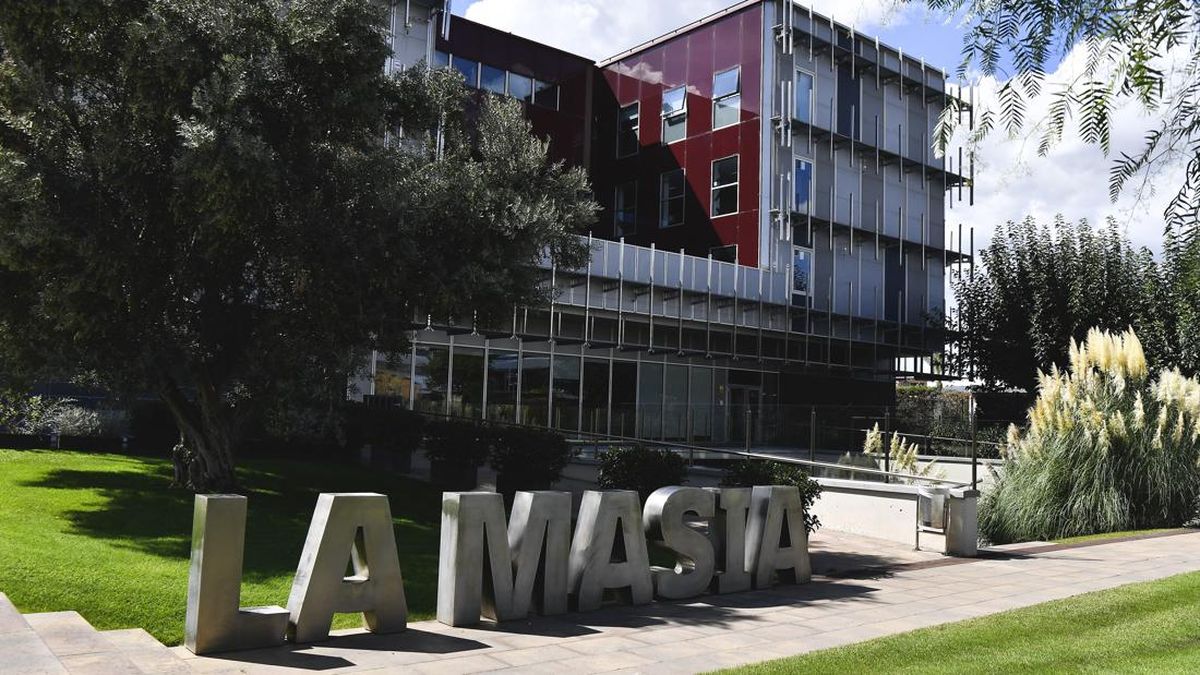
The origins of La Masia are rooted in a blend of tradition and forward-thinking strategy. Founded in 1979 during the presidency of Josep Lluís Núñez, the academy took its name from the 18th-century farmhouse (Masia) located near the Camp Nou stadium, which originally served as the residence for young players recruited from outside the city.
However, the modern identity of La Masia was truly forged in the late 1980s and early 1990s under the influence of Johan Cruyff. The Dutch visionary brought the concept of "Total Football" to Catalonia, insisting that every level of the club, from the youngest children to the first team, play with the same tactical framework. This framework prioritized ball retention, spatial awareness, and technical proficiency over raw physical power.
The timeline of La Masia’s success is marked by several key milestones:
- 1979: Formal inauguration of the residence.
- 1988: Arrival of Johan Cruyff, establishing the unified tactical philosophy.
- 2010: A watershed moment in football history when the three finalists for the FIFA Ballon d’Or—Lionel Messi, Xavi Hernández, and Andrés Iniesta—were all graduates of La Masia.
- 2012: A league match against Levante where, for 60 minutes, FC Barcelona fielded 11 players on the pitch who were all products of the academy.
- 2021: The relocation and modernization of the facilities to the Ciutat Esportiva Joan Gamper, integrating high-tech sports science with traditional coaching.
- 2026: The academy’s graduates play a decisive role in the first 48-team FIFA World Cup final.
The Philosophy of "Masia 360": Education and Character
What differentiates La Masia from other elite academies like Clairefontaine in France or the Ajax Youth Academy in the Netherlands is its holistic approach to player development. The institution operates under a "Masia 360" program, which posits that a player’s psychological and academic well-being is just as critical as their ability to execute a "Rondo" (a signature passing drill used to improve ball retention).
The academy’s methodology is built on three pillars: humility, discipline, and respect. Players are educated to remain grounded despite the immense pressure and fame that often accompany early success. This was evident in the conduct of players like Gavi and Pau Cubarsí during the 2026 World Cup, who were noted by analysts for their professional maturity and sportsmanship in high-stakes environments.
Academically, La Masia ensures that its residents do not neglect their formal education. The logic is twofold: first, to provide a safety net for those who do not make it into professional football, and second, to develop the cognitive flexibility required to understand complex tactical systems. This emphasis on "intellectual football" allows graduates to adapt to various coaching styles, though they remain most potent in systems that favor the "tiki-taka" style—a fast-paced, short-passing game that emphasizes movement and possession.
Technical Analysis: The "DNA" on the Pitch
The technical superiority of La Masia graduates during the 2026 World Cup can be attributed to the specific training drills emphasized from the age of seven. The "Rondo" is the most famous of these, where players in a circle attempt to keep the ball away from one or two defenders in the middle. While seemingly simple, this drill hones a player’s first touch, peripheral vision, and decision-making under pressure.
In the 2026 final, the Spanish midfield demonstrated an almost telepathic understanding of space. Analysts pointed out that the positioning of Gavi and the distribution of Dani Olmo were textbook examples of the "positional play" (Juego de Posición) taught at the academy. This style requires players to constantly adjust their positions relative to the ball, their teammates, and the opponents, creating passing triangles that make the ball nearly impossible to intercept.
Furthermore, the integration of Pau Cubarsí into the senior national team highlights the academy’s success in producing "modern" defenders. Unlike traditional stoppers, La Masia defenders are expected to act as the first line of attack, possessing the passing range of a midfielder. Cubarsí’s ability to break defensive lines with a single vertical pass was a recurring theme throughout the tournament.
Financial and Strategic Implications for FC Barcelona
The resurgence of La Masia’s influence in 2026 is also a result of strategic necessity. In the early 2020s, FC Barcelona faced significant financial challenges that limited their ability to compete in the transfer market for established superstars. This forced the club to pivot back to its roots, accelerating the promotion of youth talents into the first team.
The economic value of this "homegrown" strategy is immense. By producing players like Lamine Yamal and Gavi, whose market valuations have soared into the hundreds of millions of euros, the club has effectively secured its competitive future without the need for exorbitant transfer fees. The 2026 World Cup has further inflated the value of these assets, positioning Barcelona as a dominant force in the European landscape for the next decade.
Global Reactions and Broader Impact
The success of the Spanish national team, powered by La Masia, has prompted football federations worldwide to re-evaluate their youth structures. Statements from various footballing bodies suggest a move toward the "Spanish model."
"What we saw in the 2026 final was not just a victory of a nation, but the victory of a specific school of thought," noted one prominent UEFA technical observer. "The consistency with which one academy produces elite talent is unprecedented in the modern era."
The implications extend beyond the pitch. The success of these young players serves as a marketing boon for the La Liga brand and reinforces the cultural identity of Barcelona as a "més que un club" (more than a club). It proves that even in an era of multi-billion dollar transfers and state-owned clubs, a well-executed philosophy and a commitment to youth development remain the most sustainable paths to glory.
As the footballing world looks toward the next World Cup cycle, the shadow of La Masia looms large. The 2026 tournament confirmed that while players may age and retire, the "farmhouse" continues to produce a seemingly endless harvest of world-class talent, ensuring that the philosophy of Johan Cruyff and the traditions of Catalonia remain at the heart of the beautiful game.