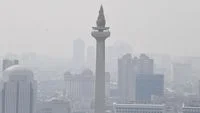
Prolonged meteorological droughts and shifting weather patterns driven by global climate phenomena frequently present severe challenges to agricultural productivity, freshwater availability, and public health across various regions globally. In predominantly Muslim communities, particularly in nations heavily reliant on agriculture such as Indonesia, extended dry spells prompt both governmental mitigation strategies and profound spiritual responses. Among the most prominent spiritual traditions observed during severe water scarcity is the performance of Sholat Istisqo, a specific congregational sunnah (recommended) prayer dedicated to petitioning Almighty God for rainfall. As climate variability intensifies the frequency of dry seasons, understanding the theological framework, precise ritual procedures, historical context, and broader implications of Sholat Istisqo offers critical insight into how faith intersects with environmental crisis management.
Understanding the Theological Foundations and Background of Sholat Istisqo
Sholat Istisqo, linguistically derived from the Arabic root meaning to seek water or rain, is an established prophetic tradition practiced during times of severe drought, depleted reservoirs, and withered crops. Islamic jurisprudence dictates that when rainfall is withheld over an extended period, threatening human survival, livestock, and agriculture, communities are encouraged to gather in open spaces to humble themselves before the Creator.
Historically, the practice dates back to the time of Prophet Muhammad, who led his companions to open fields to pray for rain during critical shortages. Islamic scholars emphasize that the ritual is not merely a mechanical request for precipitation, but a comprehensive act of collective repentance, spiritual introspection, and renewal of stewardship over the earth. By returning to God with humility, charity, and remorse for transgressions, the community acknowledges its absolute dependence on natural resources governed by divine providence.
Chronology and Preparation Leading Up to the Prayer
The execution of Sholat Istisqo involves a structured period of communal preparation rather than a spontaneous gathering. When local authorities, religious councils, and community leaders recognize the onset of a prolonged drought that threatens the livelihood of the population, a series of preparatory phases are formally initiated.
In the days preceding the prayer, community leaders typically urge citizens to engage in acts of repentance, settle interpersonal disputes, increase voluntary charity (sadaqah), and fast for three consecutive days. Fasting serves to purify the soul and reinforce humility before the mass gathering. On the designated day of the prayer, participants are advised to dress in simple, modest attire—avoiding luxurious garments or excessive adornments—to reflect a state of utter destitution and submission. Elderly individuals, children, and even livestock are sometimes brought to the designated open area to emphasize the collective vulnerability of all living creatures facing the drought.
Step-by-Step Procedural Guide for Sholat Istisqo
Unlike standard daily prayers, Sholat Istisqo possesses distinct ritual characteristics, including specific takbirs (declarations of God’s greatness) and a post-prayer sermon delivered in an open-air setting. According to guidelines compiled by prominent Islamic organizations such as the Indonesian Ulema Council (MUI), the National Alms Agency (BAZNAS), and Nahdlatul Ulama (NU), the procedural framework is executed systematically:
- Gathering in an Open Field (Tanah Lapang): The congregation, led by an appointed imam, converges on a public square, sports field, or open terrain rather than a conventional mosque, symbolizing humanity’s exposure beneath the open sky.
- Formation and Intention (Niat): The prayer is performed without the traditional call to prayer (azan) or Iqamah. The imam and congregation establish the intention silently or audibly in their hearts. The recognized intention in Arabic transliteration is: "Ushalli sunnatal istisqai, rak’ataini mustaqbilal qiblati (imaman/makmuman) lillahi ta’ala," translating to, "I intend to perform the sunnah prayer of Istisqo two units, facing the qibla, as an imam or follower, because of Allah the Almighty."
- First Rakaat Takbirs: Upon completing the opening declaration (takbiratul ihram), the imam and congregation perform an additional seven takbirs before commencing the recitation of Surah Al-Fatihah.
- Recitation of Al-Fatihah and Short Surahs: The imam recites Surah Al-Fatihah audibly, followed by a relevant short chapter from the Quran, ensuring the congregation can hear the recitation clearly.
- Standard Prayer Movements: The ritual proceeds with bowing (rukuk), standing upright (itidal), prostration (sujud), sitting between the two prostrations, and completing the remaining postures native to standard Islamic canonical prayers.
- Second Rakaat Takbirs: Upon rising for the second unit (rakaat), the congregation performs an additional five takbirs before the imam recites Surah Al-Fatihah and a subsequent Quranic chapter.
- Completion of the Prayer: The second unit concludes with the standard sequence of bowing, prostrations, the final sitting (tahiyat akhir), sending blessings upon the Prophet, and concluding with the traditional salutation (salam) turning the head to the right and left.
Sermon, Repentance, and Canonical Supplications
Immediately following the completion of the two-unit prayer, the imam or designated khatib ascends a makeshift pulpit or stands before the congregation to deliver a specialized two-part sermon (khutbah) separated by a brief sitting pause.
Unlike standard Friday sermons, the Khutbah Istisqo heavily emphasizes seeking divine forgiveness (istighfar), abandoning sinful practices, rectifying social injustices, and expressing profound gratitude despite current hardships. The khatib leads the congregation in continuous supplication, lifting hands high toward the heavens in a traditional gesture of desperate petition.
Several authenticated supplications (dua) are traditionally recited during this critical phase to invoke specific blessings:
Primary Rain Petition Supplication:
"Allahummasqina ghaitsan mughaitsan hani’an mari’an, ghadaqan mujallalan ‘amman thabaqan sahhan da’iman. Allahummasqina l-ghaitsa, wa la taj’alna minal qunithin."
Translation: "Ya Allah, turunkan kepada kami air hujan yang menolong, mudah, menyuburkan, yang lebat, banyak, merata, menyeluruh, dan bermanfaat abadi. Ya Allah, turunkan kepada kami air hujan. Jangan jadikan kami termasuk orang yang berputus harapan."
Agricultural and Livestock Blessing Supplication:
"Allahumma anbit lanaz zar’a, wa adirra lanad dhar’a, wasqina min barakatis sama’i, wa anbit lana min barakatil ardhi."
Translation: "Ya Allah, tumbuhkan tanaman kami, deraskan air susu ternak kami, turunkan pada kami air hujan karena berkah langit-Mu, dan tumbuhkan tanaman kami dari berkah bumi-Mu."
General Forgiveness and Downpour Petition:
"Allahumma inna nastaghfiruka, innaka kunta ghaffara, fa arsilis sama’a ‘alainna midrara."
Translation: "Ya Allah, sungguh kami memohon ampun kepada-Mu, karena Engkau adalah Maha Pengampun. Maka turunkan kepada kami hujan deras dari langit-Mu."
Socio-Economic Implications and Modern Environmental Context
While Sholat Istisqo functions fundamentally as an act of worship, sociological and environmental analysts note that the ritual carries profound practical implications for modern communities facing climate crises. Prolonged dry seasons directly impact national food security by ruining staple crop yields, depleting irrigation reservoirs, and triggering livestock mortality due to lack of fodder and water.
In countries vulnerable to El Niño weather patterns, government agencies frequently coordinate with religious institutions to encourage both scientific mitigation efforts—such as cloud-seeding operations and water rationing—and spiritual observances like Sholat Istisqo. This dual approach bridges technical disaster management with cultural and religious resilience, providing psychological comfort and collective solidarity to communities facing economic ruin.
Furthermore, the emphasis within the sermons on environmental stewardship, waste reduction, and repentance serves as a moral catalyst. Religious leaders often utilize the gathering to remind citizens of their ethical responsibility to preserve natural ecosystems, prevent deforestation, and manage water resources efficiently. Thus, Sholat Istisqo transcends its immediate ritual boundaries, reinforcing a holistic framework where spiritual devotion, environmental consciousness, and community resilience converge to confront ecological vulnerabilities.
Related posts: