Iran’s Currency Under Scrutiny: Rial’s Plunge and the Rise of the Toman Amidst Geopolitical Tensions

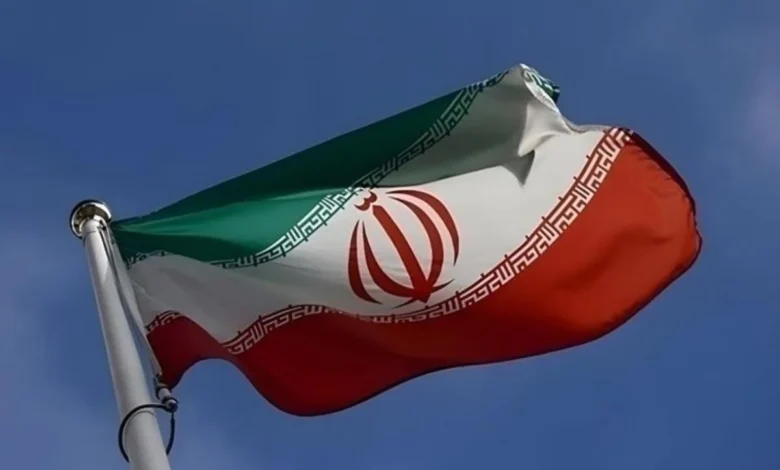
The Iranian currency, the rial, has recently become a focal point of global attention, intrinsically linked to the escalating geopolitical tensions and shifts in global economic policy. The United States, under President Donald Trump, has implemented a series of stringent measures, including imposing tariffs of up to 25 percent on countries maintaining business collaborations with Iran. This policy has reverberated through Iran’s economic landscape, most notably leading to a significant devaluation of its national currency. Recent reports indicate that the Iranian rial has experienced a dramatic decline, reaching historic lows against major international currencies like the Euro. This precarious situation underscores the immense pressure the Iranian economy is enduring, primarily due to prolonged sanctions and persistent inflation.
However, a curious phenomenon unfolds when one visits Iran’s bustling traditional markets or modern shopping centers. The term "rial" is conspicuously absent from everyday transaction conversations. Instead, locals invariably refer to prices and conduct their daily commerce using the term "toman." This linguistic adaptation is a direct consequence of the country’s extraordinarily high inflation rate. To simplify price communication and circumvent the cumbersome enumeration of excessively large numbers, Iranians have adopted an alternative accounting system based on the toman.
This article delves into the intricacies of Iran’s monetary system, examining the official currency and exploring the fundamental differences between the rial and the toman, a distinction that frequently perplexes international tourists and economic observers alike.
The Official Legal Tender: Iran’s Rial
Legally and administratively, the rial (IRR) stands as Iran’s official currency. All banking activities, governmental decrees, and pricing in modern commercial establishments are denominated in rials. The international banking system recognizes the rial as the official unit of exchange.
The Dual Reality: Rial vs. Toman in Daily Transactions
Despite the rial’s official status, its practical application in everyday Iranian life is notably diminished. In informal exchanges, from bustling bazaars to small retail outlets, the term "rial" is seldom uttered. Instead, the "toman" serves as the colloquial unit of currency for daily transactions.
This divergence stems from the sheer magnitude of the numbers involved when pricing goods and services in rials. For instance, a common item might be priced at 500,000 rials. To avoid the awkwardness of repeatedly stating such large figures, a simplified system has emerged.
Understanding the Toman: A Practical Simplification
The "toman" represents a practical simplification of the rial, born out of necessity due to rampant inflation. In essence, one toman is equivalent to 10 rials. This means that to convert a toman value to its rial equivalent, one simply adds a zero. Conversely, to express a rial amount in tomans, four zeros are effectively dropped.
For example, if a merchant quotes a price of 60,000 tomans, the actual amount to be paid in rials would be 600,000 rials (60,000 multiplied by 10). This system, though unofficial in a legal sense, has become deeply ingrained in the daily financial practices of Iranians, easing the burden of complex calculations and making everyday commerce more manageable.
Historical Context and the Erosion of the Rial’s Value
The historical roots of the rial trace back to 1932, when it replaced the qian as the national currency. For decades, it served as the stable unit of exchange. However, the economic landscape began to shift dramatically in the late 20th and early 21st centuries.
A confluence of factors, including international sanctions, regional conflicts, and internal economic mismanagement, has led to a sustained period of high inflation and currency depreciation for the Iranian rial. The reimposition of stringent sanctions by the United States in recent years has exacerbated these challenges. These sanctions target key sectors of the Iranian economy, including oil exports and financial transactions, severely limiting the country’s access to foreign exchange reserves and hindering international trade.
The impact on the rial has been profound. Its purchasing power has steadily eroded, making imported goods increasingly expensive and contributing to domestic price hikes. This decline in value has necessitated the widespread adoption of the toman as a more manageable unit of account.
Official Redenomination: Towards a New Monetary Era
Recognizing the confusion and practical difficulties arising from the devalued rial and the prevalent use of the toman, the Iranian government, through the Central Bank of Iran (CBI), initiated a long-planned currency reform. This reform, known as redenomination, aims to simplify the monetary system and restore confidence in the national currency.
The redenomination process officially began in 2020, with a phased implementation scheduled to be fully realized between 2025 and 2026. The core of this reform involves the official replacement of the rial as the primary unit of currency with a new version of the toman. This change entails the removal of four zeros from the rial. Consequently, 10,000 old rials will be officially equivalent to 1 new toman.
The new toman will also be subdivided into smaller denominations. One new toman will be divisible into 100 qirans, which were historically a sub-unit of the rial. This reintroduction of the qiran aims to provide smaller denominations for everyday transactions.
During this transitional period, both old rial-denominated banknotes and new toman-denominated notes will circulate concurrently. Newer banknotes are being printed with reduced nominal values, often accompanied by a faded representation of the dropped zeros. This visual cue serves to gradually familiarize the public with the new monetary system and ease the transition.
The Geopolitical and Economic Underpinnings of the Rial’s Weakness
The recent surge in global scrutiny of the Iranian currency is not an isolated economic event. It is deeply intertwined with the complex geopolitical landscape and the efficacy of international economic policies. The United States’ decision to impose significant tariffs on entities engaging with Iran is a deliberate strategy aimed at isolating the Iranian economy and compelling it to alter its regional policies and nuclear program.
Timeline of Key Developments:
- 2015: The Joint Comprehensive Plan of Action (JCPOA), or Iran nuclear deal, is signed, leading to the lifting of some international sanctions in exchange for curbs on Iran’s nuclear program. This period saw a relative stabilization and even appreciation of the rial.
- 2018: The United States withdraws from the JCPOA and reimposes stringent sanctions on Iran, targeting its oil exports and financial sector. This marks the beginning of a sharp and sustained decline in the rial’s value.
- 2019-2020: Iran experiences significant economic hardship, with high inflation and currency depreciation becoming endemic. The unofficial use of the toman gains further traction.
- 2020: The Central Bank of Iran officially announces plans for currency redenomination, aiming to simplify the monetary system by removing four zeros and renaming the currency to the toman.
- 2021-Present: Geopolitical tensions remain high, with ongoing negotiations and sporadic escalations in the region. The rial continues to face pressure, although the redenomination process aims to provide a long-term solution. The global economic environment, including inflation trends and interest rate policies in major economies, also indirectly influences the rial’s performance.
The impact of these sanctions is multifaceted:
- Reduced Oil Revenue: Iran’s primary source of foreign currency is oil exports. Sanctions significantly curtail these exports, diminishing the government’s revenue and its ability to purchase foreign currency to stabilize the rial.
- Financial Isolation: Restrictions on Iran’s access to the global financial system make it difficult to conduct international transactions, receive payments, and attract foreign investment. This further weakens the rial’s standing.
- Inflationary Pressures: The scarcity of imported goods due to trade restrictions, coupled with increased government spending to offset sanction impacts, fuels domestic inflation. This eroding purchasing power of the rial necessitates the use of larger nominal values for transactions.
- Investor Confidence: The uncertainty surrounding Iran’s economic future and the persistent threat of sanctions deter both domestic and international investors, further limiting capital inflows and economic growth.
Broader Implications and Future Outlook
The redenomination of the Iranian currency from rial to toman is more than just a cosmetic change; it is a strategic move to address deep-seated economic challenges. The success of this reform hinges on several factors:
- Economic Stability: For the new toman to gain credibility, Iran needs to achieve a degree of economic stability. This includes controlling inflation, diversifying its economy away from heavy reliance on oil, and attracting foreign investment.
- Sanctions Relief: The most significant factor influencing Iran’s long-term economic health remains the status of international sanctions. A substantial easing or lifting of sanctions would undoubtedly boost investor confidence, facilitate trade, and provide much-needed foreign exchange to stabilize the currency.
- Public Trust: The smooth transition to the new currency will depend on public trust and understanding. The government’s communication strategy and the gradual introduction of new banknotes are crucial in this regard.
The ongoing geopolitical tensions, particularly between Iran and the United States, cast a long shadow over the country’s economic prospects. Any escalation or de-escalation in these relations will have direct repercussions on Iran’s currency and its integration into the global economy.
While the redenomination offers a structural solution to the complexities of dealing with the rial’s depreciation, the fundamental economic challenges driven by external pressures and internal policies will continue to shape the trajectory of the Iranian toman. The world will be watching to see if this monetary reform, coupled with potential shifts in geopolitical dynamics, can pave the way for a more stable and predictable economic future for Iran. The transition from the rial to the toman is a testament to the resilience and adaptability of the Iranian people in navigating an increasingly challenging economic environment.