Sepak Takraw: The Acrobatic Southeast Asian Sport Blending Volleyball Agility with Football Kicks

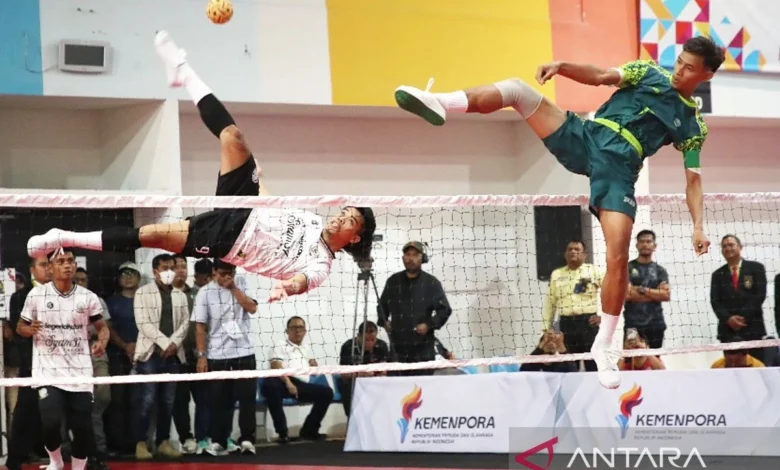
Sepak Takraw, a traditional Southeast Asian sport that captivates with its blend of volleyball’s aerial agility and football’s acrobatic kicking techniques, is experiencing a resurgence in popularity across various nations. This dynamic game, played without the use of hands, has cemented its place in the sporting landscape of Indonesia, Thailand, Malaysia, the Philippines, and beyond. Its unique appeal lies in the breathtaking displays of athleticism required to keep the woven rattan ball in play, a spectacle that consistently draws the attention of both seasoned sports enthusiasts and curious newcomers.
The name "Sepak Takraw" itself is a linguistic fusion, drawing from the Malay word "Sepak," meaning "to kick," and the Thai word "Takraw," referring to the woven rattan ball. Literally translated, it signifies "to kick the rattan ball." The formal recognition and standardization of the sport’s name were solidified following a match between Malaysia and Thailand in Kuala Lumpur in 1960, marking a pivotal moment in its global recognition.
Prior to this, in Malaysia, the sport was known as "Sepak Raga Jaring." The addition of the term "Jaring" (net) is attributed to Hamid Mydin, widely regarded as a foundational figure in the development of Sepak Takraw. In Penang around 1945, Mydin introduced the net, distinguishing the game from the traditional "Sepak Raga," which was played without one. This evolution was crucial in shaping the modern iteration of the sport, emphasizing the aerial duels and tactical positioning that define it today.
Often referred to as "kick volleyball," Sepak Takraw is a team sport typically contested by two to four players per side on a court similar in size to a badminton court. The game artfully merges elements of volleyball and footvolley, with a strict rule prohibiting the use of hands. Instead, players are permitted to use their feet, knees, shoulders, chest, and head to strike the ball over the net, mirroring the volleys and spikes seen in traditional volleyball. This restriction on hand use elevates the technical proficiency and acrobatic prowess of the athletes, demanding an exceptional level of body control and coordination.
Internationally, the sport is governed by the International Sepaktakraw Federation (ISTAF), established in 1988. ISTAF plays a crucial role in setting regulations, organizing global competitions, and promoting the sport worldwide. The sport boasts a rich tapestry of local names across different countries, including "Sepak Raga" in Indonesia, Brunei, Malaysia, and Singapore; "Sipa" in the Philippines; "Chinlone" in Myanmar; and "Takraw" in Thailand, among others in various Asian nations. This diversity in nomenclature reflects the sport’s deep cultural roots and widespread adoption throughout the region.
The Genesis of Sepak Takraw: A Historical Odyssey
The origins of Sepak Takraw are traced back to Malaysia, with evidence suggesting its existence as far back as 500 years ago. By the 15th century, it had gained significant popularity within royal circles, underscoring its esteemed status in ancient Southeast Asian societies. The sport’s influence gradually extended to Indonesia, where it became known as "Sepak Raga," around the 16th century. Its widespread adoption across Southeast Asia gained momentum in the 1940s, coinciding with the formalization of its rules and regulations.
The inaugural official competition for the sport took place in Penang in 1945, under the banner of "Sepak Raga Jaring." This event was a landmark in standardizing the game. The establishment of the Malaysian Sepak Raga Federation in Penang in 1960 marked another significant milestone. Subsequently, the sport was included in the Southeast Asian Peninsula Games in 1965, a pivotal moment where it was officially christened "Sepak Takraw." This renaming symbolized a unified identity for the sport, transcending its regional variations and paving the way for greater international recognition.
While the Malaysian origin is widely accepted, some accounts suggest that Sepak Takraw might have been introduced to Southeast Asia by the Chinese and shares a common ancestry with football. This theory posits that the sport evolved from "Cuju," an ancient Chinese traditional game recognized by FIFA as the earliest form of modern football. Cuju, meaning "to kick a ball," was historically practiced as a military exercise, where soldiers would kick a leather ball, striving to keep it airborne for extended periods. This historical link, if accurate, would provide an even deeper and more ancient lineage to the acrobatic sport of Sepak Takraw, connecting it to the very roots of ball-kicking games.
Core Mechanics and Gameplay of Sepak Takraw
Sepak Takraw is a sport that demands exceptional physical conditioning, agility, and strategic thinking. The fundamental objective is to propel the ball over a net into the opponent’s court using any part of the body except the hands and arms, with the ultimate aim of scoring points. The game is played in a format that closely resembles volleyball in terms of court dimensions and net height, yet the method of ball manipulation is vastly different.
Player Roles and Court Positioning:
The standard Sepak Takraw court is divided into two halves by a net, similar to badminton. Each team typically consists of three players on the court at any given time. These players usually occupy distinct roles:
- Tekong (Server): The player responsible for initiating play with a serve. The Tekong stands behind the service line and kicks the ball to the opposing side. Precision and power are key for a successful serve.
- Feeder (Setter): This player’s role is to set up the ball for the striker, often with intricate passes using their feet or head. They are the playmakers, orchestrating the offensive strategy.
- Striker (Killer/Spiker): The player who delivers the powerful, often acrobatic, attacking shots. They aim to score points by hitting the ball into an unreturnable position on the opponent’s court.
The strategic positioning of these players is crucial. The Tekong, while initiating the play, must also be able to transition into defensive or offensive plays. The Feeder’s ability to anticipate the Striker’s moves and deliver accurate passes is paramount for creating scoring opportunities. The Striker, in turn, must possess the agility and technique to execute powerful and well-placed shots.
The Flow of the Game:
The game commences with a serve, initiated by the Tekong. The ball is tossed from the hand and then kicked over the net. The team that wins a coin toss has the option to serve first or choose their side of the court. After the serve, the rally begins. Teams exchange the ball, employing a series of skillful kicks, headers, and body touches to keep it airborne and strategically direct it towards the opponent’s court.
The essence of Sepak Takraw lies in the seamless coordination between teammates. Players must anticipate each other’s movements, execute precise passes, and coordinate attacks. The ball can be passed up to three times by a team before it must be sent over the net, akin to volleyball’s three-touch rule, although the execution is entirely with the feet and other allowed body parts. The objective is to force an error from the opposing team or to land the ball in their court in a way that they cannot legally return it.
Scoring System:
A point is awarded when the ball lands within the boundaries of the opponent’s court, or if the opposing team commits a fault (e.g., hitting the ball out of bounds, touching the net with their body, or using their hands). Matches are typically played in a best-of-three sets format. Each set is won by the first team to reach 21 points, with a minimum two-point lead required. If the score reaches 20-20, play continues until one team achieves a two-point advantage, or until a maximum of 30 points is reached, at which point the team with the higher score wins the set.
Recent Developments and the Sport’s Growing Influence
The sport of Sepak Takraw has recently seen significant developments, particularly concerning its governance and organizational structure in Indonesia. Reports indicate that dualism in the leadership of Indonesian Sepak Takraw has been resolved, a development that has been met with optimism by international bodies like ISTAF. This resolution is seen as a crucial step towards unifying the sport within the country and fostering its growth and participation in national and international events. The Indonesian Ministry of Youth and Sports (Menpora) has been actively involved in overseeing these efforts, emphasizing the need for stable and cohesive sports federations.
The successful resolution of this organizational challenge is expected to pave the way for more streamlined development programs, enhanced athlete training, and increased opportunities for Indonesian Sepak Takraw athletes to compete on the global stage. Such internal stability is vital for any sport aiming for sustained international success and broader public engagement.
Beyond national governance, the growing popularity of Sepak Takraw is also evident in its inclusion in major sporting events. The sport has been a regular feature in the Southeast Asian Games (SEA Games), showcasing the athletic prowess of regional athletes and captivating audiences with its unique spectacle. Its inclusion in these continental games not only provides a platform for competition but also serves as a powerful promotional tool, introducing the sport to new demographics and fostering a wider appreciation for its demanding skill set.
The Enduring Appeal and Future Prospects
Sepak Takraw’s enduring appeal lies in its inherent drama and the extraordinary athleticism it demands. The sight of players executing gravity-defying kicks, spectacular dives, and precise aerial maneuvers to keep the ball in play is a testament to years of rigorous training and innate talent. It is a sport that rewards creativity, teamwork, and a deep understanding of physics and biomechanics.
As the sport continues to evolve, with enhanced international governance and increased media exposure, its future prospects appear bright. The efforts to resolve organizational dualisms in key participating nations like Indonesia are crucial for fostering consistent development and ensuring that talent can be nurtured and showcased without hindrance.
The sport’s unique blend of agility, power, and strategic depth offers a compelling alternative to more mainstream sports. With continued promotion, investment in training facilities, and wider broadcasting of its tournaments, Sepak Takraw has the potential to transcend its regional origins and achieve greater global recognition. The journey from a traditional pastime to a globally competitive sport is ongoing, and Sepak Takraw, with its captivating blend of acrobatics and skill, is well on its way to capturing the hearts of sports fans worldwide. Its narrative is one of cultural heritage, athletic excellence, and the continuous pursuit of sporting perfection.
Related posts: