Comprehensive Guide to the 2027 Hajj Officer Selection: Salary Details, Duties, Requirements, and Operational Frameworks

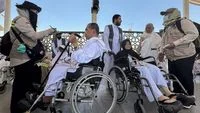
Jakarta, International Desk — The recruitment process for the Petugas Penyelenggara Ibadah Haji (PPIH) for both the Kloter (group) and Arab Saudi divisions for the 1448 H/2027 M pilgrimage season has officially generated immense public interest, particularly regarding the compensation and financial incentives associated with these critical roles. As the Ministry of Religious Affairs—operating alongside specialized bodies such as the Ministry of Hajj and Umrah—opens registration channels, prospective applicants are closely scrutinizing the projected remuneration, operational allowances, and stringent requirements mandated for service in the Holy Land.
With the administrative foundation for the 2027 pilgrimage season well underway, understanding the financial architecture, duties, and rigorous selection stages provides crucial insight into what is widely regarded as both a prestigious service opportunity and a demanding logistical assignment. The meticulous planning required for millions of global pilgrims necessitates a highly skilled, resilient, and well-compensated workforce capable of navigating the complex terrain of Makkah, Madinah, and the holy sites of Mina, Arafat, and Muzdalifah.
Detailed Breakdown of Projected Hajj Officer Compensation for 2027
A central point of inquiry among applicants and observers alike centers on the financial remuneration provided to Hajj officers during their tenure. Recent statements from high-ranking officials have shed light on the expected daily honorarium, offering a clearer picture of the earning potential for those selected for the 1448 H/2027 M deployment.
According to Deputy Minister of Hajj and Umrah Dahnil Anzar Simanjuntak, Hajj officers can anticipate an honorarium ranging from approximately IDR 900,000 to IDR 1,000,000 per day. Given that the standard deployment period for these officers spans roughly 70 days—encompassing pre-departure preparation, active operational service during the peak pilgrimage rites, and post-pilgrimage evaluation phases—the total financial compensation scales significantly.
Utilizing the upper projection of IDR 1,000,000 per day as a baseline model, an officer’s total honorarium over the course of the 70-day assignment can reach up to IDR 70,000,000. However, labor and financial experts emphasize that while this calculation offers a reliable estimate based on daily rate disclosures, it does not constitute a rigid, officially guaranteed flat-rate salary, as individual compensation can vary depending on specific operational roles, leadership designations, and length of active service in the field.
This level of financial compensation is widely viewed by policymakers as equitable and necessary, given the extraordinary physical and mental demands placed upon the officers. Unlike conventional administrative positions, Hajj officers are tasked with round-the-clock responsibilities that extend far beyond desk work. They serve as frontline coordinators, crisis managers, healthcare liaisons, and spiritual guides for vulnerable pilgrims, many of whom are undertaking the journey for the first time in advanced age.
Comprehensive Compensation Packages and Operational Facilities
Beyond the direct daily honorarium, the structural framework governing Hajj officers ensures that personal out-of-pocket expenses are minimized through comprehensive institutional support. The remuneration package is multifaceted, designed to safeguard the welfare and operational efficiency of every deployed worker.
The financial and logistical framework incorporates several vital components:
- Direct Daily Honorarium: The baseline payment compensating officers for their daily service, availability, and risk exposure.
- Operational Allowances: Supplementary funds allocated for specific fieldwork, mobility, and communication needs while navigating crowded pilgrim sectors.
- Full Acommodation: Fully covered lodging arrangements in proximity to designated service zones in Makkah and Madinah, ensuring adequate rest between shifts.
- Daily Consumption: Provision of standardized meals and hydration supplies throughout the 70-day operational window.
- Comprehensive Transportation: Dedicated logistical transit services, including buses and authorized vehicle passes, enabling officers to move swiftly between accommodation sites, administrative offices, and the holy ritual locations.
These logistical provisions are not merely perks; they are essential operational investments. Given the scorching desert climates, immense physical exhaustion, and high-density crowd environments characteristic of the Hajj season, ensuring that officers are well-fed, securely housed, and independently mobile directly correlates with the quality of care delivered to the Indonesian congregation.
Legal Foundations and State Budget Allocation
The financial governance and administrative legitimacy governing Hajj officer recruitment and remuneration are firmly rooted in national legislation. Specifically, these provisions are regulated under Law Number 14 of 2025, which serves as an amendment to Law Number 8 of 2019 concerning the Implementation of Hajj and Umrah.
Under the stipulations of this legal framework, Hajj officers are formally appointed through ministerial decree. Crucially, the operational funding, honorariums, logistical support, and facility provisions for these officers are directly charged to the State Budget (Anggaran Pendapatan dan Belanja Negara / APBN). This institutional funding mechanism underscores the high priority placed by the Indonesian government on pilgrim welfare and administrative accountability.
By routing officer financing through the APBN, the state ensures rigorous financial transparency, auditability, and adherence to public expenditure standards. It also establishes clear lines of accountability, ensuring that officers remain fully dedicated to their institutional mandate of public service rather than commercial or localized interests.
Chronology of the 2027 Hajj Officer Selection Process
The administrative timeline for the 1448 H/2027 M Hajj operational cycle has been structured to ensure a methodical, transparent, and highly competitive selection process. The Ministry of Hajj and Umrah initiated the recruitment pipeline well in advance of the pilgrimage season, allowing adequate time for vetting, training, and deployment logistics.
The key chronological milestones for the 2027 recruitment cycle include:
- August 25, 2026: Official opening of national registration for prospective PPIH Kloter and PPIH Arab Saudi candidates.
- August 31, 2026: Official closing date for candidate registration and submission of initial administrative files.
- Early September 2026: Verification of administrative documents, background checks, and health screenings.
- September 5, 2026: Implementation of the Computer Assisted Test (CAT) to evaluate cognitive capabilities, religious knowledge, and general operational competency.
- Subsequent Phases: Medical Check-Ups (MCU), intensive education, and specialized training programs (Diklat) designed to prepare candidates for crisis simulation, crowd management, and cross-cultural communication in Saudi Arabia.
This structured timeline ensures that only the most qualified candidates progress through the multi-tiered filtration system, minimizing operational vulnerabilities during the actual pilgrimage window.
Mandatory Requirements for Prospective Hajj Officers
Securing a position as an official Hajj officer requires adherence to a strict set of criteria established by the Ministry. The selection filters are designed to screen for operational resilience, moral integrity, physical fitness, and technical proficiency.
To qualify for consideration, candidates must fulfill the following mandatory requirements:
- Nationality and Citizenship: Must be an Indonesian Citizen (WNI) possessing a valid and legal population identity card (KTP).
- Religious Qualification: Must be of the Islamic faith, possessing a solid foundational understanding of Hajj rituals and Islamic jurisprudence relevant to pilgrimage administration.
- Health Standards: Must be declared physically and mentally fit through an official Medical Check-Up (MCU) administered by authorized medical institutions.
- Professional Integrity: Must demonstrate an exemplary track record, high moral integrity, and an absence of any disciplinary or legal infractions.
- Legal Status: Must not be undergoing any criminal judicial proceedings or active police investigations.
- Healthcare Coverage: Must maintain active and verified membership in the national health insurance scheme (BPJS Kesehatan).
- Technological Competency: Must possess basic digital literacy, including the proven ability to operate computers, tablets, and smartphone applications utilized for modern pilgrimage tracking and reporting.
Broader Implications and Strategic Analysis of Hajj Management Reforms
The structured approach to compensation, legal backing, and rigorous selection for the 2027 Hajj season reflects a broader evolution in Indonesia’s state management of religious tourism and mass pilgrimage logistics. Managing the world’s largest national contingent of pilgrims requires an administrative apparatus that is both deeply compassionate and ruthlessly efficient.
By standardizing daily honorariums between IDR 900,000 and IDR 1,000,000 and anchoring officer financing within the APBN, the government aims to mitigate the risk of administrative burnout, corruption, and service negligence. Fair compensation professionalizes the role, transforming what was historically viewed by some as an informal volunteer assignment into a disciplined, accountable public service vocation.
Furthermore, the emphasis on technological integration—highlighted by the inclusion of digital literacy tests and computer-assisted examinations—signals an ongoing digital transformation within Hajj operations. As real-time tracking apps, digital health passports, and electronic coordination systems become standard in Saudi Arabia, Indonesian officers must possess the technical aptitude to interface seamlessly with host-country systems.
Ultimately, the rigorous selection of 2027 Hajj officers serves as a vital safeguard for the safety, comfort, and spiritual fulfillment of millions of Indonesian pilgrims. Through a transparent recruitment framework, fair state-backed financial incentives, and comprehensive operational support, the Ministry of Hajj and Umrah continues to set higher benchmarks for international religious administration.