Comprehensive Guide to Universitas Terbuka Academic Programs and Tuition Structures for Prospective Students

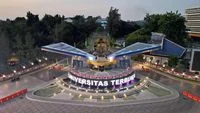
Choosing the right academic major and higher education institution represents a pivotal milestone in an individual’s personal and professional development. For prospective students seeking flexibility, comprehensive academic choices, and rigorous distance learning standards, Universitas Terbuka (UT) remains a prominent choice in Indonesia’s higher education landscape. Established decades ago to widen access to quality education across the archipelago, UT has continuously adapted its curriculum to meet the dynamic demands of the modern global workforce. This article provides an extensive overview of the academic faculties, degree pathways, tuition fee structures, and administrative payment schemes available at Universitas Terbuka, offering prospective applicants a thorough foundation for making informed academic decisions.
The evolution of distance education in Indonesia has transformed significantly since the inception of state-backed open universities. Universitas Terbuka was founded to bridge the educational gap for working professionals, individuals residing in remote geographical regions, and high school graduates seeking affordable yet accredited tertiary education. By leveraging modern digital learning management systems alongside traditional printed modules, UT has democratized access to undergraduate and postgraduate degrees. Understanding the breadth of academic options and financial commitments required is essential for anyone aiming to enroll in this esteemed institution.
Comprehensive Academic Facets Across Four Main Faculties and Postgraduate Schools
Universitas Terbuka structures its academic offerings across multiple specialized faculties and schools, catering to a vast array of disciplines ranging from fundamental sciences to humanities, economics, and applied technologies. The institutional framework is designed to accommodate various academic interests and career trajectories, offering programs across diploma, undergraduate, master’s, and doctoral tiers.
Faculty of Economics and Business (FEB)
The Faculty of Economics and Business at UT addresses the ever-growing demand for skilled professionals in financial management, corporate governance, entrepreneurial leadership, and macroeconomic analysis. FEB offers rigorous undergraduate programs that equip students with theoretical foundations and practical competencies necessary to navigate complex market environments. Curriculum designs regularly incorporate contemporary business practices, digital commerce, and accounting standards to ensure graduates remain competitive in local and international labor markets.
Faculty of Teacher Training and Education (FKIP)
As one of the foundational pillars of Universitas Terbuka, the Faculty of Teacher Training and Education plays a critical role in producing qualified educators across Indonesia. FKIP offers numerous undergraduate programs tailored to specific pedagogical domains, ranging from early childhood education to specialized subject teaching at secondary school levels. Furthermore, FKIP facilitates the highly sought-after Teacher Professional Education (Program Pendidikan Profesi Guru or PPG) scheme. This program is specifically engineered to elevate the certification, pedagogical competence, and professional standing of practicing teachers nationwide, directly supporting national educational reform initiatives.
Faculty of Science and Technology (FST)
The Faculty of Science and Technology bridges the gap between theoretical scientific inquiry and applied industrial execution. FST encompasses programs dealing with computational sciences, environmental management, civil engineering, agricultural sciences, and regional development. As technological disruption accelerates across all economic sectors, FST continuously updates its learning modules to integrate data analytics, sustainable development principles, and modern engineering frameworks, preparing students to solve complex infrastructural and environmental challenges.
Faculty of Law, Social Sciences, and Political Sciences (FHISIP)
For students drawn to governance, legal systems, societal structures, and international relations, the Faculty of Law, Social Sciences, and Political Sciences provides a comprehensive array of academic disciplines. FHISIP programs delve into constitutional law, public administration, communication sciences, sociology, and governmental affairs. The curriculum emphasizes critical thinking, policy analysis, and an understanding of socio-legal frameworks, producing graduates capable of contributing effectively to public service, non-governmental organizations, and corporate legal departments.
School of Postgraduate Studies (SPs)
For professionals seeking advanced specialization and academic research opportunities, the School of Postgraduate Studies at Universitas Terbuka offers structured master’s (S2) and doctoral (S3) degree programs. These graduate programs are designed to foster advanced critical analysis, specialized research methodologies, and leadership capabilities. Working professionals find these postgraduate pathways particularly attractive due to the flexible modular learning system, which allows them to balance demanding career schedules with rigorous academic advancement.
School of Vocational Studies (SV)
Recognizing the urgent need for highly skilled, job-ready practitioners in specific technical trades and applied sectors, Universitas Terbuka operates a dedicated School of Vocational Studies. The vocational programs encompass various diploma and applied bachelor’s (sarjana terapan) tracks. These curricula prioritize hands-on competencies, technical mastery, and industry-aligned training, bridging the gap between higher education outputs and direct labor market demands.
Tuition Fee Frameworks and Financial Planning at Universitas Terbuka
Navigating the financial aspects of higher education is a critical step for prospective students and their families. Universitas Terbuka prides itself on offering cost-effective education without compromising academic rigor. To accommodate diverse financial capabilities, UT implements a transparent tuition structure divided into two primary payment systems: the SIPAS (Sistem Paket Semester) scheme and the Non-SIPAS scheme.
Understanding the SIPAS Payment System
The SIPAS scheme is a comprehensive tuition package where students pay a fixed nominal fee per semester that covers all required course materials, digital learning resources, administrative fees, and specific tutorial services. SIPAS is further categorized into various service tiers depending on the intensity of academic support required by the student, ranging from standard independent study packages to packages incorporating intensive tutorial sessions. By opting for SIPAS, students can accurately forecast their educational expenses throughout their academic journey without worrying about fluctuating textbook costs or unexpected administrative charges.
Understanding the Non-SIPAS Payment System
Alternatively, the Non-SIPAS scheme operates on a per-Credit Semester System (SKS) basis. Under this model, students pay tuition fees calculated strictly according to the number of credits they register for in a given semester. Generally, the cost per SKS under the Non-SIPAS framework ranges between IDR 35,000 and IDR 80,000, depending heavily on the specific faculty and the practical requirements of the chosen course. This scheme offers maximum flexibility for students who wish to accelerate their studies, take fewer courses due to financial constraints, or retake specific modules.
Flexible Payment Services and Administrative Infrastructure
To ensure seamless financial transactions, Universitas Terbuka collaborates with numerous major national banking institutions and digital payment networks. Students can settle their tuition fees through designated automated teller machines (ATMs), mobile banking applications, internet banking portals, and authorized retail partner networks. This robust administrative infrastructure minimizes friction during registration periods, allowing students from diverse geographical locations—ranging from bustling urban centers to remote islands—to complete their financial obligations securely and efficiently.
Broader Implications and Socio-Economic Impact of Open Distance Learning
The continued expansion and modernization of Universitas Terbuka carry profound implications for Indonesia’s human capital development index. In an era where lifelong learning has transitioned from a supplementary advantage to an absolute economic necessity, open universities provide an indispensable safety net and growth engine. By eliminating physical classroom attendance barriers, UT enables marginalized populations, regional civil servants, active-duty military personnel, and corporate employees to upgrade their educational credentials.
Furthermore, the integration of digital learning technologies within UT’s pedagogical framework aligns seamlessly with national digital transformation agendas. As internet penetration deepens across the archipelago, the university’s capacity to deliver high-quality video lectures, interactive e-learning modules, and virtual examination platforms ensures that geographical isolation no longer dictates intellectual potential. This democratization of higher education directly contributes to reducing regional disparities in skill acquisition and employability.
Conclusion and Strategic Recommendations for Prospective Applicants
Prospective students evaluating their higher education options must weigh academic inclinations against structural lifestyle commitments. Universitas Terbuka demands a high degree of self-discipline, time management, and intrinsic motivation, given its independent learning model. Candidates are advised to thoroughly review the curriculum outlines, credit requirements, and financial structures of their preferred faculties—whether FEB, FKIP, FST, FHISIP, SPS, or SV—prior to submitting official applications.
By carefully selecting between the SIPAS and Non-SIPAS payment schemes and aligning their credit loads with personal time budgets, students can optimize both their academic performance and financial investments. Ultimately, a degree from Universitas Terbuka serves as a testament to an individual’s resilience, adaptability, and dedication to continuous personal growth in an increasingly competitive globalized economy.