
Former Vice President Jusuf Kalla Defends Ugm Sermon Amid Blasphemy Allegations Citing Focus On Peace And Conflict Resolution
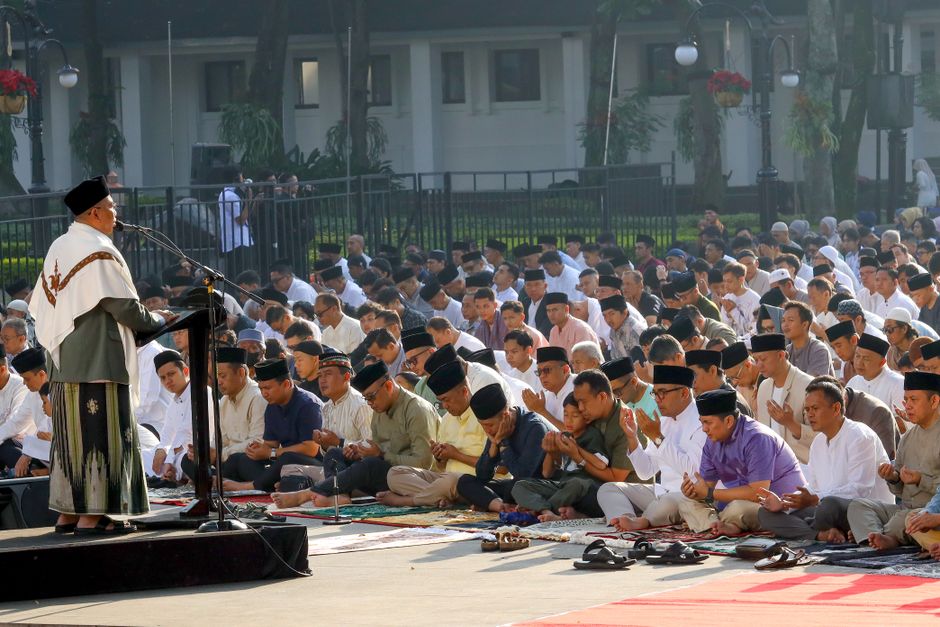
Jusuf Kalla Defends UGM Sermon Amidst Blasphemy Allegations, Emphasizing Peace and Conflict Resolution
Former Vice President of Indonesia, Jusuf Kalla, has publicly defended a sermon delivered at Universitas Gadjah Mada (UGM), a prominent institution in Yogyakarta, against accusations of blasphemy. The controversy arose from specific content within the sermon, which some segments of the public perceived as offensive to religious sensibilities. Kalla, a seasoned political figure with a long history of engagement in public discourse and conflict resolution, has positioned his defense around the sermon’s overarching message of peace, tolerance, and the imperative for constructive dialogue, arguing that a narrow interpretation of select phrases risks undermining these crucial objectives. His stance underscores a broader debate in Indonesia regarding freedom of expression, religious harmony, and the appropriate boundaries of public discourse, particularly within academic settings.
The sermon in question, delivered by a prominent religious figure, reportedly touched upon sensitive theological interpretations. While the exact details of the controversial passages remain a subject of ongoing discussion and varying accounts, the core of the accusation lies in the alleged misrepresentation or disparagement of Islamic tenets or figures. In Indonesia, a nation with a diverse religious landscape yet a significant Muslim majority, blasphemy laws are a sensitive issue, often invoked in cases of perceived insult to religion, leading to legal repercussions and social unrest. Kalla’s intervention, therefore, carries considerable weight, aiming to de-escalate the situation and steer the national conversation towards a more nuanced understanding of the sermon’s intent and impact.
Kalla’s defense is rooted in his extensive experience with interfaith dialogue and his long-standing commitment to fostering peace and stability in Indonesia. He argues that the sermon, when viewed in its entirety and within the context of its delivery at UGM, a secular academic institution, was intended to promote understanding and bridge divides, rather than to provoke or offend. He has specifically highlighted the sermon’s focus on the importance of peaceful coexistence and the application of religious teachings to resolve conflicts, both at a societal and individual level. This emphasis on conflict resolution, a domain where Kalla has actively participated through various initiatives and diplomatic efforts, forms the bedrock of his defense. He posits that focusing solely on isolated phrases, divorced from their broader context and the speaker’s stated intentions, can lead to misinterpretations that are detrimental to the very principles of tolerance and mutual respect that are vital for a pluralistic society like Indonesia.
The former Vice President has articulated that the sermon’s broader message was to encourage critical thinking and engagement with religious texts, encouraging listeners to find universal values of peace and compassion within their faith traditions. He has drawn parallels with historical instances where religious discourse has been used to foster understanding and reconciliation, arguing that the current controversy risks mischaracterizing a potentially positive contribution to public discourse. Kalla’s perspective suggests that such pronouncements, particularly within an academic environment like UGM, should be seen as catalysts for deeper reflection and discussion, rather than as definitive pronouncements to be accepted without question or debate. He implies that the intention was to foster an intellectual engagement with religious ideas, a process that inherently involves exploring different interpretations and perspectives, a cornerstone of academic inquiry.
Furthermore, Kalla’s defense implicitly addresses the broader socio-political landscape of Indonesia, where religious identity often intersects with political discourse and social activism. In recent years, there has been a rise in the mobilization of religious groups to assert their views and to hold individuals and institutions accountable for perceived transgressions. Kalla’s statement can be interpreted as a call for a more measured and less reactive approach to religious criticism, advocating for dialogue and understanding over immediate condemnation and legal action. He suggests that the current climate, if not carefully navigated, could lead to an environment where fear and suspicion stifle open discussion and hinder the progress towards a more inclusive and harmonious society. His emphasis on "conflict resolution" extends beyond mere theological debate; it speaks to the practical application of religious principles in fostering social cohesion and preventing the escalation of intergroup tensions.
The UGM sermon controversy is not an isolated incident but rather a symptom of ongoing challenges in managing religious pluralism in Indonesia. The country’s constitutional framework guarantees freedom of religion, yet the practical implementation of this freedom is often tested by societal pressures and the interpretation of religious laws. Kalla’s defense of the UGM sermon can be seen as an attempt to reassert the importance of moderation and inclusivity in navigating these complex issues. He is implicitly arguing that the discourse surrounding religion should not devolve into divisive rhetoric or accusations that serve to alienate rather than unite. His focus on peace and conflict resolution suggests a pragmatic approach, emphasizing the need for solutions that preserve social harmony and respect the rights of all citizens, regardless of their religious beliefs.
The academic context of the sermon is also significant. UGM, as a leading university, is expected to be a space for intellectual exploration and critical inquiry. Kalla’s defense suggests that religious discourse within such an environment should be viewed through an academic lens, one that encourages analysis, interpretation, and debate, rather than one that is solely focused on the pronouncements of religious authority. He implies that the university is an appropriate venue for discussing diverse religious perspectives, even those that might be challenging or controversial, as long as they are approached with intellectual rigor and a commitment to respectful dialogue. This perspective aligns with the ideals of academic freedom and the pursuit of knowledge.
Moreover, Kalla’s intervention highlights the role of prominent figures in shaping public opinion and mediating contentious issues. As a former Vice President and a respected elder statesman, his words carry considerable weight and can influence the direction of public discourse. His willingness to defend the UGM sermon, despite the potential for political backlash, demonstrates his commitment to his principles and his belief in the importance of fostering a more tolerant and understanding society. His defense is not merely about protecting an individual or an institution; it is about advocating for a particular approach to religious discourse and interfaith relations in Indonesia.
The allegations of blasphemy, while serious, should not overshadow the potential for positive engagement with religious themes, Kalla seems to suggest. His emphasis on the sermon’s purported focus on peace and conflict resolution implies a belief that religious teachings can be a powerful force for good in society, provided they are interpreted and communicated in a way that promotes understanding and compassion. He is advocating for a more constructive approach to religious dialogue, one that seeks common ground and fosters mutual respect, rather than one that focuses on perceived offenses and divisive rhetoric.
The legal ramifications of blasphemy allegations in Indonesia are a significant concern for proponents of freedom of speech. Kalla’s defense can be seen as a subtle plea for a more cautious and reasoned approach to the application of blasphemy laws, urging that accusations be thoroughly examined and that the intent and context of religious discourse be taken into account. He is implicitly arguing against a knee-jerk reaction that could lead to the silencing of legitimate discourse and the creation of an atmosphere of fear.
In conclusion, Jusuf Kalla’s defense of the UGM sermon, amidst accusations of blasphemy, is a multifaceted intervention that speaks to critical issues of religious freedom, freedom of expression, and interfaith harmony in Indonesia. By emphasizing the sermon’s purported focus on peace and conflict resolution, Kalla aims to reframe the debate, urging for a more nuanced and contextual understanding of religious discourse, particularly within academic settings. His stance underscores the ongoing challenges of navigating religious pluralism in a diverse society and highlights the importance of moderation, dialogue, and mutual respect in fostering a more inclusive and harmonious Indonesia. His advocacy for a constructive approach to religious engagement seeks to prevent the weaponization of religious sentiment and to promote the positive potential of faith to contribute to social cohesion and peace. The controversy serves as a reminder of the delicate balance that must be struck between protecting religious sensibilities and upholding the fundamental rights of free expression and intellectual inquiry in a democratic society.