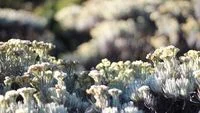
A devastating wildfire that recently swept through the slopes of Mount Ciremai in Kuningan Regency, West Java, has left a trail of ecological destruction, most notably turning vast fields of the protected Javanese edelweis into charred remnants. The fire, which severely impacted the local flora and fauna within the Mount Ciremai National Park (TNGC) region, has prompted deep concern among environmentalists, conservationists, and local volunteer groups who witnessed the aftermath firsthand.
Video footage captured by local volunteers revealed the grim reality on the ground. Once-thriving meadows of edelweis—scientifically recognized for their resilience and often referred to as everlasting flowers—were reduced to black ash, alongside extensive patches of mountain grass. The disaster underscores the increasing vulnerability of Indonesia’s high-altitude ecosystems to climate-induced pressures and prolonged dry spells, which heighten the risks of forest and land fires, locally known as karhutla.
The Chronology and Extent of the Destruction
The scale of the devastation became apparent during mop-up operations conducted by local response teams. Darsa, a 51-year-old coordinator for the Fire-Care Community (MPA) sweeping team of Padabeunghar, Siliwangi Majakuning, confirmed that approximately 10 hectares of edelweis fields were completely destroyed.
According to field reports, the affected edelweis zone lies at an elevation ranging between 1,200 and 1,800 meters above sea level (mdpl) along the northern slopes of Mount Ciremai. "The edelweis affected by the fire covers roughly 10 hectares. All the vegetation in that specific expanse was completely killed," Darsa stated, reflecting on the grim discoveries made by his team during their patrols.
In addition to the destruction of the iconic alpine flora, rescue and monitoring teams also documented harrowing encounters with displaced wildlife. Among the victims of the smoke and flames was a baby surili—a primate species endemic to the island of Java—highlighting the broader ecological toll of the disaster on native fauna struggling to escape the advancing inferno.
While a small fraction of the edelweis population managed to evade direct incineration, they were not entirely spared. Many surviving plants suffered severe wilting and cellular damage due to prolonged exposure to toxic smoke and intense ambient heat.
Resilience of Alpine Flora: A Glimmer of Hope
Despite the catastrophic loss of mature plants across the 10-hectare tract, ecological experts and veteran conservationists offer a note of cautious optimism regarding the eventual recovery of the landscape. Edelweis possesses unique evolutionary traits that equip it to survive harsh mountain environments, including periodic natural disturbances like volcanic activity and fires.
Darsa expressed confidence that the edelweis population will regenerate naturally once the seasonal weather patterns shift. He explained that the reproductive biology of the edelweis plant acts as a natural safeguard against total eradication. While the above-ground vegetation is obliterated by fire, the seeds remain protected beneath the soil surface.
"The edelweis seeds did not burn," Darsa noted. "Before long, when the rainy season arrives, they will sprout again, and they might even grow in greater numbers because the canopy and surrounding brush have been cleared, opening up the land to sunlight."
This regenerative capacity is a hallmark of pioneer plant species adapted to alpine zones. However, environmental scientists caution that while natural succession will eventually restore the landscape, the intermediate phase leaves the exposed soil highly susceptible to erosion, landslides, and invasive weed species until the native flora successfully re-establishes root systems.
Official Response and Containment Efforts
The wildfire on Mount Ciremai triggered a coordinated response involving forestry officials, park rangers, and dedicated community volunteers. The Mount Ciremai National Park authority, in collaboration with regional disaster management agencies, mobilized personnel to contain the spread of the flames before they could breach deeper into protected primary forests or threaten nearby human settlements.
Following intensive firefighting and monitoring operations, the National Disaster Management Agency (BNPB) officially confirmed that the situation has stabilized. Aerial and ground assessments verified that no active hot spots remain within the affected sectors of the national park. Authorities have transitioned from active suppression to post-fire assessment and rehabilitation planning, focusing on damage quantification and wildlife monitoring.
Broader Implications for Conservation and Climate Risk
The Mount Ciremai fire serves as a stark reminder of the mounting threats facing Indonesia’s conservation areas. Mount Ciremai stands as the highest peak in West Java and acts as a vital water catchment area and biodiversity sanctuary for the surrounding regencies, including Kuningan and Cirebon.
Environmental analysts point out that forest and land fires in high-altitude conservation zones are increasingly driven by a combination of prolonged dry seasons, anomalous weather patterns linked to global climate change, and human-induced factors. While national parks maintain strict regulations regarding human activity and fire safety, the sheer expanse of rugged terrain makes early detection and rapid response exceptionally challenging.
The loss of 10 hectares of edelweis—while ecologically recoverable—disrupts the local micro-ecosystem, affecting pollinators and small fauna that rely on the alpine meadows for habitat and sustenance. Furthermore, the incident has reignited calls from conservationists to bolster community-based fire prevention frameworks and enhance early-warning infrastructure across vulnerable mountainous regions in West Java.
As local authorities conclude their damage assessments, the focus shifts toward mitigating post-fire erosion and monitoring the early signs of natural regeneration. Conservation groups remain on high alert, hoping that the arrival of the upcoming rainy season will breathe new life into the ashes of Mount Ciremai, allowing the resilient edelweis to reclaim the landscape.