Jakarta Officially Opens the Inaugural FIFA ASEAN Cup 2026 as Global Governing Body Integrates Regional Football into Official International Calendar

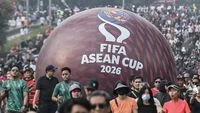
The landscape of Southeast Asian football underwent a historic transformation on Monday, September 21, 2026, as the international FIFA Matchday window officially opened, signaling the commencement of the inaugural FIFA ASEAN Cup 2026. This newly established tournament represents a paradigm shift for the region, bridging the gap between traditional regional competitions and the global football ecosystem. Jointly conceived by the Fédération Internationale de Football Association (FIFA) and regional leadership across Southeast Asia, the tournament brings a fresh level of prestige, official recognition, and competitive rigor to football federations within the Association of Southeast Asian Nations (ASEAN) and invited international guests.
The genesis of this tournament dates back to a landmark Memorandum of Understanding (MoU) signed in 2025 between FIFA and ASEAN sports leaders. The agreement was designed to elevate the standard of play, commercial viability, and administrative governance of football in Southeast Asia. While the traditional ASEAN Championship—widely known as the AFF Cup—successfully took place in July and August 2026, stakeholders recognized a critical structural limitation: the traditional regional tournament does not fall strictly within the mandatory FIFA international match calendar. Consequently, clubs were historically under no obligation to release their star players for the AFF Cup, often resulting in diluted squads and diminished global sporting credibility.
The FIFA ASEAN Cup 2026 was explicitly created to resolve this dilemma. By anchoring the tournament firmly within the September-October FIFA Matchday calendar, participating member associations hold the regulatory right to summon their finest talents, including European, Asian, and Americas-based professionals who were previously restricted by club commitments. This regulatory alignment transforms the regional competition from a secondary regional fixture into a high-stakes international showcase where teams can deploy their absolute strongest rosters, barring unforeseen circumstances such as injuries or disciplinary suspensions.
Expansion, Innovation, and the Inclusion of Invited Nations
Unlike traditional regional formats that are strictly exclusive to the ten or eleven ASEAN member states, the FIFA ASEAN Cup 2026 introduces a groundbreaking element of inter-confederation competition. To enhance tactical diversity, stylistic matchups, and overall global ranking points, FIFA and the organizing committee extended invitations to select nations outside the ASEAN geographic bloc.
For its historic inaugural edition, the tournament is co-hosted by Indonesia and Hong Kong, reflecting a dual-hub strategy designed to maximize infrastructure utilization and fan engagement across different sub-regions of Asia. A total of 14 teams have qualified or been invited to participate in the 2026 edition, encompassing all 11 ASEAN member associations alongside three strategic guest nations: Bangladesh, Pakistan, and Hong Kong.
To ensure competitive balance and maintain engaging group dynamics, the tournament organizers implemented a tiered divisional structure. The 14 participating teams have been separated into two distinct divisions, further subdivided into balanced groups designed to maximize regional rivalries and provide compelling viewing for global broadcast partners.
Division and Group Stage Configuration for the FIFA ASEAN Cup 2026
The tournament format is structured to guarantee competitive integrity while offering lower-ranked nations ample opportunity to test their progress against more established regional powerhouses.
DIVISI 1
- Group A: Indonesia, Malaysia, Singapura, Bangladesh
- Group B: Vietnam, Thailand, Filipina, Pakistan
DIVISI 2
- Group Hong Kong: Hong Kong, Laos, Brunei Darussalam
- Group B: Kamboja, Myanmar, Timor Leste
Division 1 features the traditional heavyweights of Southeast Asian football, bolstered by the strategic inclusion of South Asian contenders Bangladesh and Pakistan. Group A pits arch-rivals Indonesia and Malaysia against each other in what promises to be one of the most-watched fixtures of the calendar year, alongside Singapore and Bangladesh. Meanwhile, Group B gathers regional powerhouses Vietnam and Thailand alongside the rapidly developing Philippines and Pakistan, setting the stage for tactical chess matches and high-octane encounters.
Division 2 provides a vital developmental platform for co-hosts Hong Kong, alongside Laos, Brunei Darussalam, Cambodia, Myanmar, and Timor Leste. This tier emphasizes developmental growth, tactical experimentation, and the accumulation of crucial FIFA ranking coefficients for emerging football nations.
Chronology of Events and the Strategic Integration of the 2026 Calendar
The path to the inaugural FIFA ASEAN Cup 2026 has been characterized by meticulous logistical planning and diplomatic coordination between regional federations. Following the signing of the foundational MoU in 2025, technical committees from FIFA and the ASEAN Football Federation (AFF) worked in tandem to harmonize scheduling, broadcast rights, and sponsorship packages.
The timeline leading up to the September 21 opening involved several key milestones:
- Early 2025: Conceptualization of an officially sanctioned FIFA-backed regional tournament to address club-release friction.
- Mid-2025: Formalization of the agreement via an MoU signed by FIFA executives and ASEAN regional delegates.
- Late 2025: Confirmation of Indonesia and Hong Kong as joint co-hosts for the inaugural edition.
- Early 2026: Finalization of the 14-team roster, division draws, and inclusion parameters for invited guest nations.
- July–August 2026: Execution of the traditional ASEAN Championship (AFF Cup), serving as a precursor and domestic benchmark.
- September 21, 2026: Official opening of the FIFA Matchday window and commencement of the FIFA ASEAN Cup 2026 group stage matches.
This chronological rollout ensured that the footballing ecosystem in Southeast Asia maintained continuous high-level activity throughout the 2026 calendar year, creating a dual-peak structure that satisfies both traditional regional sentiments and modern global professional standards.
Official Responses and Stakeholder Perspectives
The launch of the FIFA ASEAN Cup 2026 has drawn enthusiastic commentary from regional sports administrators, national team managers, and administrative bodies. Representatives from the Indonesian Football Association (PSSI) and the Hong Kong Football Association expressed immense pride in co-hosting the inaugural edition, emphasizing the nation’s readiness to deliver a world-class sporting spectacle.
Speaking on the regulatory implications of the tournament, leading regional analysts noted that the mandatory player release rule is a game-changer for Southeast Asian football development. "For decades, our national team managers had to compromise their tactical blueprints because key players were retained by European or East Asian clubs during non-official regional windows," remarked one prominent regional sports commentator. "The FIFA ASEAN Cup eliminates this barrier. When Indonesia plays Malaysia or Vietnam faces Thailand under FIFA Matchday regulations, fans will finally witness the absolute pinnacle of what Southeast Asian players can achieve together."
Furthermore, representatives from invited nations such as Bangladesh and Pakistan highlighted the developmental value of competing within an integrated ASEAN framework. Participating in a structured, FIFA-recognized tournament outside the South Asian Football Federation (SAFF) zone provides these federations with invaluable exposure to different tactical philosophies, climatic conditions, and high-intensity match environments.
Broader Economic, Social, and Sporting Implications
The introduction of the FIFA ASEAN Cup 2026 carries profound implications that extend far beyond the white lines of the pitch. From an economic perspective, the tournament represents a lucrative commercial asset. With top-tier players guaranteed to participate, broadcast rights values have surged compared to historical regional tournaments. International media networks, digital streaming platforms, and multinational corporate sponsors have heavily invested in the event, recognizing the immense demographic weight and digital engagement of the Southeast Asian fan base.
Sportingly, the tournament directly impacts FIFA World Rankings. Because matches played within the official FIFA Matchday window carry higher coefficient multipliers than friendly fixtures or unsanctioned regional tournaments, strong performances in the FIFA ASEAN Cup will yield significant ranking gains. This upward mobility is crucial for ASEAN nations striving to secure more favorable seeding in AFC Asian Cup qualifiers and future FIFA World Cup qualification rounds.
Socially, the co-hosting arrangement between Indonesia and Hong Kong fosters deeper diplomatic and cultural ties across different Asian sub-regions. Tourism boards in both host territories anticipate significant influxes of traveling supporters, boosting the hospitality, airline, and retail sectors during what is traditionally a shoulder tourist season.
As the matches get underway across various modern venues in Indonesia and Hong Kong, the eyes of the global football community are firmly fixed on Southeast Asia. The FIFA ASEAN Cup 2026 is no longer a theoretical blueprint; it is a living, breathing reality that promises to redefine the trajectory of the sport across the region for generations to come.
Related posts: