Passenger Meltdown Forces Costly TUI Flight Diversion and Threatens British Woman with Imprisonment

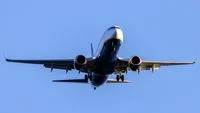
An escalating crisis concerning unruly airline passengers has once again placed commercial aviation safety under intense public scrutiny following a severe mid-air disturbance aboard a TUI Airways transatlantic service. Sarah Parker, a thirty-year-old resident of Halifax, United Kingdom, now faces the looming prospect of a custodial sentence after her severe intoxication and highly erratic behavior forced an emergency flight diversion. The incident, which disrupted a routine international journey from the United Kingdom to the United States, has reignited global debates regarding passenger accountability, cabin crew safety, and the rigorous enforcement of federal and international aviation laws.
The situation unfolded on July 24, 2025, during what was supposed to be a standard scheduled holiday flight operated by TUI Airways, originating from Birmingham Airport and heading toward the state of Florida in the United States. According to official court documents and investigative reports detailed by regional British media outlets including the Manchester Evening News, Parker’s disruptive actions began almost immediately as the aircraft initiated its departure sequence. Despite repeated safety briefings and explicit, illuminated cabin signs requiring all travelers to remain seated with their seatbelts securely fastened during takeoff, Parker stood up from her assigned passenger seat.
Chronology of the Incident
The sequence of events escalated rapidly within the first hour of the journey. Disregarding direct verbal instructions issued by the flight deck crew, Parker insisted on navigating the cabin while the aircraft was ascending. When cabin crew members attempted to intervene and guide her back to her seat in accordance with mandatory aviation safety protocols, Parker became increasingly combative and belligerent.
Witness statements provided to aviation authorities indicate that Parker was visibly and heavily intoxicated. The situation deteriorated from mere non-compliance into an alarming public decency offense when Parker walked down the narrow central aisle of the commercial airliner. In full view of dozens of shocked passengers, including families with young children, she proceeded to pull down her shorts and underwear in the aircraft cabin. This extraordinary breach of public decency caused immediate distress among fellow travelers and created an untenable operational environment for the flight attendants striving to maintain order.
Recognizing the severe threat to cabin security and the impossibility of de-escalating the situation with an intensely intoxicated and non-compliant individual, the flight captain made the critical decision to alter the flight path. Rather than continuing across the Atlantic Ocean toward North America, the cockpit crew coordinated with air traffic control to execute an emergency diversion. The aircraft was rerouted back toward the United Kingdom, safely landing at Manchester Airport, where local law enforcement officers were waiting on the tarmac to intercept the aircraft upon its arrival.
Legal Proceedings and Court Admissions
Following the emergency landing at Manchester Airport, Parker was immediately detained by police officers. She was subsequently charged with multiple offenses stemming from her conduct aboard the aircraft. During initial hearings at the Manchester Magistrates Court, Parker formally entered guilty pleas to three distinct criminal charges: performing an indecent act in public, being drunk on an aircraft, and failing to obey the lawful commands of the aircraft captain.
Despite her guilty plea, the presiding magistrates determined that the severity of Parker’s offenses far exceeded their statutory sentencing powers. Under British aviation and criminal law, endangering an aircraft and committing disruptive acts that compromise the safety of a flight carry penalties that demand higher-level judicial oversight. Consequently, the magistrates court formally declined jurisdiction over the final sentencing phase and referred the case upward to the Crown Court.
Parker is now scheduled to appear for her sentencing hearing at the Manchester Minshull Street Crown Court on December 1, 2026. Legal experts and judicial observers note that while a custodial sentence is heavily anticipated given the nature of the charges and the substantial financial fallout, the exact duration of her imprisonment has not yet been determined and will be finalized by the Crown Court judge presiding over the case.
Financial and Operational Impact on TUI Airways
The disruption caused by Parker’s behavior extended far beyond the immediate shock experienced by the passengers inside the cabin. Flight diversions of international wide-body or medium-haul aircraft carry staggering financial consequences for commercial carriers, and the TUI Airways incident was no exception.
Aviation economists and airline representatives calculate that the unauthorized diversion to Manchester Airport cost TUI Airways approximately 20,000 British pounds—equivalent to roughly 486,000 Indonesian rupiahs when adjusted for contemporary exchange rates. This substantial sum encompasses a wide array of operational expenditures, including unexpected landing fees at Manchester Airport, additional fuel burn required to safely land a heavily fueled transatlantic aircraft, gate management charges, and ground handling services.
Furthermore, the financial loss incorporates the complex logistical challenge of rescheduling a disrupted crew whose maximum legal working hours were exceeded due to the unscheduled stop. TUI Airways also had to manage the logistical nightmare of accommodating, feeding, and rebooking hundreds of frustrated holidaymakers whose travel plans were delayed by hours or even days. Industry analysts emphasize that these figures do not account for the indirect costs associated with diminished passenger satisfaction and the reputational strain placed upon the airline.
Broader Industry Implications and the Rise of Unruly Passengers
The case of Sarah Parker is unfortunately not an isolated anomaly within the contemporary post-pandemic aviation landscape. Global aviation authorities, including the International Air Transport Association (IATA) and the European Union Aviation Safety Agency (EASA), have reported a persistent upward trend in incidents involving unruly, abusive, and intoxicated passengers over recent years.
Security specialists point out that alcohol consumption remains a primary catalyst for disruptive behavior in the skies. Many incidents begin in airport departure lounges, where passengers consume alcohol freely before boarding, only for the physiological effects of high altitude and pressurized cabins to amplify the intoxication rapidly once airborne. When combined with the confined environment of an aircraft cabin, even minor grievances can escalate rapidly into dangerous confrontations that threaten flight safety.
In response to these escalating safety concerns, commercial airlines, regulatory bodies, and law enforcement agencies have adopted a zero-tolerance approach toward disruptive behavior. Cabin crews undergo specialized training in conflict resolution, de-escalation techniques, and the legal protocols required to manage intoxicated individuals. Simultaneously, prosecutors and courts across various jurisdictions are increasingly willing to impose severe legal penalties, including substantial financial restitution orders and lengthy prison sentences, to deter potential offenders.
Aviation safety advocates argue that high-profile prosecutions, such as the upcoming sentencing of Sarah Parker at the Manchester Minshull Street Crown Court, serve as a vital deterrent to the traveling public. By demonstrating that illegal behavior in the sky carries profound personal, legal, and financial consequences, authorities hope to reinforce the foundational principle that compliance with aviation safety directives is non-negotiable. As the legal process reaches its final stages in late 2026, the aviation industry will continue to monitor the outcome as a benchmark for how judicial systems handle the growing menace of air rage.