Pelindo Moves to Capture Malacca Strait Shipping Market and Challenge Regional Port Dominance

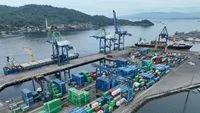
Indonesia is charting a decisive new course for its maritime sector as state-owned port operator PT Pelabuhan Indonesia (Persero), commonly known as Pelindo, prepares to challenge the long-standing regional dominance of Singapore and Malaysia in managing maritime traffic across the vital Malacca Strait. Through a series of ambitious strategic initiatives anchored by the development of the Dumai Transshipment Hub in Riau, Indonesia aims to carve out a substantial market share from one of the busiest shipping lanes in the world, shifting the economic benefits of international trade back to domestic shores.
The strategic pivot, revealed by Pelindo’s Business Development Director Prasetyo during a public forum in South Jakarta, targets an underserved segment of maritime traffic that currently bypasses the major transshipment ports of Singapore and Malaysia. By leveraging the post-merger capacity and unified strength of the state enterprise, Indonesia hopes to transform its geographic advantage into tangible economic gains, marking a paradigm shift in the country’s national logistics strategy.
Main Facts of the Strategic Expansion
At the core of Pelindo’s expansion plan is the Dumai Transshipment Hub, a multi-phased mega-project designed to capture approximately 40 percent of international cargo ships traversing the Malacca Strait that currently do not dock at either Singaporean or Malaysian ports.
Historically, despite sharing the coastline of the Malacca Strait—one of the world’s most critical maritime chokepoints connecting the Indian Ocean to the Pacific Ocean—Indonesia has captured a surprisingly minimal share of the economic value generated by the heavy vessel traffic passing through its waters. Every year, an estimated 110,000 vessels navigate these waters, carrying a significant portion of global trade, particularly energy supplies and manufactured goods moving between East Asia and the Middle East or Europe.
Pelindo’s leadership has emphasized that the corporate strategy is not designed to cannibalize or forcibly seize the existing 60 percent market share firmly entrenched by neighboring ports in Singapore and Malaysia. Instead, the state-owned enterprise is focusing exclusively on the untapped 40 percent segment—vessels that transit the strait without utilizing regional transshipment facilities for cargo consolidation, redistribution, or logistical servicing. By offering competitive port services, modern infrastructure, and streamlined customs clearance, Pelindo aims to make Indonesian ports an attractive, primary destination for these wandering carriers.
Chronology and Development Timeline
The realization of the Dumai Transshipment Hub is structured as a long-term, multi-stage infrastructure undertaking. Pelindo has laid out a development timeline that targets the initial operational phase of the transshipment hub by the year 2030.
The initiative follows a series of foundational corporate reforms within Indonesia’s port sector. Most notably, the late-2021 consolidation and merger of four regional state-owned port operators—Pelindo I, II, III, and IV—into a single unified entity under Pelindo has provided the corporate heft, financial leverage, and operational efficiency required to execute capital-intensive projects of this magnitude. Prior to the merger, fragmented management across different regional jurisdictions hindered Indonesia’s ability to compete with centralized, highly efficient maritime hubs like the Port of Singapore.
Following the internal consolidation, Pelindo identified the strategic potential of Dumai, strategically located on the eastern coast of Sumatra facing the Malacca Strait. Over the subsequent years, feasibility studies and logistical assessments were conducted to evaluate cargo flows and infrastructure requirements.
Recognizing that regional transshipment hubs require massive capital expenditure and deep-water access, Pelindo formally proposed that the Dumai Transshipment Hub be granted the status of a National Strategic Project (PSN). Securing PSN designation is critical for fast-tracking bureaucratic approvals, securing land acquisition rights, and attracting potential international and domestic joint-venture investments.
Supporting Data and Context of the Malacca Strait
The geopolitical and economic significance of the Malacca Strait cannot be overstated. As a narrow, 500-mile stretch of water between the Malay Peninsula and the Indonesian island of Sumatra, it serves as the shortest sea route between the Indian and Pacific oceans, linking major Asian economies such as China, Japan, South Korea, and India with Europe and the Middle East. Approximately one-quarter of all traded goods globally pass through these waters.
Despite this immense volume, the economic capture for Indonesia has historically been disproportionately low. While Singapore developed into a premier global transshipment hub—handling massive volumes of containerized cargo and providing comprehensive ship-servicing, bunkering, and financial logistics—Indonesian ports largely served domestic point-to-point routes. This structural imbalance resulted in many Indonesian export commodities being shipped to Singapore first for consolidation before heading to final international destinations, adding unnecessary time and logistical costs for Indonesian businesses.
Pelindo’s market research indicates that out of the roughly 110,000 ships passing through the strait annually, a substantial pool of vessels seeks alternative or supplementary ports due to congestion, high tariffs, or capacity constraints at established hubs. Capturing 40 percent of this un-docked or flexibly routed segment represents a multi-billion-dollar opportunity to boost Indonesia’s logistics performance index and reduce national logistics costs, which have historically remained higher than those of regional peers.
Official Responses and Government Support
The ambition of Pelindo has garnered strong institutional backing from the central government, signaling a coordinated national approach to maritime logistics development.
The Ministry of National Development Planning (BPPENAS) has responded positively to Pelindo’s proposal to designate the Dumai Transshipment Hub as a National Strategic Project. Minister of PPN/Head of Bappenas Rachmat Pambudy confirmed that the ministry is currently conducting a thorough evaluation of the proposal.
The ongoing review by Bappenas focuses on aligning the Dumai project with the broader framework of the National Medium-Term Development Plan (RPJMN) for the 2025–2029 period. Furthermore, the assessment verifies whether the project satisfies the stringent technical, economic, and strategic criteria mandated by the Minister of PPN/Head of Bappenas Regulation Number 4 of 2025 concerning the guidelines for proposing and evaluating PSNs.
If approved, the PSN status will grant the project prioritized government support, streamlined environmental and spatial licensing, and enhanced coordination across various ministries, including the Ministry of Transportation, the Ministry of State-Owned Enterprises, and local regional governments.
Broader Economic Implications and Analyst Perspectives
The push by Pelindo to establish a world-class transshipment hub in Dumai carries profound implications for Indonesia’s economic landscape, supply chain resilience, and geopolitical standing in Southeast Asia.
First, from a domestic cost perspective, the presence of a globally competitive transshipment hub on Sumatra’s eastern seaboard is expected to dramatically lower logistical expenses for industries operating in western Indonesia. Currently, domestic goods moving internationally often face high inter-island shipping costs before reaching global trunk routes. A localized hub allows direct mother-vessel calls, reducing transit times and freight costs for manufacturing, agricultural, and resource-based commodities originating from Sumatra and surrounding regions.
Second, the initiative aligns with Indonesia’s long-term vision of transforming its economy from a raw material exporter into a high-value industrial and trade processing nation. By establishing robust maritime infrastructure, Indonesia can attract foreign direct investment into surrounding special economic zones, manufacturing hubs, and industrial parks.
Third, geopolitically, the project enhances Indonesia’s sovereign presence and active management over its territorial waters. For decades, foreign maritime powers and neighboring logistics hubs derived the lion’s share of economic value from the Malacca Strait while Indonesia bore the environmental and security responsibilities associated with managing a congested waterway. Shifting a portion of the maritime services economy to Indonesian ports addresses this historical imbalance.
However, industry analysts point out that significant challenges remain. Developing a transshipment hub requires not only deep-water berths, high-capacity ship-to-shore gantry cranes, and advanced terminal operating systems, but also deep integration with global shipping alliances. Shipping lines operate on strict schedules and require guaranteed turnaround times, high productivity rates, and transparent customs procedures. Pelindo will need to ensure that the hardware of port infrastructure is matched by "software"—specifically regulatory efficiency, digital integration, and skilled maritime labor.
As Bappenas finalizes its evaluation of the National Strategic Project status and Pelindo continues its phased planning toward the 2030 operational target, the Dumai Transshipment Hub stands out as one of Indonesia’s most consequential economic infrastructure bets. If successfully executed, it could fundamentally redraw the maritime logistics map of Southeast Asia, establishing Indonesia not just as a passive guardian of a busy strait, but as an active, dominant player in global maritime trade.