Ancient Fossil Unveils Definitive Proof of Egg-Laying Mammal Ancestors, Rewriting Evolutionary Timeline and Permian Extinction Survival

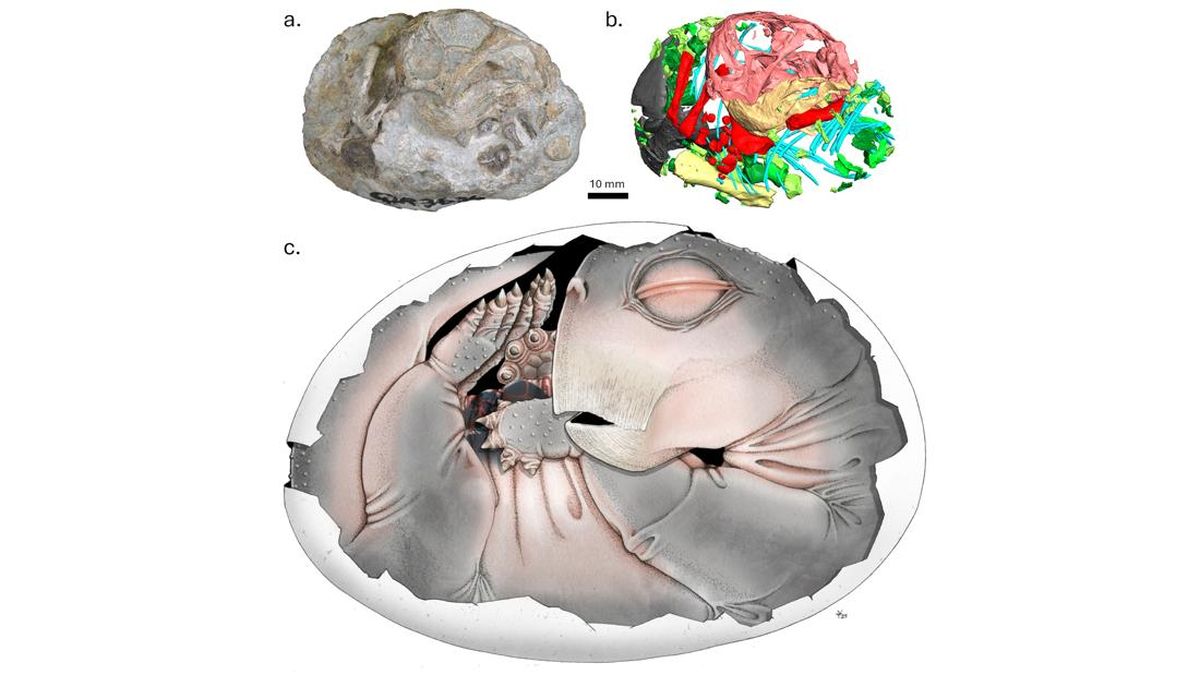
A 250-million-year-old fossilized stone has provided irrefutable evidence that the distant ancestors of mammals, known as synapsids, laid eggs, offering profound insights into the origins of mammalian traits and the remarkable survival strategies employed during Earth’s most devastating mass extinction event. This groundbreaking research, published in the prestigious journal PLOS One, details the discovery of an embryonic Lystrosaurus within a fossil unearthed in South Africa. Lystrosaurus, a genus of dicynodont therapsids, is renowned for its improbable survival through the Permian-Triassic extinction, a cataclysmic event approximately 252 million years ago that annihilated an estimated 90% of life on Earth.
Unearthing the Past: The Lystrosaurus Embryo Discovery
The fossil, a testament to deep time, underwent rigorous examination using state-of-the-art paleontological techniques. Researchers employed high-resolution computed tomography (CT scans) and synchrotron X-ray imaging, a technology capable of generating X-rays significantly brighter than the sun, to peer inside the ancient stone without causing any damage to the delicate specimen. This non-invasive approach allowed the team to meticulously reconstruct the internal anatomy of the embryonic Lystrosaurus.
The crucial revelation emerged from the detailed scans: the embryo’s jaw was not fully fused. This anatomical characteristic, as noted by lead author Julien Benoit, a professor at the Evolutionary Studies Institute at the University of Witwatersrand in South Africa, is exclusively observed in the embryos of modern birds and turtles while they are still developing inside their eggs. "This feature is only found in the embryos of modern birds and turtles," Benoit explained, highlighting the definitive nature of the finding. "It unequivocally proves that the Lystrosaurus embryo was inside an egg when it died."
This discovery marks a monumental shift in understanding the reproductive biology of early synapsids. "This is the first time we can say, with absolute certainty, that mammal ancestors like Lystrosaurus laid eggs, making this a true milestone in the field," Benoit emphasized. Prior hypotheses about egg-laying in these ancient creatures were largely inferential, based on phylogenetic placement and comparisons with extant reptiles and monotremes. The direct evidence from an embryonic fossil provides a level of certainty previously unattainable.
Further analysis of the fossil and comparisons with contemporaneous reproductive strategies suggest that these ancient eggs possessed soft, leathery shells, akin to those of many modern reptiles and the monotremes (platypus and echidna). Hard-shelled eggs, as we know them from birds, are believed to have evolved significantly later, at least 50 million years after the Lystrosaurus roamed the Earth. This detail is crucial for understanding the environmental context in which these creatures lived and reproduced, as leathery shells have different properties regarding water retention and gas exchange compared to their calcified counterparts.
The Great Dying: Context of the Permian-Triassic Extinction
To fully appreciate the significance of Lystrosaurus‘s reproductive strategy, it is essential to understand the backdrop of the Permian-Triassic extinction event, often referred to as "The Great Dying." Occurring approximately 252 million years ago, this was the most severe mass extinction in Earth’s history, dwarfing even the event that wiped out the non-avian dinosaurs. Over a relatively short geological period, estimated to be between 20,000 and 200,000 years, an estimated 90% of marine species and 70% of terrestrial vertebrate species vanished.
The primary driver of this catastrophe is widely attributed to massive volcanic eruptions in what is now known as the Siberian Traps. These eruptions, releasing vast quantities of lava and ash, also injected colossal amounts of greenhouse gases, including carbon dioxide and methane, into the atmosphere. This led to rapid and extreme global warming, with global temperatures potentially rising by 8-10 degrees Celsius. The increased atmospheric CO2 subsequently led to severe ocean acidification, devastating marine ecosystems, particularly those with calcifying organisms like corals and shelled invertebrates. Widespread anoxia (lack of oxygen) developed in both marine and terrestrial environments, creating vast dead zones. Such dramatic environmental shifts caused widespread ecosystem collapse, leaving few survivors.
Lystrosaurus, a sturdy, pig-like herbivore, stands out as a remarkable exception. While most life forms perished, Lystrosaurus not only survived but thrived in the immediate aftermath, becoming one of the most common terrestrial vertebrates of the early Triassic period. Its fossils are found in abundance across Gondwana, indicating a widespread distribution from Antarctica to India and South Africa. This resilience has long puzzled paleontologists, earning Lystrosaurus the moniker of a "disaster taxon" – a species that proliferates in the wake of ecological devastation. The new findings on its reproductive biology offer a compelling piece of the puzzle regarding its extraordinary survival.
An Evolutionary Advantage: How Lystrosaurus‘s Eggs Aided Survival
The specific characteristics of Lystrosaurus‘s eggs provide a potential explanation for its unparalleled success during and after the Permian-Triassic extinction. Benoit elaborated on this critical link, noting that Lystrosaurus inhabited extremely arid, desert-like environments. These conditions were exacerbated by the global warming and drying trends of the extinction event, transforming much of the supercontinent Pangea into vast, parched landscapes.
In such harsh conditions, water conservation would have been paramount for both adult animals and their developing offspring. Benoit suggests that Lystrosaurus likely foraged in dry riverbeds and sought out soft, muddy ground to dig burrows, where it could shelter and aestivate (a state of dormancy, similar to hibernation, to survive prolonged drought). Its eggs, being relatively large for the animal’s size (adult Lystrosaurus typically ranged from 0.6 to 2.5 meters in length) and possessing a thick, leathery shell, offered a significant evolutionary advantage. "The eggs of Lystrosaurus lost less water through their thick, leathery shells compared to the eggs of other species at the time," Benoit explained. This reduced water loss would have been a critical factor in the survival of embryos in an increasingly parched world, preventing desiccation in their subterranean nests or burrows.
Furthermore, the substantial size of the Lystrosaurus eggs implies that the hatchlings were already well-developed upon emerging. This precocial state would have bestowed several advantages. Larger, more developed young would have been better equipped to fend for themselves immediately after hatching, reducing their vulnerability to predators and increasing their chances of finding food and water independently in a resource-scarce environment. This early independence would have also contributed to a faster maturation rate, allowing Lystrosaurus individuals to reach reproductive age more quickly. In a post-extinction world where populations were decimated and environmental pressures remained high, rapid reproduction would have been a key factor in the species’ ability to rebound and dominate new niches.
Rewriting Mammalian Evolution: Origins of Lactation and Viviparity
Beyond explaining Lystrosaurus‘s survival, this discovery carries profound implications for understanding the evolutionary trajectory of key mammalian characteristics, particularly the development of lactation (milk production) and viviparity (live birth). For a long time, the evolutionary pathway from egg-laying ancestors to live-bearing, milk-producing mammals has been a subject of intense scientific debate.
Benoit’s research provides a crucial piece of the puzzle. The finding that Lystrosaurus hatchlings were relatively large and well-developed suggests that they were not entirely dependent on immediate parental care for sustenance after birth. This contrasts with modern mammalian young, which are typically born helpless and completely reliant on milk. This observation leads to an intriguing hypothesis: the ability to produce milk, a defining characteristic of mammals, may not have initially evolved for feeding offspring.
Instead, the study lends strong support to the idea that lactation might have first evolved to keep the leathery, water-permeable eggs of early mammal ancestors moist and protected within the nest or burrow. The secretion of a nutrient-rich, antimicrobial fluid could have served to maintain hydration, prevent fungal or bacterial infections, and potentially even offer some thermoregulation for the developing embryos. Only later, as young became more altricial (helpless at birth) and parental investment increased, would this secretion have evolved into the primary source of nutrition we recognize as milk today.
Based on this evidence, researchers can now more precisely estimate the timeline for the evolution of true lactation. It is now believed that the ability to produce milk for feeding young likely evolved sometime between the early and late Triassic periods, roughly 252 to 201 million years ago, after the Permian-Triassic mass extinction event. This places the origin of lactation within the timeframe when other crucial mammalian traits, such as endothermy (warm-bloodedness) and hair, were also beginning to emerge in the synapsid lineage. The evolution of lactation and later, viviparity, represented a significant shift in reproductive strategy, allowing for greater parental investment and protection of offspring, ultimately contributing to the spectacular diversification and success of mammals.
Expert Reactions and Broader Significance
The findings have resonated across the paleontological community. Steve Brusatte, a renowned professor of paleontology and evolution at the University of Edinburgh in Scotland, who was not involved in the PLOS One study, described the Lystrosaurus embryo as an "exciting fossil." His commentary further underscores the importance of this discovery in illuminating the evolutionary journey from reptile-like ancestors to true mammals.
"This is strong evidence that some of our closest mammal ancestors were still laying eggs and reproducing like reptiles, and had not yet given birth to live young and fed their babies with milk," Brusatte stated, referencing his extensive work, including his book "The Rise and Reign of the Mammals." He continued, "Those things would come later, and be crucial to the current prosperity of mammals."
Brusatte’s insights highlight that the transition to viviparity and full lactation was not a singular, abrupt event but rather a gradual process involving a series of evolutionary innovations. The Lystrosaurus fossil provides a tangible snapshot of an intermediate stage, bridging the gap between ancestral reptilian reproduction and the highly specialized reproductive strategies of modern mammals. It helps to clarify the sequence of evolutionary events, suggesting that egg-laying persisted in early synapsids long after they began to diverge from reptilian lineages. This understanding is vital for constructing a comprehensive narrative of mammalian origins, explaining how the ‘mammal package’ – a suite of traits including warm-bloodedness, hair, live birth, and lactation – assembled over millions of years.
Future Research and the Mammal Success Story
The current study, while definitive in its immediate findings, also opens numerous avenues for future research. Benoit and his team are already planning further investigations into the intricate evolution of lactation and viviparity. These complex processes, fundamental to mammalian identity, still harbor many mysteries regarding their precise origins and development.
"These are some of the most important features that characterize our family, and we still don’t know exactly when and how they evolved," Benoit remarked, expressing the ongoing scientific quest. He added, "Unraveling this will greatly help in understanding the mammal success story." Future research may involve searching for more embryonic fossils of early synapsids, analyzing the microscopic structures of ancient eggshells (if preserved), and applying advanced computational models to simulate the evolutionary pressures that led to these reproductive adaptations. Comparative studies with modern monotremes, which retain the ancestral trait of egg-laying while also lactating, will also continue to provide invaluable insights into this evolutionary transition.
The journey from a small, egg-laying creature like Lystrosaurus to the diverse array of mammals we see today, including humans, is a testament to the power of natural selection and evolutionary innovation. This ancient stone, containing the fossilized whisper of a developing Lystrosaurus, has not only shed light on a critical moment in Earth’s history but has also illuminated the very roots of what it means to be a mammal. Its story is far from over, as scientists continue to piece together the grand tapestry of life’s evolution, one remarkable fossil at a time.