
Blinken Gaza Egypt Sisi
Blinken Gaza Egypt Sisi: Navigating the Complex Geopolitical Nexus
The geopolitical landscape surrounding Gaza, Egypt, and the United States, particularly through the lens of Secretary of State Antony Blinken’s engagements with Egyptian President Abdel Fattah el-Sisi, represents a multifaceted and perpetually evolving crisis. This nexus is characterized by competing interests, humanitarian imperatives, security concerns, and long-standing historical grievances that have, for decades, defied simple solutions. Understanding the dynamics at play requires dissecting the roles and motivations of each key actor, the historical context that frames current events, and the immediate challenges that Secretary Blinken and President Sisi must confront. The Gaza Strip, a densely populated Palestinian territory under blockade, exists in a state of perpetual conflict with Israel, fueled by the unresolved Israeli-Palestinian dispute. Egypt, a vital regional power and the sole Arab state with a direct border with Gaza, plays a critical, albeit often constrained, role in mediating conflicts, managing humanitarian aid, and ensuring its own national security interests, which are inextricably linked to the stability of its eastern border. The United States, as a major global superpower and a long-standing ally of Israel, wields significant diplomatic and economic influence, frequently acting as a mediator in the region. Secretary Blinken’s visits to Egypt and his discussions with President Sisi are not mere diplomatic courtesy calls; they are crucial junctures where American policy objectives are communicated, regional security architectures are assessed, and pathways towards de-escalation and potential long-term solutions are explored. The underlying complexities involve the historical context of the Arab-Israeli conflict, the rise of Hamas in Gaza, the ongoing Israeli blockade, the internal Palestinian political division between Fatah and Hamas, Egypt’s own domestic security challenges, and the broader regional power dynamics involving Iran, Turkey, and other actors.
The historical bedrock of the Gaza-Egypt-US relationship is the protracted Israeli-Palestinian conflict. Since its creation in 1948, Israel has been at odds with its Arab neighbors, a conflict that has repeatedly erupted into violence and displacement. Gaza, under Egyptian administration following the 1948 Arab-Israeli War, was captured by Israel in the 1967 Six-Day War and remained under Israeli occupation until 2005, when Israel unilaterally withdrew its forces and settlers. However, Israel maintained control over Gaza’s borders, airspace, and territorial waters, a situation that evolved into the current blockade following Hamas’s electoral victory and subsequent takeover of Gaza in 2007. This blockade, imposed by Israel and largely supported by Egypt, aims to prevent the flow of weapons and materials that could be used by Hamas against Israel. However, it has also severely restricted the movement of people and goods, leading to a dire humanitarian situation in Gaza, characterized by high unemployment, poverty, and limited access to essential services like clean water and electricity. For Egypt, the situation in Gaza presents a persistent security dilemma. Cairo views Hamas with suspicion, not only due to its ideological leanings but also its perceived connections to the Muslim Brotherhood, an organization outlawed in Egypt. The flow of arms and potential militant incursions from Gaza into Egypt pose a direct threat to Egyptian national security. Consequently, Egypt has been a key player in mediating ceasefires between Israel and Hamas and has played a crucial role in facilitating the entry of humanitarian aid into Gaza, albeit often under strict Israeli oversight. President Sisi’s government has also been instrumental in demilitarizing parts of the Sinai Peninsula to counter militant activity that has, at times, been linked to the Gaza conflict. The US, under successive administrations, has consistently sought to promote a two-state solution to the Israeli-Palestinian conflict, a framework that envisions an independent Palestinian state alongside Israel. Secretary Blinken’s engagements with President Sisi are a critical component of this broader American strategy. The US relies on Egypt’s influence and cooperation to advance its diplomatic objectives, including de-escalation of violence, humanitarian assistance, and the long-term goal of a lasting peace.
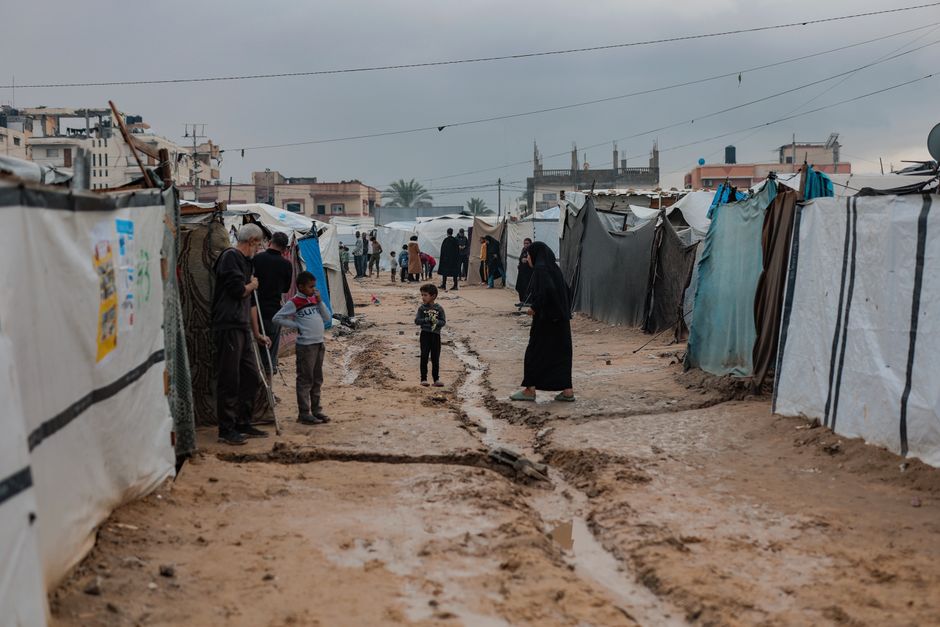
The humanitarian crisis in Gaza is a recurring and urgent theme in the discussions between Blinken and Sisi. The blockade, coupled with repeated cycles of violence, has resulted in widespread destruction of infrastructure, a devastated economy, and a population heavily reliant on international aid. Secretary Blinken has consistently voiced concerns about the humanitarian situation, advocating for increased access for aid and unimpeded delivery of essential supplies. His diplomatic efforts often focus on securing guarantees from both Israel and Egypt regarding the safe passage of humanitarian convoys and the lifting of restrictions that impede reconstruction and economic recovery. President Sisi, while balancing his security concerns with the need to maintain regional stability and international legitimacy, has often been a conduit for these humanitarian efforts. Egypt, through the Rafah border crossing, is the primary gateway for humanitarian aid into Gaza, a role that places immense logistical and political pressure on Cairo. The US, in turn, provides significant financial assistance to Gaza through international organizations and directly to the Palestinian Authority, further underscoring the intertwined nature of these efforts. However, the effectiveness of these humanitarian interventions is constantly challenged by the prevailing security environment and the political deadlock between Israel and Palestinian factions. The cyclical nature of conflict means that any progress made in rebuilding Gaza is vulnerable to being undone by renewed hostilities, creating a perpetual state of crisis that complicates long-term solutions and sustained humanitarian relief.
The security dimension of the Gaza-Egypt-US nexus is perhaps the most sensitive and consistently debated aspect of the relationship. For Egypt, the primary security concern is the prevention of militant infiltration and the smuggling of weapons from Gaza into the Sinai. President Sisi’s government has invested heavily in border security and has undertaken significant military operations in the Sinai to combat extremist groups, some of which have been alleged to have links to Gaza-based militants. The US, as a key security partner of Egypt, provides substantial military aid and intelligence support, recognizing Cairo’s crucial role in regional counter-terrorism efforts. Secretary Blinken’s discussions with Sisi invariably involve an exchange of intelligence and coordination on security strategies. For Israel, the paramount security concern is preventing rocket attacks and other forms of aggression from Gaza. The blockade, while heavily criticized for its humanitarian impact, is justified by Israel as a necessary measure to counter Hamas’s military capabilities. The US, as Israel’s staunchest ally, supports Israel’s right to defend itself, but also advocates for measures that minimize civilian harm and do not exacerbate the humanitarian crisis. This delicate balancing act means that US policy often seeks to empower Egypt to play a more active role in managing Gaza’s security, thereby reducing the direct burden on Israel and potentially creating a more sustainable security architecture. However, this approach is fraught with challenges, given the deep-seated mistrust between various actors and the inherent difficulties in achieving lasting security in a volatile region.
The political and diplomatic strategies employed by Secretary Blinken and President Sisi are intrinsically linked to the broader goal of achieving a sustainable resolution to the Israeli-Palestinian conflict. The US, under Secretary Blinken, has reiterated its commitment to a two-state solution, emphasizing the need for Palestinian statehood and security for Israel. Egypt, as a key Arab interlocutor, is seen by the US as vital in facilitating any peace process. President Sisi has historically played a mediating role in ceasefires and has engaged in discussions with both Israeli and Palestinian leaders. However, the internal Palestinian political division between Hamas in Gaza and the Palestinian Authority in the West Bank presents a significant obstacle. Any lasting peace agreement would likely require a unified Palestinian leadership, a goal that has remained elusive for decades. Secretary Blinken’s engagements with Sisi are aimed at exploring avenues for Palestinian reconciliation, encouraging de-escalation, and building the groundwork for renewed peace talks. This involves not only diplomatic pressure but also economic incentives and security assurances. The US understands that a stable and prosperous Gaza, free from the existential threats posed by the blockade and internal conflict, is a prerequisite for any lasting peace. Similarly, Egypt’s willingness to play a constructive role is essential, but this willingness is often contingent on its own security interests and the broader regional geopolitical landscape.
The role of the United States in this complex equation is multifaceted. As a major diplomatic power, the US seeks to shape regional outcomes through its engagements, offering incentives for de-escalation and peace. As a significant military and economic power, it provides crucial support to key regional actors, including Egypt and Israel. Secretary Blinken’s role as the chief diplomat is to articulate US policy, broker agreements, and manage relationships with key players like President Sisi. The US approach to Gaza often involves a delicate balancing act: supporting Israel’s security needs while simultaneously advocating for the humanitarian well-being of Gazans and the long-term prospect of a Palestinian state. This requires constant dialogue with Cairo, leveraging Egypt’s unique position and influence. The discussions between Blinken and Sisi are not merely about crisis management; they are about strategizing for a future that prioritizes stability, security, and the eventual resolution of the underlying conflict. The effectiveness of these engagements hinges on a shared understanding of the challenges, a willingness to compromise, and a long-term vision that transcends immediate political considerations. The success or failure of these diplomatic efforts has profound implications for regional security and the lives of millions of people.
The international community’s engagement with Gaza, Egypt, and the US is crucial for addressing the multifaceted challenges. Beyond the diplomatic and security dimensions, there are significant economic and developmental aspects that require sustained attention. The US, through its bilateral relations with Egypt and its extensive aid to the Palestinian territories, plays a pivotal role. Secretary Blinken’s dialogue with President Sisi extends to discussions about economic development in Gaza, the potential for job creation, and the rebuilding of infrastructure. These efforts are often hampered by the ongoing blockade and the cyclical nature of conflict, which deters private investment and makes long-term planning extremely difficult. Egypt, with its own economic vulnerabilities, is also keen to see stability in Gaza as a means of improving its own economic outlook, particularly in the Sinai region. International organizations, such as the United Nations, also play a critical role in coordinating humanitarian aid and implementing development projects in Gaza. The US, as a leading contributor to these organizations, works closely with them to ensure that aid is delivered effectively and that development initiatives are aligned with broader peace-building efforts. However, the sheer scale of the humanitarian and economic challenges in Gaza necessitates a coordinated and sustained international response, one that goes beyond emergency relief and addresses the root causes of the crisis. The discussions between Blinken and Sisi are, therefore, not just about managing the present crisis, but about laying the groundwork for a more sustainable and prosperous future for Gaza and the wider region. This requires a commitment to addressing the underlying political issues, promoting economic development, and fostering a sense of hope and opportunity for the people of Gaza.
In conclusion, the intricate interplay between Blinken, Gaza, and Egypt, as mediated through President Sisi, underscores a persistent geopolitical challenge. The ongoing conflict in Gaza, exacerbated by the blockade and the broader Israeli-Palestinian dispute, creates a humanitarian crisis that demands constant international attention. Egypt’s role as a border state and a regional mediator is indispensable, while the United States, through its diplomatic and economic influence, endeavors to steer the region towards stability and a lasting peace. Secretary Blinken’s engagements with President Sisi are vital for coordinating security strategies, facilitating humanitarian aid, and exploring pathways toward de-escalation and, ultimately, a political resolution. However, the deep-seated complexities, including internal Palestinian divisions, regional power dynamics, and the persistent security concerns of all parties involved, present formidable obstacles. The effectiveness of these efforts hinges on sustained diplomatic engagement, a commitment to addressing the root causes of the conflict, and a collective aspiration for a future where security and prosperity prevail over perpetual instability. The path forward requires a nuanced understanding of each actor’s motivations and constraints, a willingness to engage in difficult conversations, and a shared vision for a more peaceful and equitable future in the Middle East.
