
Iran Us Troops Jordan
Iran-US Troops in Jordan: A Geopolitical Nexus of Tension and Strategic Importance
The presence and interplay of Iran-aligned forces and US troops in Jordan represent a critical and volatile geopolitical nexus, deeply influencing regional security dynamics, particularly in the Levant. Jordan, strategically positioned as a buffer state bordering Syria, Iraq, and Saudi Arabia, has become a focal point where competing interests of regional powers, notably Iran, and global powers, primarily the United States, converge. This convergence manifests in a complex web of troop deployments, intelligence gathering, and proxy activities, making Jordan a silent arena for a multifaceted geopolitical struggle. Understanding this dynamic requires an in-depth examination of the historical context, the nature of Iranian influence in neighboring states, the US military posture, and the inherent risks and implications for Jordan’s stability and the broader Middle East.
Iran’s regional ambitions, amplified through its support for various non-state actors and its direct military presence via the Islamic Revolutionary Guard Corps (IRGC) and affiliated militias, casts a long shadow over Jordan. While Iran does not maintain direct territorial control within Jordan, its influence is deeply felt through its proxies operating in Syria and Iraq, countries that share a border with Jordan. These Iran-aligned groups, often designated as terrorist organizations by the US and its allies, pose a direct security threat to Jordan’s northern and eastern frontiers. Examples include Hezbollah in Lebanon, which has a significant presence and operational capacity along the Syrian-Jordanian border, and various Shiite militias in Iraq, whose movements and potential incursions are meticulously monitored by Jordanian and US intelligence. The IRGC’s strategic objective has been to establish a land corridor from Iran to the Mediterranean, a plan that inherently involves navigating or circumventing Jordanian airspace and territory, thereby creating a persistent security concern. Furthermore, Iran’s ballistic missile program and its development of drone technology are viewed with extreme caution by Jordan, as these capabilities could be used to project power into Jordanian airspace or target critical infrastructure, especially in scenarios of escalation.
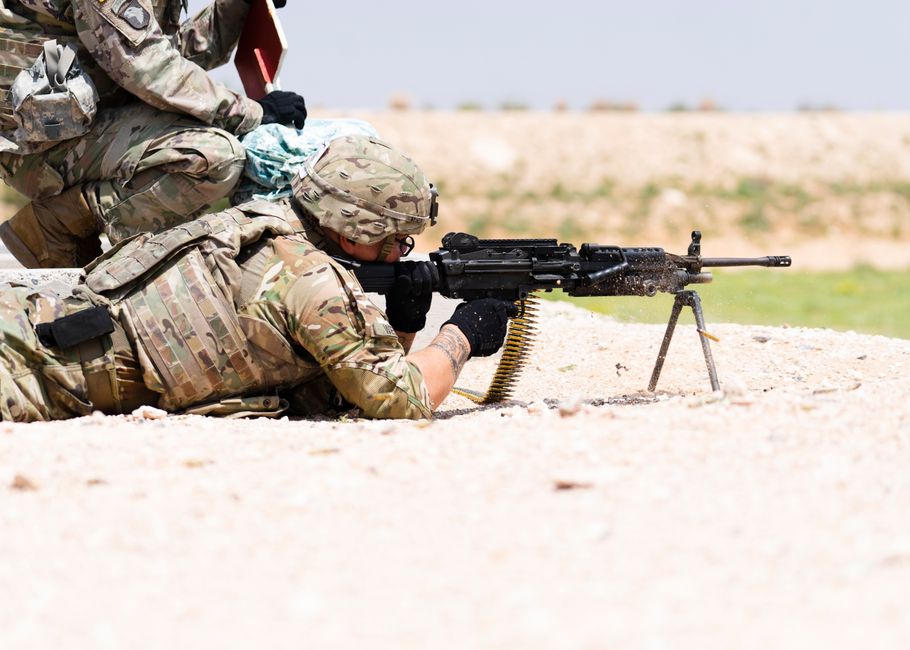
The United States, in response to Iranian regional expansionism and the threat posed by extremist groups like ISIS, has maintained a significant military presence in Jordan for decades. This presence is multifaceted, encompassing air force bases, training facilities, and special operations forces. Key US installations, such as Al-Udeid Air Base in Qatar and installations within Jordan itself, serve as crucial hubs for intelligence, surveillance, and reconnaissance (ISR) operations targeting Iran and its proxies. US troops in Jordan are primarily focused on counter-terrorism operations, deterring aggression from Iran-aligned militias, and providing strategic support to the Jordanian Armed Forces (JAF). The US also utilizes Jordan as a staging ground for operations in Syria, where American forces are engaged in a protracted effort to counter remnants of ISIS and prevent the resurgence of extremist ideologies. The presence of these US troops is often framed within the broader context of regional security architecture, aimed at reassuring allies, containing Iranian influence, and maintaining freedom of navigation in vital waterways. The strategic rationale for the US presence is rooted in the belief that a stable Jordan is crucial for regional security and that preventing Iran from achieving unchecked dominance is paramount to protecting US interests and those of its allies.
The interaction between Iran-aligned forces and US troops in Jordan is not typically characterized by direct, overt confrontation within Jordanian borders, but rather by a constant state of heightened vigilance and indirect competition. This competition plays out in the intelligence domain, with both sides seeking to understand and influence the other’s movements and intentions. US forces conduct extensive ISR missions to monitor Iranian activities and the movements of its proxies in neighboring countries, sharing this intelligence with Jordan. Conversely, Iran and its affiliates constantly assess US troop deployments and capabilities within Jordan, seeking to identify vulnerabilities and potential targets. This intelligence war is a crucial component of the broader geopolitical struggle, where information dominance can translate into strategic advantage. Moreover, the indirect nature of this competition means that incidents, when they occur, are often attributed to proxy actions or miscalculations, creating a complex blame game and fueling regional tensions. The Jordanian government finds itself in a precarious position, balancing its security needs and alliance with the US against the potential for Iranian retaliation should it be perceived as overtly hostile to Tehran.
The geopolitical implications of Iran-US troop presence in Jordan are far-reaching and deeply concerning for regional stability. Jordan’s fragile economic situation and its reliance on foreign aid make it particularly vulnerable to regional instability. An escalation of tensions between Iran and the US, or between Iran-aligned militias and US forces operating from Jordanian soil, could have devastating consequences for the Hashemite Kingdom. This could manifest in the form of increased refugee flows from neighboring conflict zones, disruption of trade routes, and a heightened risk of direct attacks or sabotage within Jordan. The presence of US troops, while providing a security umbrella, also makes Jordan a potential target for Iranian retaliation, especially in scenarios where US forces are perceived to be directly threatening Iranian interests. Conversely, Iran’s continued efforts to expand its influence through proxies in Syria and Iraq create a constant security threat for Jordan, necessitating a robust defensive posture and continued US military support. The delicate balancing act that Jordan performs between these competing powers underscores the immense pressure placed upon its leadership to maintain internal stability and national sovereignty.
The nature of Iranian influence in Jordan’s vicinity is a key driver of US military posture and deployment decisions. Iran’s support for groups like the Houthi rebels in Yemen, its involvement in the Syrian civil war, and its backing of Shiite militias in Iraq have created a contiguous arc of influence that directly borders Jordan. This has led to a persistent concern for Jordan’s security, particularly regarding the potential for weapon smuggling and the infiltration of extremist elements. The IRGC’s doctrine of asymmetric warfare and its reliance on proxy forces mean that Iran can project power and exert influence without direct military confrontation, a strategy that poses a significant challenge for conventional military forces. The ongoing conflict in Syria, where Iranian-backed militias are heavily involved, has created a direct and immediate security challenge for Jordan, with skirmishes and cross-border incidents being a recurring concern. The fear of Iran establishing permanent military bases or significant proxy footholds in close proximity to Jordan is a primary driver for US strategic planning and troop deployments.
US military strategy in Jordan is largely defensive and deterrent-oriented, aiming to prevent Iranian aggression and protect vital US interests and allies. This involves a combination of forward-deployed forces, robust intelligence gathering, and joint military exercises with the JAF. The objective is to signal to Iran that any attempt to destabilize the region or attack US interests would be met with a swift and decisive response. US forces in Jordan are equipped with advanced surveillance technology and are trained to operate in complex, asymmetric environments. The focus is on projecting power and maintaining a credible deterrent without provoking an unnecessary escalation of conflict. However, the inherent risks of such deployments cannot be ignored. The presence of foreign troops, even allied ones, can be a sensitive issue in any host nation, and any misstep or perceived overreach can have significant political ramifications for the host government. The US maintains a careful dialogue with the Jordanian government to ensure that its operations are conducted in a manner that respects Jordanian sovereignty and does not exacerbate regional tensions.
The strategic importance of Jordan as a platform for regional security operations is undeniable. Its geographical location allows for rapid response to emerging threats across the Levant and the Arabian Peninsula. US air power, based in Jordan and nearby facilities, can project influence and provide support to regional partners with relative ease. Furthermore, Jordan’s stability is seen as crucial for the wider regional security architecture, as its collapse would create a power vacuum that could be exploited by extremist groups or hostile state actors. The US military presence, therefore, is not just about protecting its own interests but also about investing in the stability and security of a key regional ally. This partnership also extends to intelligence sharing, training, and equipment provision, bolstering Jordan’s own defensive capabilities against the threats it faces from its neighbors. The long-standing military cooperation between the US and Jordan is a testament to their shared security objectives and mutual understanding of the complex regional landscape.
The role of Jordan as a buffer state amplifies the stakes of Iran-US troop interactions. Its neutral stance, though increasingly challenged, is vital for preventing a wider regional conflagration. Any direct clash between Iran-aligned forces and US troops, even if occurring outside Jordanian territory but initiated from or targeting assets within Jordan’s sphere of influence, would inevitably draw Amman into the fray. This delicate balance requires a sophisticated diplomatic and security approach from the Jordanian leadership. They must maintain strong ties with the US for security and economic reasons, while simultaneously managing their relationship with Iran to avoid becoming a direct target. The presence of both US troops and the implicit threat of Iranian-backed militias on its borders creates a constant security dilemma for Jordan. The country has actively sought to de-escalate tensions, advocating for diplomatic solutions and working closely with international partners to counter extremist narratives and prevent radicalization within its own borders, which could be exploited by external actors.
In conclusion, the interplay of Iran-aligned forces and US troops in Jordan is not merely a military or strategic consideration but a deeply interwoven geopolitical reality. It is a dynamic that fuels regional instability, dictates security postures, and places immense pressure on Jordan to navigate a treacherous path between powerful global and regional actors. The continued tension underscores the enduring complexities of the Middle East, where the ambitions of regional powers like Iran clash with the strategic imperatives of global powers like the United States, all within the sensitive confines of a strategically vital but vulnerable buffer state. The future trajectory of this nexus will undoubtedly continue to shape the security landscape of the Levant and beyond, demanding constant vigilance, astute diplomacy, and a deep understanding of the intricate geopolitical forces at play.
