President Prabowo Subianto Bestows National Hero Status Upon Marsinah, Upholding Legacy of Labor Rights Activism

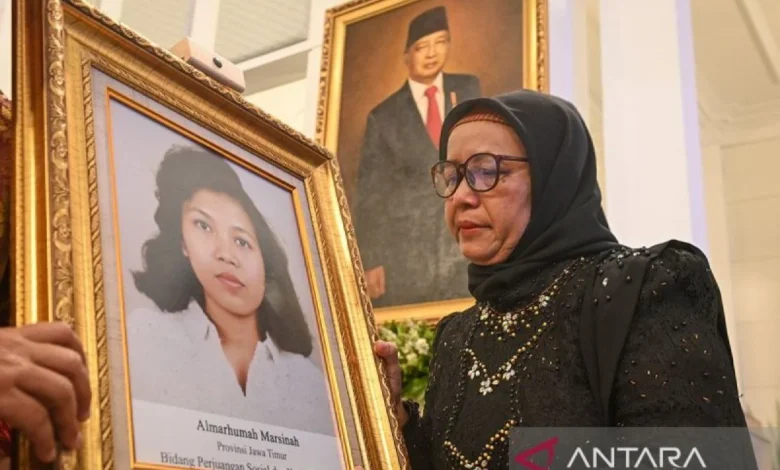
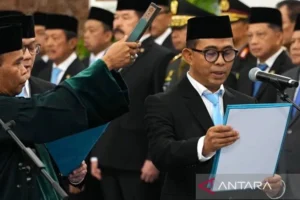
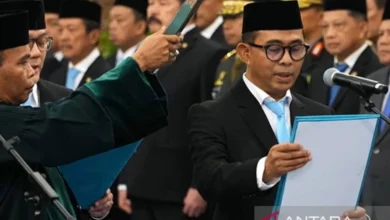
Jakarta, Indonesia – President Prabowo Subianto officially conferred the esteemed title of National Hero upon Marsinah, a courageous labor activist renowned for her unwavering fight for workers’ rights, during a solemn ceremony held at the State Palace in Jakarta on Monday, November 10. The posthumous recognition, enacted through Presidential Decree (Keppres) Number 116/TK/Tahun 2025, positions Marsinah as a powerful symbol of the working class’s resilience in demanding justice, particularly against the backdrop of systemic social inequality and repressive treatment prevalent during Indonesia’s New Order era. This year’s decree acknowledges the profound contributions of ten distinguished figures to the nation, with Marsinah’s inclusion marking a significant moment in the country’s ongoing journey toward historical reconciliation and the recognition of human rights defenders.
The announcement resonated deeply across various segments of Indonesian society, especially among labor organizations and human rights advocates who have championed Marsinah’s cause for decades. Her story, a poignant narrative of dedication culminating in tragedy, has long served as a rallying cry for industrial workers and a stark reminder of the sacrifices made in the pursuit of fundamental human dignity and equitable working conditions. The award is seen not merely as an honor for an individual but as a broader validation of the struggles faced by countless laborers who, like Marsinah, dared to challenge oppressive systems.
A Life Forged in Adversity: Marsinah’s Early Years and Awakening
Marsinah’s journey began on April 10, 1969, in the humble village of Nglundo, Sukomoro District, Nganjuk, East Java. Born into a modest family as the second of three children to Mastin and Sumiani, she was largely raised by her grandmother and aunt, an experience that instilled in her a profound sense of self-reliance and tenacity from an early age. Despite the financial constraints that defined her childhood, Marsinah displayed an indomitable spirit, often contributing to the family income by selling snacks. This early exposure to economic hardship undoubtedly shaped her perspective and fueled her later passion for social justice.
Her formal education commenced at SD Negeri Karangasem 189, followed by SMP Negeri 5 Nganjuk. She briefly pursued religious studies at Pondok Pesantren Muhammadiyah. However, her aspirations for higher education were ultimately curtailed by her family’s limited financial resources, a common plight for many young Indonesians from underprivileged backgrounds during that period. This setback did not deter her drive; instead, it channeled her energies towards securing employment and contributing meaningfully to her community.
In 1989, seeking better opportunities, Marsinah embarked on a journey to Surabaya, East Java’s bustling provincial capital. She resided with her elder sister, Marsini, while diligently searching for work. Her determination led her to a position at SKW plastic factory in the Rungkut industrial estate. A year later, in 1990, she secured employment at PT Catur Putra Surya (CPS), a watch factory located in Porong, Sidoarjo. It was within the confines of this factory that Marsinah’s awareness of labor rights began to sharpen, as she witnessed firsthand the pervasive injustices and exploitative practices endured by her fellow workers. This period marked a pivotal turning point, transforming her from an ordinary factory worker into an emerging advocate for change.
The Genesis of a Movement: The 1993 Strike at PT CPS
The year 1993 became etched in the annals of Indonesian labor history, largely due to the events unfolding at PT CPS. The catalyst for widespread discontent was the refusal of the factory management to implement a provincial directive. In 1992, then-East Java Governor Soelarso had issued Circular Letter No. 50/Th.1992, mandating a 20 percent increase in workers’ wages. This directive was a crucial step towards improving the livelihoods of industrial laborers, many of whom were earning below the minimum wage and struggling to cope with rising living costs. The management of PT CPS, however, chose to disregard this official instruction, sparking deep resentment among its workforce.
The workers’ frustration culminated in a decisive strike on May 3-4, 1993. Marsinah, demonstrating her inherent leadership qualities and courage, stood at the forefront of this protest alongside twelve other colleagues. Their demands were clear and urgent: adherence to the mandated wage increase and the dissolution of the factory-level SPSI (Serikat Pekerja Seluruh Indonesia – All-Indonesia Workers Union) unit. The SPSI, during the New Order regime, was the only officially sanctioned labor union, often criticized for being government-controlled and failing to genuinely represent workers’ interests. The workers at PT CPS believed their SPSI unit was complicit with management, rather than serving as their advocate.
Remarkably, the initial phase of the strike yielded a partial victory. Eleven of the twelve demands put forth by the protesting workers were reportedly agreed upon by the factory management. This momentary triumph, however, proved to be fleeting and ultimately precarious. The following day, the situation took a sinister turn. Thirteen workers, including those prominently involved in the strike, were summoned to the Sidoarjo Military District Command (Kodim Sidoarjo). Under duress, they were compelled to sign letters of resignation, effectively terminating their employment and silencing their dissent. Upon learning of this alarming development, Marsinah, ever the steadfast champion of justice, bravely sought clarification. She went to the Kodim to request copies of these forced resignation letters, hoping to pursue legal avenues and clarify the fate of her colleagues. This act of courage marked her last known public appearance.
A Tragic Disappearance and the Discovery of a Martyr
Following her courageous attempt to aid her colleagues, Marsinah vanished without a trace. Her disappearance sent ripples of fear and anxiety through the local community and among her fellow activists. The hope for her safe return was tragically shattered on May 8, 1993, when her lifeless body was discovered in a secluded hut in Desa Jegong, Wilangan District, Nganjuk – a considerable distance from Porong. The scene was horrifying: her body bore extensive signs of severe torture and brutal violence, indicating a particularly gruesome end. Her death immediately ignited public outrage and became a searing indictment of the harsh repression faced by workers and activists under the New Order regime.
The discovery of Marsinah’s body sparked a national outcry and international condemnation. Human rights organizations, both within Indonesia and abroad, demanded a thorough and transparent investigation into her murder. The case quickly became a symbol of the egregious human rights violations perpetrated against those who dared to challenge the state-sanctioned order. The subsequent investigations and trials were fraught with controversy and suspicion. Several individuals, including factory managers, were arrested and charged. However, the legal proceedings were widely criticized for their perceived lack of credibility and for failing to genuinely uncover the masterminds behind the heinous crime. Ultimately, the true perpetrators and the full extent of the conspiracy behind Marsinah’s murder remain shrouded in mystery, an enduring stain on Indonesia’s justice system.
The Broader Context: Labor Rights and Repression in New Order Indonesia
Marsinah’s struggle and tragic demise must be understood within the broader socio-political landscape of New Order Indonesia (1966-1998). This era was characterized by an authoritarian government that prioritized economic development and political stability, often at the expense of fundamental human rights, particularly those pertaining to freedom of association and expression. Labor movements were tightly controlled, with the government actively suppressing any independent union activities deemed to threaten national stability or economic growth.
The All-Indonesia Workers Union (SPSI) was the sole officially recognized labor organization, and its leadership was often appointed by the government or closely aligned with state interests. This structure effectively prevented workers from genuinely advocating for their rights, as independent collective bargaining was virtually nonexistent. Strikes and protests were frequently met with swift and severe repression, often involving the military and security apparatus. Workers demanding better wages, improved working conditions, or the right to form independent unions faced intimidation, arbitrary arrests, and even violence, as tragically exemplified by Marsinah’s case.
The economic policies of the New Order, while leading to periods of significant growth, often resulted in a vast wealth disparity. Industrialization led to a surge in factory jobs, but these positions were frequently characterized by low wages, long hours, and poor safety standards. This created a fertile ground for discontent among the working class, but the mechanisms for expressing grievances were systematically stifled. Marsinah’s activism was a direct challenge to this repressive system, making her a dangerous figure in the eyes of those who benefited from the status quo. Her murder sent a chilling message to other potential labor activists, reinforcing the climate of fear.
The Path to Recognition and Enduring Legacy
For nearly three decades, human rights organizations, labor unions, and Marsinah’s family have relentlessly campaigned for her official recognition and for justice in her unresolved murder case. Various attempts were made over the years to have her declared a National Hero, reflecting a persistent societal demand to acknowledge her sacrifice and the importance of her cause. The decision by President Prabowo Subianto to grant her this posthumous honor is therefore a culmination of these long-standing efforts and carries profound symbolic weight.
The award is not merely a gesture of remembrance; it is a powerful affirmation that Marsinah’s struggle was not in vain. It officially recognizes her as a figure who embodied exceptional courage and made significant contributions to the nation by defending the rights of the marginalized. For many, this acknowledgment serves as a crucial step towards healing historical wounds and providing a measure of official validation for the victims of past human rights abuses.
Reactions and Implications
The announcement has elicited a range of reactions from key stakeholders. Said Iqbal, President of the Confederation of Indonesian Trade Unions (KSPI), hailed the award as a monumental recognition of the labor movement by the state. "This title is not just for Marsinah but for all Indonesian workers. It signifies that the state acknowledges the importance of labor rights and the sacrifices made to achieve them," Iqbal stated, emphasizing the renewed hope it brings for the ongoing fight for decent work and social justice.
Human rights organizations, such as KontraS (Commission for the Disappeared and Victims of Violence), while welcoming the recognition, also underscored the imperative for continued efforts to resolve the mystery of her murder. "The title of National Hero is important, but true justice requires the uncovering of the truth and accountability for those responsible for her death," a KontraS representative remarked, highlighting the persistent demand for legal closure.
Marsinah’s family, represented by her elder sister Marsini, expressed immense pride and gratitude. "This is an honor for our entire family. Marsinah fought for what was right, and now her bravery is recognized by the nation," Marsini reportedly shared, acknowledging the bittersweet nature of the award in the absence of full justice.
Academics and historians view the award as a significant moment for Indonesia’s historical memory. Dr. Budiarto, a political historian specializing in the New Order era, noted, "The recognition of Marsinah as a National Hero under the current administration signals a willingness to confront darker chapters of our history. It can serve as a foundation for broader reconciliation and a re-evaluation of past injustices, particularly concerning labor and human rights."
The implications of this award are multifaceted. Firstly, it reinforces the principle that fighting for human rights, even against formidable state power, is a heroic act worthy of national veneration. Secondly, it sends a strong message to current and future generations of workers and activists that their struggles for justice are recognized and valued. Thirdly, for President Prabowo Subianto, whose past has been scrutinized regarding human rights issues, this decision may be interpreted as an effort to foster national unity and reconciliation, signaling a commitment to addressing historical grievances. Finally, it keeps the conversation about unresolved human rights cases alive, potentially spurring renewed calls for investigations into other similar incidents from the New Order era.
A Continuing Source of Inspiration
Marsinah’s story, now officially enshrined in the pantheon of Indonesian heroes, continues to serve as an enduring source of inspiration for activists, labor unions, and all those who believe in the fundamental right to justice and dignity in the workplace. While the full truth behind her brutal murder remains elusive, her legacy as a fearless advocate for the oppressed is now indelibly etched into the national consciousness. Her name resonates as a powerful reminder that the fight for human rights is a continuous endeavor, and that the courage of individuals can indeed shape the course of a nation’s history. The awarding of National Hero status ensures that Marsinah’s voice, though silenced decades ago, will echo through generations, forever inspiring the pursuit of a more just and equitable society.