
Japanese legendary singer, actor, and voice artist Akihiro Miwa, also known by his birth name Shingo Maruyama, has passed away at the age of 91. Miwa died peacefully last week on June 20, 2026, with the news of his passing publicly disclosed by his family on Sunday, June 28, 2026. While the exact cause of death was not officially announced, family representatives indicated that he passed away calmly due to advanced age, concluding a life that profoundly shaped Japan’s cultural and entertainment landscape for over half a century.
A Quiet Farewell: Family Wishes and Public Remembrance
In adherence to Akihiro Miwa’s personal wishes, the family held a private funeral ceremony, a solemn event attended only by close relatives and friends. They respectfully declined monetary donations and floral tributes from fans and the public, emphasizing Miwa’s desire for a simple and dignified farewell. Despite the private nature of the funeral, the family has arranged for a public altar, providing an opportunity for legions of fans to pay their final respects to the beloved artist. In a poignant gesture, Miwa was interred with a collection of heartfelt letters from his admirers, symbolizing the deep connection he shared with his audience throughout his illustrious career. His health had reportedly been in decline over the past three months, prompting him to significantly reduce his workload and spend more time resting at home in the period leading up to his peaceful passing.
The Genesis of a Legend: Early Life and Formative Years
Born Shingo Maruyama on May 15, 1935, in Nagasaki, Japan, Akihiro Miwa emerged from the ashes of post-war Japan to become a transformative figure in the nation’s cultural scene. His early life was marked by the profound trauma of the atomic bombing of Nagasaki, an experience that, while rarely explicitly discussed in his artistic work, undeniably colored his worldview and perhaps fueled his later pursuit of beauty and unique expression. Miwa began his career in the mid-1950s, initially as a cabaret singer in Ginza, Tokyo. It was during this period that he began to cultivate his distinctive persona, famously performing in lavish feminine attire and heavy makeup, challenging the rigid gender norms prevalent in conservative post-war Japanese society. This audacious artistic choice was revolutionary at the time, positioning him not just as an entertainer but as a cultural provocateur and a pioneer in gender non-conformity long before such concepts gained mainstream recognition. His early performances were known for their dramatic flair, his powerful vocal range, and his fearless embrace of an identity that defied traditional expectations. This foundational period established him as an artist who was unafraid to push boundaries, laying the groundwork for a career characterized by artistic courage and unwavering individuality.
Theatrical and Cinematic Grandeur: A Diverse Filmography
Miwa’s transition from cabaret stages to the silver screen marked a significant expansion of his artistic reach. His unique theatrical presence translated powerfully into film, where he became known for his captivating and often boundary-pushing roles. Among his most celebrated live-action performances were his titular roles in the cult classics Black Lizard (Kurotokage, 1968) and Black Rose Mansion (Kuro Bara no Yakata, 1969).
In Black Lizard, directed by Kinji Fukasaku and based on a novel by Edogawa Ranpo, Miwa portrayed the enigmatic and seductive master thief, Madame Midori, also known as the Black Lizard. His portrayal was lauded for its blend of sophisticated elegance, cunning intellect, and a palpable sense of danger, making the character an enduring icon of Japanese cinema. The film itself, a stylish and campy thriller, benefited immensely from Miwa’s theatricality, cementing his status as a unique leading man who transcended conventional masculinity. His performance was not merely cross-dressing; it was a profound embodiment of a complex character that challenged audience perceptions of gender, power, and desire.
Following this success, Miwa starred in Black Rose Mansion, directed by Fukasaku and often associated with Yukio Mishima, who wrote the screenplay. Here, he once again captivated audiences with his portrayal of a mysterious and alluring figure, further solidifying his reputation for taking on roles that explored themes of identity, desire, and societal transgression. These films were not only significant for their artistic merit but also for their cultural impact, introducing a broader audience to Miwa’s fearless artistry and cementing his place as an actor willing to explore the fringes of conventional storytelling. His work in these films, alongside his stage performances, established him as a true pioneer, paving the way for future generations of artists who would dare to challenge established norms.
The Voice of Legends: Studio Ghibli and Beyond
While his live-action roles were iconic, Akihiro Miwa’s voice acting work, particularly with the acclaimed Studio Ghibli, introduced his distinctive talent to a global audience and etched his performances into the annals of animation history. His unique vocal timbre—deep, resonant, and capable of conveying immense gravitas, wisdom, and occasionally, a mischievous menace—made him a perfect choice for characters requiring profound depth and commanding presence.
One of his most memorable voice roles was as Moro, the Wolf God, in Hayao Miyazaki’s epic masterpiece Princess Mononoke (Mononoke Hime, 1997). Moro is a formidable and ancient deity, the protector of the forest and a fierce matriarchal figure to San (Princess Mononoke). Miwa’s voice lent an unparalleled authority and spiritual weight to Moro, perfectly capturing her ancient wisdom, unwavering resolve, and profound connection to nature. He conveyed both her ferocity in battle against humanity and her deep, maternal love for her wolf children and San. The character’s iconic lines, delivered with Miwa’s distinct cadence, became instantly recognizable and integral to the film’s powerful narrative about environmentalism and the clash between humanity and nature. Miyazaki’s choice of Miwa for such a pivotal and revered character underscored the director’s appreciation for Miwa’s ability to imbue animated figures with extraordinary emotional and mythical depth. Princess Mononoke went on to achieve immense critical and commercial success worldwide, becoming a landmark in animation and further solidifying Miwa’s international recognition.
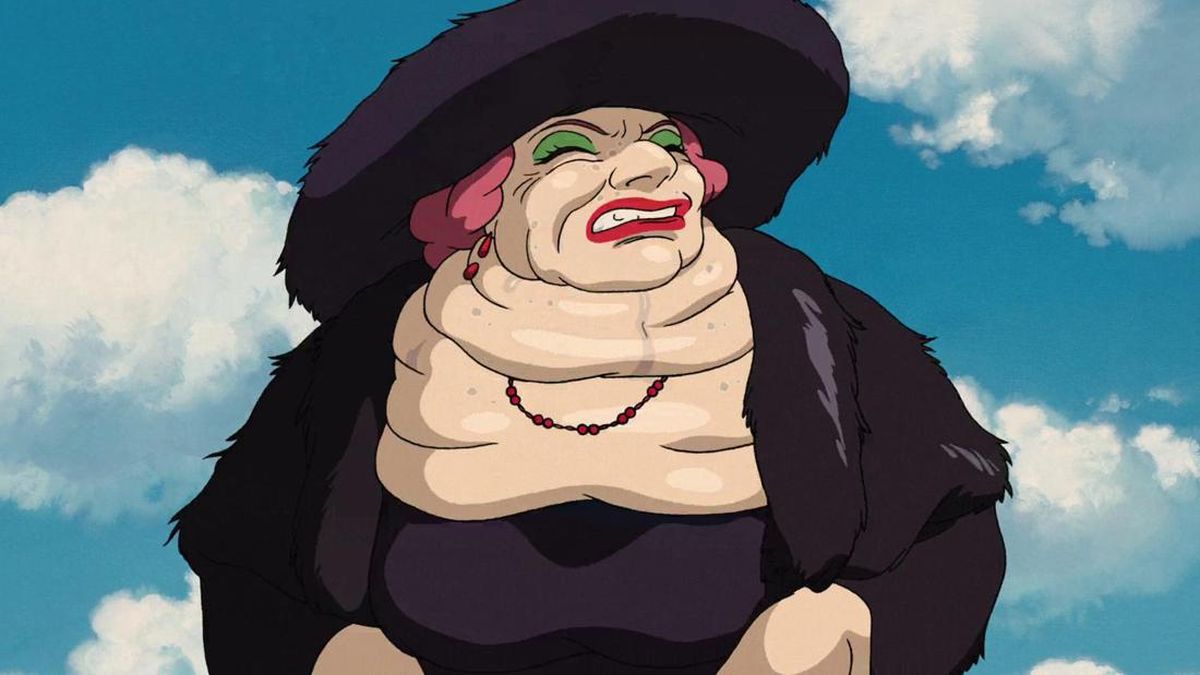
Seven years later, Miwa once again collaborated with Studio Ghibli, lending his voice to the equally iconic character of the Witch of the Waste in Miyazaki’s Howl’s Moving Castle (Howl no Ugoku Shiro, 2004). This role showcased Miwa’s incredible versatility, as he navigated the character’s complex transformation from a powerful, malevolent sorceress to a frail, somewhat senile old woman. Initially, Miwa’s voice embodied the Witch’s formidable magical power, her vanity, and her menacing presence, creating a truly intimidating antagonist. However, as the story progresses and the Witch loses her powers, Miwa skillfully adapted his vocal performance to convey her vulnerability, her stubbornness, and even moments of unexpected comedic relief. This nuanced portrayal allowed the audience to see beyond the initial villainy, adding layers of humanity to a character that could have easily remained one-dimensional. The film, another global phenomenon for Studio Ghibli, greatly benefited from Miwa’s ability to give such an iconic character both grandeur and a surprising degree of pathos.
Beyond his work with Ghibli, Miwa also contributed his vocal talents to other significant animated projects. Notably, he voiced the legendary Pokémon Arceus in Pokémon: Arceus and the Jewel of Life (Gekijōban Poketto Monsutā Daiyamondo to Pāru: Aruseusu Chōkoku no Jikū e, 2009). In this role, he brought a sense of ancient power and divine wisdom to the titular mythical Pokémon, further demonstrating his ability to lend gravitas to characters across diverse genres and target audiences. His contribution to the Pokémon franchise cemented his place as a versatile voice actor capable of resonating with younger generations while maintaining his artistic integrity.
Beyond Entertainment: Activism and Cultural Iconography
Akihiro Miwa’s influence extended far beyond his captivating performances; he was a true cultural icon and, in many ways, an inadvertent activist. From his early days in cabaret, he fearlessly embraced and celebrated his unique identity, challenging the prevailing social conservatism of post-war Japan. His public persona, characterized by his extravagant fashion, theatrical makeup, and unapologetic self-expression, was a powerful statement against conformity. In a society that often favored homogeneity, Miwa stood out as a beacon of individuality and artistic freedom.
While he may not have explicitly labeled himself an "LGBTQ+ activist" in the modern sense, his mere existence and unwavering presence in the public eye had a profound impact. He normalized gender fluidity and alternative forms of expression at a time when such concepts were largely stigmatized or hidden. His career, spanning more than 50 years, served as a testament to resilience and authenticity. He endured criticism and misunderstanding but consistently commanded respect for his artistic talent and unwavering commitment to his identity. Miwa’s work and life paved the way for greater acceptance and understanding of diverse identities in Japan, inspiring countless individuals to embrace their true selves. He became a symbol of defiance against societal pressures, demonstrating that one could achieve immense success and cultural reverence without compromising one’s unique spirit. His influence can be seen in subsequent generations of Japanese artists and public figures who have found greater freedom to express themselves authentically.

Legacy and Enduring Influence
Akihiro Miwa’s passing marks the end of an extraordinary era, but his legacy will undoubtedly endure as a cornerstone of Japanese arts and culture. He was a polymath of unparalleled talent, seamlessly transitioning between roles as a celebrated singer, a groundbreaking actor in both live-action and animated films, a captivating television personality, and an insightful author. His unique ability to command attention, whether through a soaring vocal performance, a nuanced character portrayal, or a powerful spoken word, set him apart.
The void left by his departure is deeply felt across the entertainment industry and by his vast global fanbase. Colleagues and critics alike are expected to reflect on his unparalleled contributions. Hayao Miyazaki, for instance, has historically praised Miwa’s unique ability to convey profound depth and emotion, often remarking on how Miwa’s voice could give animated characters a soul that transcended the visual medium. His Ghibli roles, in particular, introduced his distinct vocal artistry to millions worldwide, ensuring that his voice will forever be synonymous with some of animation’s most beloved and powerful characters.
Miwa’s pioneering spirit, his artistic courage in challenging societal norms, and his unwavering commitment to authenticity will continue to inspire future generations of artists. He demonstrated that true artistry knows no bounds, whether of genre, medium, or societal expectation. His work ignited discussions about identity, gender, and the power of individual expression, discussions that remain highly relevant in contemporary global society. Akihiro Miwa was not just a performer; he was a cultural phenomenon, a trailblazer who used his immense talent to broaden horizons and enrich the human experience. His memory will live on through his timeless performances and the profound impact he had on the cultural fabric of Japan and beyond.