China Deploys Advanced Powered Pontoon Bridge for Record-Breaking Flood Evacuation in Guangxi, Rescuing Over 6,000

In a remarkable display of advanced disaster response technology, China recently deployed a sophisticated self-powered pontoon bridge to evacuate more than 6,000 students and staff trapped by severe, record-breaking floods in Guigang, within the Guangxi Zhuang Autonomous Region of Southern China. This innovative engineering solution proved critical in navigating the treacherous, inundated landscape, providing a vital lifeline amidst a crisis triggered by unprecedented rainfall. The swift and efficient operation underscored China’s growing capabilities in leveraging high-tech infrastructure for large-scale humanitarian efforts, drawing international attention to its disaster preparedness strategies.
Chronology of a Crisis and Rapid Response
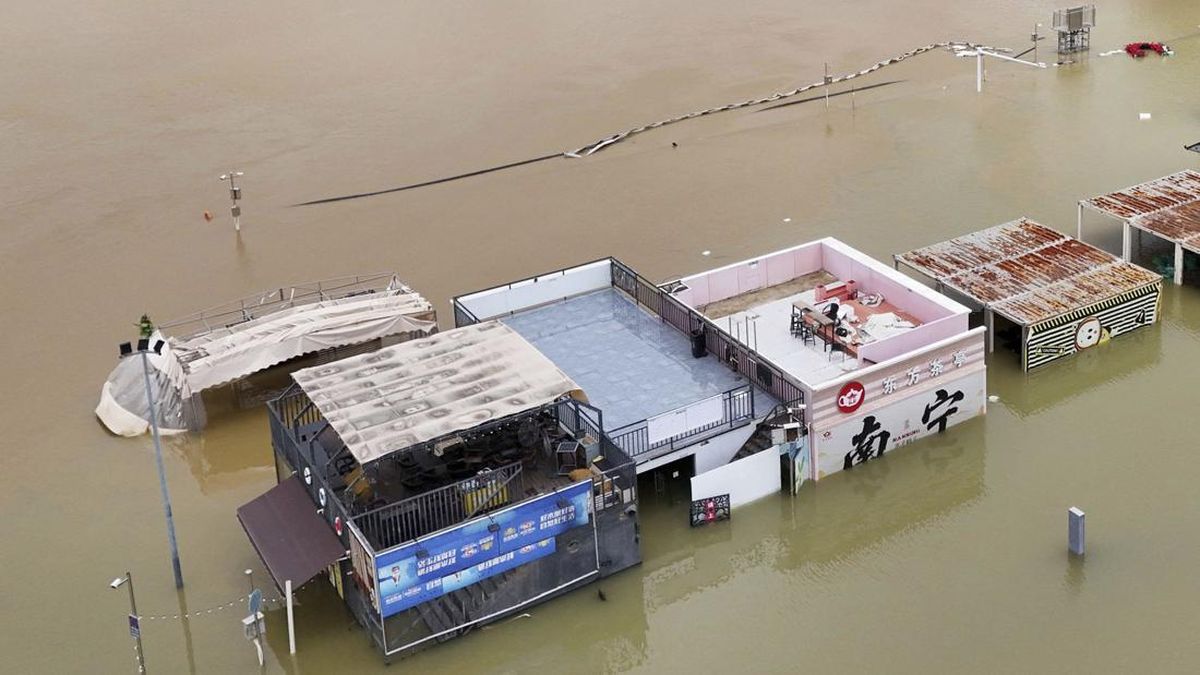
The crisis unfolded with startling rapidity on the evening of Tuesday, July 7th, when torrential rains, described by local authorities as record-breaking for the region, led to flash floods that engulfed an expansive educational complex in Guigang. Within hours, the rising waters trapped over ten thousand students and faculty members within various buildings, cutting off conventional escape routes and plunging the campus into a precarious state. The suddenness of the deluge left little time for pre-emptive evacuation, turning the educational hub into an isolated island amidst a rapidly swelling expanse of water.
As dawn broke on Wednesday, July 8th, the full extent of the disaster became clear. Water levels continued to rise, posing an immediate threat to those stranded and creating immense logistical challenges for any rescue attempt. Emergency services were immediately mobilized, but the sheer scale of the inundation, coupled with the complex layout of the campus—featuring numerous buildings, submerged pathways, and unexpected obstacles—necessitated a highly specialized approach. Traditional rescue boats faced significant limitations in speed and capacity, especially given the urgent need to move thousands of individuals.
Responding to the dire situation, elite rescue teams from the China Anneng Group, a state-owned enterprise specializing in emergency response and construction, arrived on site. Recognizing the unique challenges presented by the submerged campus, they deployed their cutting-edge self-powered pontoon bridge system. This specialized equipment, often lauded for its rapid deployment capabilities, was assembled and operational within approximately ten minutes, a critical factor in saving valuable time during a fast-evolving emergency. The arrival of these "rescue aircraft carriers," as they are sometimes dubbed, signaled a turning point, transforming a scene of isolation and despair into one of hope and organized extraction.
The evacuation process commenced with precision and urgency. Due to the inherent dangers of operating in darkness, particularly with submerged obstacles and shifting debris, active rescue operations were primarily conducted during daylight hours. Lin Feng, Dean of Student Affairs at Guangxi Vocational Polytechnic of Logistics, confirmed that "Evacuation started again at 6 AM once it was bright, because doing it in the dark was too dangerous." This strategic decision, while extending the overall duration, prioritized the safety of both the evacuees and the rescue personnel. Over the course of less than 20 hours of active operation, the pontoon bridge facilitated the safe transport of approximately 6,000 students, staff, and other individuals to secure ground, demonstrating an extraordinary feat of engineering and coordination.
The Prowess of the Powered Pontoon Bridge
At the heart of this successful evacuation was the deployment of China’s advanced powered pontoon bridge technology. This system is far more than a simple floating pathway; it represents a significant leap in mobile bridge engineering designed for rapid deployment in challenging environments, particularly during natural disasters. The "powered" aspect refers to its self-propulsion capabilities, allowing units to navigate autonomously and connect with minimal external assistance, greatly speeding up deployment time compared to traditional, often crane-dependent pontoon systems.
The core components of this system are modular pontoon units, each equipped with its own propulsion system. These units can be quickly linked together to form a stable, continuous bridge platform. In Guigang, the rescue operation utilized a combination of two primary units, capable of accommodating an impressive 300 to 400 people per trip. This high capacity was crucial for evacuating thousands efficiently. Bian Fang, Head of the Emergency Rescue Department at China Anneng Group’s Bureau I, elaborated on the operational strategy: "We deployed three of these units because the terrain was complex and some areas were very narrow." The use of multiple units allowed for greater flexibility, enabling teams to navigate around submerged obstacles, weave through narrow passages between school buildings, and maintain continuous flow during the evacuation. This multi-unit rotation ensured the operation remained agile, safe, and highly efficient, even in the face of unpredictable underwater hazards like submerged trees and debris.
The design philosophy behind these pontoon bridges emphasizes speed and adaptability. The claim of being "assembled in about ten minutes" refers to the rapid connection of pre-positioned modules or the initial deployment of a single unit to establish a foothold. This rapid-assembly feature is invaluable in flash flood scenarios where every minute counts. Furthermore, their sturdy construction allows them to carry significant loads, making them suitable not only for pedestrian evacuation but potentially for light vehicle transport if needed in other contexts. Nicknamed "rescue aircraft carriers," these platforms symbolize China’s strategic investment in robust, deployable infrastructure for emergency situations, capable of transforming vast stretches of water into temporary, stable pathways for mass movement.
A Broader Context: China’s Flood Challenges and Disaster Management
China, with its vast network of major rivers including the Yangtze, Yellow, and Pearl Rivers, is inherently prone to seasonal flooding, particularly during the annual monsoon season which typically spans from late spring to early autumn. The country experiences some of the most severe and widespread floods globally, which frequently result in significant economic losses, agricultural damage, and, tragically, loss of life. Over the past decades, the Chinese government has invested heavily in flood control infrastructure, including dams, levees, and early warning systems, but climate change has introduced new complexities, leading to more extreme weather events and less predictable rainfall patterns. The record-breaking rainfall witnessed in Guangxi is a stark reminder of these evolving challenges.
This incident in Guigang highlights a critical aspect of China’s contemporary disaster management strategy: a dual focus on large-scale infrastructure projects for prevention and sophisticated, rapid-response technologies for mitigation and rescue. While massive engineering projects like the Three Gorges Dam aim to control river flow, mobile and flexible solutions like the powered pontoon bridge are essential for localized, immediate emergencies where fixed infrastructure is either absent, overwhelmed, or inaccessible. The government’s emphasis on rapid deployment and high-capacity rescue tools reflects a proactive approach to minimizing human casualties and disruptions during increasingly frequent extreme weather events.
The effectiveness of the China Anneng Group, a state-owned entity, in deploying such advanced equipment underscores the centralized nature of China’s disaster response. These specialized groups are trained and equipped for a wide range of emergencies, from earthquakes to floods, and their coordinated action is a cornerstone of national resilience efforts. The successful evacuation in Guangxi serves as a case study for how integrated technological solutions and organized emergency services can effectively manage the human impact of large-scale natural disasters.
Voices from the Frontline: Relief and Gratitude
For the thousands trapped within the educational complex, the days leading up to the rescue were marked by anxiety and dwindling resources. Qin Zhiyong, a student at Guangxi Vocational Polytechnic of Logistics, shared his harrowing experience, recounting how he was stranded for "three days and two nights," subsisting on "dry food." His emotional testimony encapsulates the desperation felt by many: "When I saw the rescuers coming, it felt like seeing the light leading home." This sentiment of profound relief was echoed by many of the evacuees, highlighting the psychological toll of being isolated by floodwaters and the immense comfort brought by the arrival of rescue teams.
Official statements further underscored the success and challenges of the operation. Lin Jian, Spokesperson for China’s Ministry of Foreign Affairs, utilized social media platform X (formerly Twitter) to disseminate news of the successful operation, stating: "A ‘rescue ship’ is in action! Self-powered pontoon bridge becomes a floating lifeline, helping to evacuate over 6,000 trapped people to safety in Guangxi, China." This public announcement not only confirmed the scale of the rescue but also showcased China’s advanced capabilities on an international stage.
Bian Fang of the China Anneng Group emphasized the operational complexities, noting that the choice of three units was specifically tailored to the "complex terrain and very narrow" areas within the campus. This adaptability, he stressed, was key to maintaining "liveliness, safety, and efficiency" throughout the arduous process. The strategic deployment and coordination of these units were paramount to overcoming the unique challenges posed by the submerged environment.
Lin Feng, Dean of Student Affairs, expressed immense gratitude to the rescue teams, acknowledging their tireless efforts under difficult conditions. His statement regarding the necessity of daylight operations for safety reasons provides insight into the meticulous planning and cautious execution that characterized the entire rescue. The collaboration between the educational institution and the rescue services was critical, ensuring a smooth and orderly evacuation despite the chaotic circumstances.
Broader Impact and Implications
The successful deployment of the powered pontoon bridge in Guigang carries significant implications beyond the immediate rescue operation, touching upon technological advancement, disaster preparedness, and future resilience.
Firstly, this event serves as a powerful testament to China’s continuous investment in and development of sophisticated disaster response technology. The self-powered pontoon bridge exemplifies a growing trend towards specialized, rapidly deployable engineering solutions that can adapt to diverse and challenging environments. This technological edge not only enhances China’s domestic capacity to respond to natural disasters but also positions it as a leader in innovative emergency infrastructure, potentially offering lessons and even export opportunities for other flood-prone nations.
Secondly, the incident underscores the critical importance of robust disaster preparedness and rapid response mechanisms. While prevention is ideal, the unpredictable nature of extreme weather events necessitates a highly organized and well-equipped emergency infrastructure. The swift mobilization of the China Anneng Group and their specialized equipment demonstrates a national commitment to minimizing casualties and disruption when disasters strike. This preparedness extends beyond just hardware; it includes trained personnel, coordinated logistics, and effective communication channels, all of which were evident in the Guigang operation.
Thirdly, the humanitarian success of evacuating over 6,000 individuals highlights the profound impact of effective disaster management on human lives and well-being. Preventing potential loss of life and ensuring the safety of a large population under duress is the ultimate measure of success in any disaster response. The personal accounts of students like Qin Zhiyong underscore the psychological relief and renewed hope that such timely interventions bring to affected communities.
Looking forward, this experience will undoubtedly inform and refine future flood mitigation and evacuation strategies across China. The lessons learned from navigating complex, submerged urban environments with advanced pontoon technology can be integrated into training programs, emergency protocols, and urban planning initiatives. It might encourage further research and development into even more versatile and resilient mobile infrastructure. As climate change continues to intensify extreme weather events globally, the Guigang rescue operation offers a valuable case study in combining technological innovation with human ingenuity and organizational efficiency to build greater resilience against natural calamities. The tired but safe students disembarking from the pontoon bridge were not just survivors; they were living proof of a nation’s commitment to safeguarding its people through cutting-edge solutions.