China Inaugurates Groundbreaking Satellite-Based AI Computing Network with Launch of Xingshu Plan Constellation


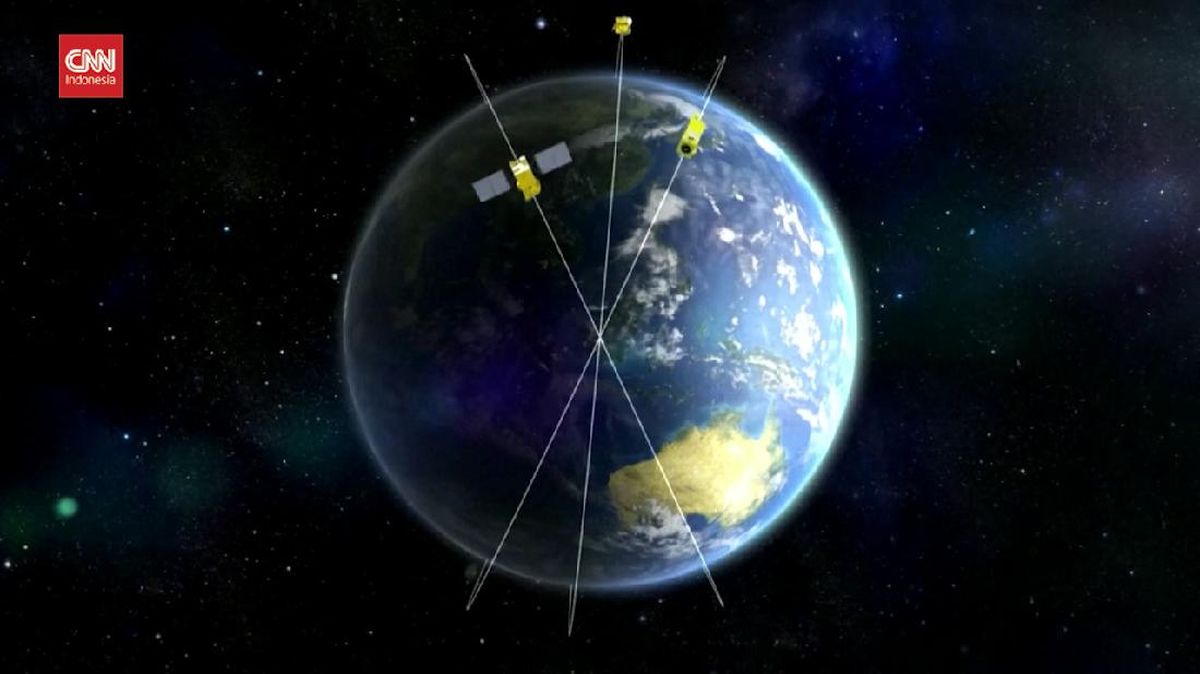
China has officially embarked on a transformative endeavor to establish an orbital artificial intelligence (AI) computing network, commencing with the successful launch of the inaugural constellation for its ambitious Xingshu Plan. This strategic initiative, spearheaded by Shanghai Xingshu Tiansuan Space Technology, aims to deploy a vast network of approximately 1,000 satellites around Earth, fundamentally altering how data is processed and utilized for AI and remote sensing applications. The project distinguishes itself by performing data computation directly in space, a significant departure from conventional methods that rely on transmitting raw data back to Earth for processing. This in-orbit processing capability promises to revolutionize data delivery by substantially reducing latency and alleviating the communication strain on terrestrial networks.
The Xingshu Plan: A New Frontier in Space Computing
The Xingshu Plan, whose name translates from Chinese as "Star Centre," represents a pivotal step in China’s broader strategy to lead the global AI and space technology race. Announced during the prestigious World AI Conference (WAIC) and the High-level Meeting on Global AI Governance 2026 in Shanghai on Saturday, July 18, the project’s initial launch marks a critical milestone. According to Shanghai Xingshu Tiansuan Space Technology, this preliminary deployment brings China considerably closer to the commercial operation of its space-based computing network.
At the core of the Xingshu Plan is the innovative concept of in-orbit data processing. Traditional satellite systems typically collect vast amounts of raw data—from imagery and environmental metrics to communications signals—and then relay this unprocessed information to ground stations. This method can be data-intensive, requiring substantial bandwidth for downlink, and time-consuming, introducing latency as data travels from orbit to Earth, is processed, and then potentially sent back out. The Xingshu Plan circumvents these limitations by integrating powerful AI computing capabilities directly onto the satellites themselves. Instead of merely acting as data conduits, these satellites will perform advanced analytics and AI inferences on the collected data while still in orbit. Only the refined, actionable insights and processed results will then be transmitted to Earth, dramatically reducing the volume of data needing to be sent and the time it takes to deliver meaningful information.
This paradigm shift holds immense potential for applications requiring near real-time data analysis, such as disaster monitoring, rapid environmental assessment, advanced navigation, and sophisticated intelligence gathering. By processing data at the source, the network can provide critical information with unprecedented speed and efficiency, enhancing decision-making capabilities across various sectors.
Phased Development and Ambitious Scale
The Xingshu Plan is envisioned as a multi-stage development, culminating in an expansive constellation of approximately 1,000 satellites. This phased approach allows for incremental deployment, testing, and refinement of the technology before reaching its full operational capacity.
The initial "verification stage" of the project is designed to include two dedicated computing satellites and 12 "edge computing" satellites. These early deployments are crucial for validating the technical feasibility of the in-orbit processing architecture, testing inter-satellite communication links, and assessing the performance of AI algorithms in the harsh space environment. Computing satellites are expected to house more robust processing capabilities, acting as central nodes within segments of the constellation, while edge computing satellites, typically smaller and more numerous, will perform localized data processing closer to the data collection points. This distributed computing model maximizes efficiency and resilience.
Following successful verification, the project will transition to its "commercial stage," where the network is targeted to expand significantly, comprising 50 computing satellites and 100 edge computing satellites. This phase aims to establish a more robust and commercially viable service, offering enhanced data processing capabilities to a broader range of users, including government agencies, private enterprises, and scientific research institutions. The increase in satellite numbers at this stage will enable greater coverage, higher data throughput, and more complex AI applications.
The final "operational stage" is the most ambitious, targeting the deployment of around 1,000 satellites. This extensive constellation would provide near-global coverage and immense computing power in orbit, capable of handling vast streams of data from various sources. Such a large-scale network would transform the landscape of space-based data services, offering unparalleled capabilities for AI-driven insights across the planet. The sheer scale of this proposed constellation underscores China’s commitment to becoming a dominant force in the emerging domain of space-based AI.
Strategic Imperatives: China’s Dual Pursuit of Space and AI Dominance
The Xingshu Plan is not an isolated endeavor but an integral component of China’s overarching national strategies to achieve preeminence in both space technology and artificial intelligence. Under the leadership of President Xi Jinping, Beijing has explicitly articulated its ambition to become a world leader in AI by 2030 and to establish a robust and independent space infrastructure.
President Xi Jinping’s presence at the World AI Conference, where the Xingshu Plan was announced, further highlights the strategic importance China places on these technological frontiers. His consistent rhetoric emphasizes Beijing’s aspiration to lead a new global order centered on AI, positioning China not just as a technological innovator but as a standard-setter and governance leader in this critical domain. The development of advanced, autonomous AI capabilities, particularly those with dual-use potential in both civilian and military applications, is a cornerstone of this national vision.
China’s space program, managed primarily by the China National Space Administration (CNSA), has seen rapid and impressive growth over the past two decades. From its successful lunar missions (Chang’e program) and the construction of its own space station (Tiangong) to the deployment of the BeiDou satellite navigation system (a direct competitor to GPS), China has consistently demonstrated its capacity for ambitious and complex space projects. The Xingshu Plan leverages this growing expertise in satellite manufacturing, launch capabilities, and orbital operations. Furthermore, China has been actively promoting a "Belt and Road Space Information Corridor," aiming to integrate its space infrastructure with partner nations, extending its technological and geopolitical influence.
The convergence of these two strategic pillars—space and AI—in the Xingshu Plan is highly significant. By establishing an independent, powerful, and pervasive AI computing infrastructure in orbit, China aims to secure a critical advantage in information processing, surveillance, and intelligent decision-making, both for domestic development and global strategic positioning. This initiative is a clear signal of China’s long-term commitment to technological self-sufficiency and leadership in key strategic domains.
The Paradigm Shift: Benefits of In-Orbit Data Processing
The shift from transmitting raw data to processing it in orbit offers a multitude of benefits that could redefine the utility of satellite constellations:
-
Reduced Latency: This is perhaps the most significant advantage. By performing computations closer to the data source, the time delay between data collection and actionable insight can be drastically cut. For applications like disaster response, real-time traffic management, or military intelligence, every second saved can be critical. Traditional systems involve multiple hops: satellite to ground station, ground station to processing center, processing center to user. In-orbit processing streamlines this, often delivering results directly to users or local ground terminals.
-
Improved Efficiency and Bandwidth Conservation: Transmitting processed data, which is typically much smaller in volume than raw data, significantly reduces the demands on communication bandwidth. This allows for more efficient use of limited spectrum resources and enables satellites to collect even larger volumes of raw data without overwhelming downlink capacities. It also lowers the energy consumption associated with high-bandwidth data transmission.
-
Enhanced Data Security: Processing sensitive data in orbit can reduce its exposure to terrestrial cyber threats. By performing initial analysis and filtering in space, only relevant and potentially encrypted results need to be transmitted, minimizing the risk of interception or tampering during long-distance transmission over public networks.
-
Greater Autonomy and Resilience: Satellites equipped with advanced AI processing capabilities can operate more autonomously, making intelligent decisions or prioritizing data collection tasks without constant instruction from Earth. This resilience is particularly valuable in scenarios where communication with ground stations might be disrupted or during missions in remote regions.
-
New Applications and Services: The ability to conduct complex AI analysis in space opens doors for entirely new applications. Imagine satellites capable of real-time object recognition for maritime surveillance, immediate anomaly detection in vast environmental datasets, or instantaneous atmospheric modeling for hyper-local weather forecasting. Such capabilities would enable more dynamic and responsive services across various sectors.
Global Race: Competition and Parallel Developments
China’s Xingshu Plan does not exist in a vacuum; it is part of a burgeoning global interest in space-based computing, particularly for AI applications. The report from Reuters explicitly mentions Elon Musk’s SpaceX, which, following its integration with xAI in February, is also reportedly pushing initiatives in space-based computing to accelerate AI development.
SpaceX’s Starlink constellation, already the largest satellite constellation in orbit, provides a potential platform for integrating computing capabilities. While Starlink’s primary focus is global internet connectivity, the underlying infrastructure of thousands of interconnected satellites offers a unique opportunity to experiment with distributed computing nodes. If SpaceX were to equip its future Starlink satellites with AI processing units, it could develop a parallel or even competing space-based AI network. xAI, Musk’s AI company, is focused on understanding the true nature of the universe and developing advanced AI, and leveraging space-based infrastructure for data collection and processing could be a logical extension of its goals.
Beyond SpaceX, various government agencies and commercial entities in the United States and Europe are also exploring concepts related to edge computing in space. The European Space Agency (ESA) and NASA have funded research into AI hardware for space applications, intelligent satellite autonomy, and inter-satellite communication networks that could support distributed processing. Companies like Amazon (with Project Kuiper) and OneWeb are also deploying large constellations, and while their initial focus is on connectivity, the architectural foundation could potentially be adapted for future in-orbit processing capabilities. This growing global interest underscores the recognition that space-based computing, especially for AI, represents the next frontier in satellite technology and information superiority.
The competition is not just about who launches first or who has more satellites, but also about the sophistication of the AI algorithms deployed in space, the efficiency of the computing hardware, and the robustness of the inter-satellite communication architecture. It’s a race for technological leadership, with significant economic and strategic implications.
Technical Hurdles and Operational Challenges
Despite its immense promise, the realization of a large-scale space-based AI computing network like the Xingshu Plan faces formidable technical and operational challenges:
-
Power Consumption and Thermal Management: AI processors, especially those capable of complex computations, require significant electrical power and generate considerable heat. In the constrained environment of a satellite, managing power generation (via solar panels) and dissipating heat (via radiators) efficiently is a major engineering challenge. This is particularly true for edge computing units, which need to be compact yet powerful.
-
Radiation Hardening: Space is a harsh environment characterized by high levels of radiation, which can disrupt electronic components, cause data corruption, or even permanently damage processors. AI hardware must be specifically designed and "hardened" to withstand these radiation effects, adding to complexity and cost.
-
Inter-Satellite Communication: For a distributed computing network to function effectively, satellites must be able to communicate with each other at high speeds and with low latency. This requires advanced inter-satellite links, often using optical (laser) communication, which are complex to implement and maintain across a vast, dynamic constellation.
-
Software Updates and Maintenance: Deploying and updating complex AI software on hundreds or thousands of satellites in orbit presents significant logistical challenges. Remote updates must be reliable and secure, and the system needs to be resilient enough to handle potential software glitches or failures without human intervention.
-
Space Debris and Collision Avoidance: A constellation of 1,000 satellites dramatically increases the risk of collision with existing space debris or other operational satellites. Robust collision avoidance systems, precise orbital mechanics, and effective space traffic management will be crucial for the long-term sustainability of such a network.
-
Cost and Manufacturing Scale: Building, launching, and maintaining 1,000 advanced satellites is an extraordinarily expensive undertaking. China’s ability to mass-produce satellites efficiently and conduct frequent launches at a competitive cost will be critical to the Xingshu Plan’s success.
Implications: Economic, Geopolitical, and Ethical Dimensions
The successful deployment and operation of the Xingshu Plan will have profound implications across economic, geopolitical, and potentially ethical landscapes.
Economic Implications: The Xingshu Plan is poised to stimulate significant economic growth within China’s space and AI sectors. It will drive innovation in satellite design, advanced materials, AI chip development for space, and launch services. Furthermore, the commercial applications arising from enhanced remote sensing and real-time data analytics could create new markets in areas like smart agriculture, environmental monitoring, urban planning, resource management, and logistics. It could also provide China with a competitive edge in offering advanced data services globally, potentially creating a new revenue stream and extending its technological influence.
Geopolitical Implications: This initiative carries significant geopolitical weight. The dual-use nature of advanced space-based AI computing — applicable for both civilian and military purposes — raises concerns among international observers, particularly the United States and its allies. Such a network could significantly enhance China’s intelligence, surveillance, and reconnaissance (ISR) capabilities, providing faster, more precise data for military applications. It could improve targeting, battlefield awareness, and response times, potentially altering strategic balances. The ability to process vast amounts of data in orbit also contributes to information dominance, a key aspect of modern geopolitical competition. Questions around data sovereignty, control over critical information infrastructure, and the potential for selective data access or censorship will become increasingly relevant.
Ethical Dimensions: As AI systems become more autonomous and are deployed in critical infrastructure like space, ethical considerations gain prominence. Ensuring the responsible development and deployment of AI in orbit, particularly regarding decision-making processes, data privacy, and the potential for autonomous actions without human oversight, will be crucial. The "World AI Conference and High-level Meeting on Global AI Governance 2026" where the Xingshu Plan was announced suggests China is aware of these governance issues, at least in rhetoric, though implementation and international cooperation on such frameworks remain challenging.
Looking Ahead: The Future of Space-Based AI
The Xingshu Plan represents a bold and ambitious vision for the future of space technology and artificial intelligence. By pioneering in-orbit data processing, China is positioning itself at the forefront of a technological revolution that promises to unlock unprecedented capabilities for understanding and interacting with our planet. While significant technical and operational hurdles remain, the initial launch underscores China’s unwavering commitment to achieving its strategic objectives in space and AI.
The development of such a large-scale, intelligent satellite constellation will undoubtedly reshape the global landscape of information technology, remote sensing, and national security. As the space race evolves from simply launching objects into orbit to building intelligent, interconnected infrastructures that actively process and analyze data, the Xingshu Plan will serve as a critical benchmark, pushing the boundaries of what is technologically possible and setting the stage for the next era of space exploration and utilization. The world will be watching closely as China endeavors to bring its "Star Centre" vision to full operational reality, with profound implications for global power dynamics and technological advancement.
Related posts: