Indonesia Braces for ‘Strong’ El Niño: BMKG Elevates Intensity Probability to 98% Amidst Worsening Drought Conditions and Global Climate Concerns

Jakarta, Indonesia – The Indonesian Agency for Meteorology, Climatology, and Geophysics (BMKG) has significantly escalated its prediction for the current El Niño phenomenon, now forecasting a 98 percent probability of it reaching "strong" intensity. This marks a dramatic increase from its previous projection of 62 percent, signaling a heightened concern for the country’s climate outlook, particularly during its critical dry season. The updated assessment, disseminated by BMKG through its official Instagram account on Tuesday, June 23, 2026, as part of its climate condition update for the second ten-day period of June 2026, underscores the urgency for robust preparedness and mitigation strategies across the archipelago.
Escalating El Niño Threat and Oceanic Anomalies
The revised forecast from BMKG highlights a concerning acceleration in the development of El Niño, a natural climate pattern characterized by the warming of ocean surface temperatures in the central and eastern tropical Pacific Ocean. This warming can significantly alter global weather patterns, leading to more extreme conditions in various regions, including prolonged droughts in Southeast Asia. The BMKG’s assessment is underpinned by recent observations of sea surface temperature (SST) anomalies in the crucial Niño 3.4 region, which registered an increase of +1.61 during the reporting period. This figure indicates a sustained warm condition that has persistently exceeded the neutral threshold for seven consecutive ten-day periods, signaling a firmly established El Niño event.
The agency emphasized that fluctuations in ocean temperatures in both the Pacific Ocean (associated with the El Niño-Southern Oscillation, ENSO) and the Indian Ocean (related to the Indian Ocean Dipole, IOD) are pivotal drivers influencing Indonesia’s weather patterns. These oceanic phenomena dictate rainfall distribution, air temperatures, and the potential for extreme weather events across the vast Indonesian archipelago. While the Pacific exhibits a strong warming trend, the Indian Ocean Dipole (IOD) currently remains in a neutral phase, recorded at -0.298. A positive IOD typically exacerbates dry conditions in Indonesia, while a negative IOD tends to bring more rainfall. The current neutral IOD, however, does not significantly counteract the strong drying influence projected by the intensified El Niño.
The El Niño-Southern Oscillation (ENSO) and Its Mechanisms
El Niño, the warm phase of the ENSO cycle, is a naturally occurring climate phenomenon driven by complex interactions between the ocean and atmosphere in the tropical Pacific. During an El Niño event, trade winds weaken or even reverse, allowing warm water that typically accumulates in the western Pacific to spread eastward. This shift in warm water distribution affects atmospheric circulation, leading to a cascade of global weather impacts. For Indonesia, El Niño typically results in reduced rainfall, prolonged dry seasons, and increased temperatures. Conversely, La Niña, the cold phase of ENSO, often brings increased rainfall to Indonesia.
The Niño 3.4 region, a key indicator area for monitoring El Niño’s strength, spans from 5°N to 5°S latitude and 170°W to 120°W longitude. Sustained SST anomalies above +0.5°C in this region typically signify an El Niño event, with anomalies exceeding +1.5°C often indicating a "strong" El Niño. The current +1.61 anomaly therefore places the ongoing event firmly in the strong category, justifying BMKG’s updated probability.
The Indian Ocean Dipole (IOD) operates independently but can interact with ENSO to either amplify or mitigate its effects on Indonesia. The IOD refers to the difference in sea surface temperatures between the western and eastern equatorial Indian Ocean. A positive IOD is characterized by warmer waters in the western Indian Ocean and cooler waters in the east, often leading to reduced rainfall over Indonesia. A negative IOD is the reverse, bringing increased rainfall. The current neutral IOD means that its influence is not significantly pushing Indonesia towards either extreme, leaving El Niño as the dominant force shaping the country’s climate in the coming months.
Current Seasonal Progression and Drought Footprint
BMKG’s monitoring of 699 Climate Zones (ZOM) across Indonesia reveals a growing footprint of the dry season. As of the latest update, 37.6 percent of Indonesia’s territory, encompassing 263 ZOMs, is now experiencing the dry season. This figure indicates a significant portion of the country already grappling with reduced rainfall. In contrast, 46.2 percent or 323 ZOMs are still in the wet season, while a further 16.2 percent or 113 ZOMs are categorized as "Type 1 Musim," which typically denotes transitional periods or regions with complex, less defined seasonal patterns.
The regions currently experiencing the dry season are diverse, spanning parts of Sumatra, Java, Nusa Tenggara, and Kalimantan, with some areas in Sulawesi also showing signs of reduced precipitation. These areas are particularly vulnerable to the intensifying El Niño, which is expected to exacerbate drought conditions, potentially leading to water scarcity, agricultural failures, and an elevated risk of forest and land fires. The uneven distribution of seasonal patterns across the archipelago means that while some areas may still receive adequate rainfall, others will face severe challenges, necessitating localized and targeted interventions.
Prolonged El Niño and its Far-Reaching Impacts
The current El Niño phenomenon is not merely strong but also anticipated to be protracted, with BMKG predicting its persistence until early 2027. This extended duration poses a significant threat, as it is expected to intensify and prolong the dry season in Indonesia, rendering it considerably drier and lengthier than average. BMKG clarifies that while the phenomenon itself may endure, its direct and most severe impacts on Indonesian territory are primarily projected to occur throughout the dry season, specifically until October 2026. This window of direct impact is crucial for planning and executing disaster mitigation measures.
The implications of such a strong and prolonged El Niño are multifaceted and severe, touching upon critical sectors including agriculture, water resources, public health, and the broader economy.
1. Agricultural Sector and Food Security:
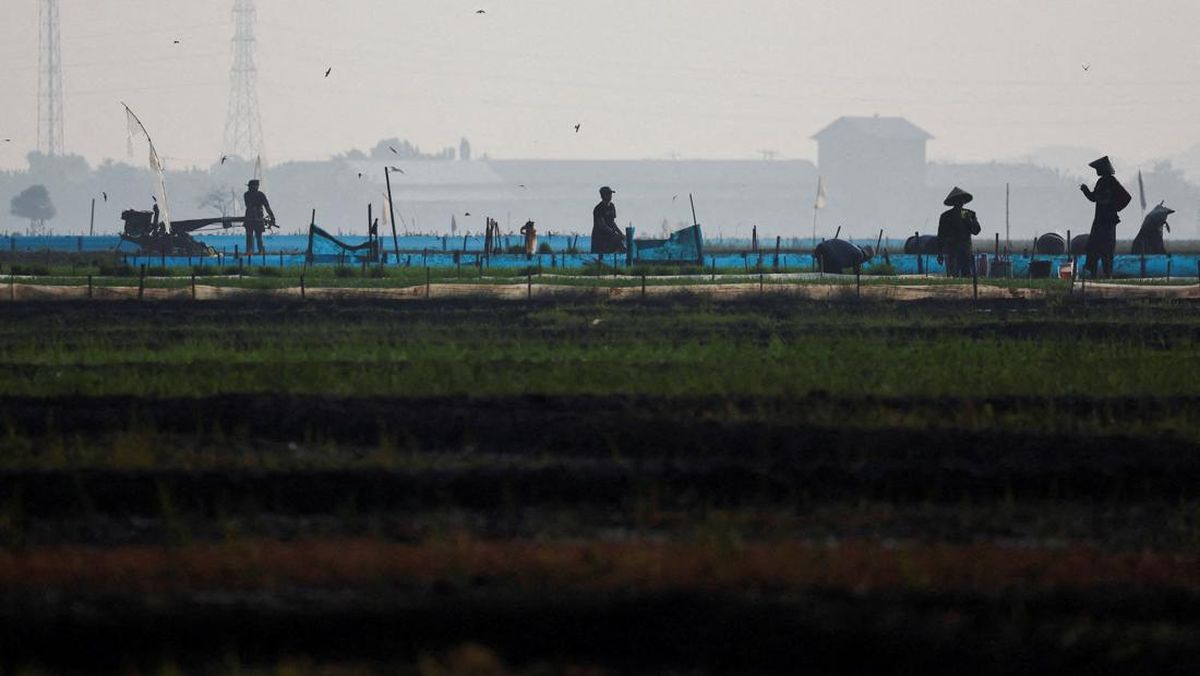
Indonesia, a major agricultural producer, relies heavily on consistent rainfall for its staple crops, particularly rice. A prolonged dry season means reduced water availability for irrigation, leading to potential crop failures, decreased yields, and delayed planting seasons. Smallholder farmers, who constitute a significant portion of the agricultural workforce, are particularly vulnerable due to their limited access to advanced irrigation systems and drought-resistant crop varieties. The impact on food production could trigger price increases for essential commodities, exacerbating food insecurity, especially for low-income households. Beyond rice, other key crops like corn, soybeans, and palm oil plantations could also suffer, affecting both domestic consumption and export revenues.
2. Water Resources Management:
Drought conditions will inevitably lead to decreased water levels in reservoirs, rivers, and groundwater sources. This poses a significant challenge for drinking water supply, industrial use, and hydroelectric power generation. Regions already experiencing water stress will face amplified difficulties, potentially leading to localized water crises and increased competition for dwindling resources. Water management authorities will need to implement stringent rationing measures and explore alternative water sources to sustain communities and essential services.
3. Forest and Land Fires (Karhutla):
One of the most devastating consequences of prolonged drought in Indonesia is the increased risk and intensity of forest and land fires, often referred to as ‘Karhutla’. Peatlands, prevalent in Sumatra and Kalimantan, become highly flammable when dry, leading to persistent and difficult-to-extinguish fires that release vast amounts of greenhouse gases and create transboundary haze pollution. The 2015 El Niño-induced fires, for instance, caused an estimated economic loss of USD 16 billion and severe health crises across Southeast Asia due to hazardous air quality. A strong El Niño in 2026-2027 significantly elevates this risk, threatening ecological devastation, biodiversity loss, and public health emergencies.
4. Public Health Concerns:
The direct and indirect impacts on public health are substantial. Haze from forest fires causes acute respiratory infections (ARIs), eye irritations, and skin conditions, particularly affecting children, the elderly, and individuals with pre-existing respiratory conditions. Prolonged heatwaves associated with El Niño can lead to heatstroke and other heat-related illnesses. Additionally, altered rainfall patterns can affect vector-borne diseases; while drought may reduce mosquito breeding grounds in some areas, stagnant water in others after intermittent rains can create new breeding sites, potentially leading to outbreaks of dengue fever or malaria.
5. Economic Repercussions:
The cumulative impact on agriculture, water resources, and public health will inevitably ripple through the Indonesian economy. Reduced agricultural output could dampen economic growth, particularly in provinces heavily reliant on farming. The costs associated with disaster response, fire suppression, health treatments, and potential economic losses from disrupted trade and tourism could be substantial. The government might need to reallocate funds for emergency relief and recovery, potentially affecting other development initiatives.
Global Context and Climate Change Amplification
The current El Niño is not an isolated event; its global repercussions are being closely monitored by meteorological agencies worldwide. Australia’s Bureau of Meteorology, for instance, has already issued warnings that El Niño patterns have solidified in the tropical Pacific and could evolve into one of the most powerful events in seven decades during the latter half of 2026. This magnitude suggests a potential for widespread and severe climate disruptions across the globe.
Historically, strong El Niño events have been associated with significant global weather anomalies. They typically bring excessive rainfall and cooler conditions to parts of the Americas, particularly along the Pacific coast, while simultaneously inducing hotter and drier conditions across large swathes of Asia, including India, Southeast Asia, and Australia. Such extreme weather variations have profound implications for global agriculture, increasing concerns about food supply stability in some of the world’s most densely populated regions. The interconnectedness of global food markets means that production shortfalls in one major region can trigger price volatility and supply chain disruptions worldwide.
Furthermore, a critical dimension to the current and future El Niño events is their interaction with anthropogenic climate change. Scientists increasingly emphasize that global warming is amplifying the effects of natural climate phenomena like El Niño. Warmer ocean temperatures, a direct consequence of climate change, can provide additional energy to El Niño events, potentially making them more intense or extending their duration. This synergy means that the impacts observed during an El Niño in a warming world could be more severe and unpredictable than those in pre-industrial times, posing unprecedented challenges for adaptation and resilience efforts.
Government Response and Preparedness Strategies
In anticipation of these severe impacts, Indonesian authorities are expected to intensify their preparedness and mitigation efforts. BMKG plays a crucial role as the primary provider of climate information and early warnings, enabling other government agencies and the public to take proactive measures.
- National Disaster Management Agency (BNPB): The BNPB will likely be at the forefront of coordinating disaster response, including pre-positioning resources, preparing for potential evacuations, and leading fire prevention and suppression efforts, especially in peatland areas. Public awareness campaigns on drought management and fire prevention will be critical.
- Ministry of Agriculture: Focus will be on implementing drought-resistant farming practices, optimizing irrigation schedules, developing alternative water sources, and managing national food stocks to ensure adequate supply despite potential harvest shortfalls. Support for farmers, including subsidies or assistance for crop diversification, will be vital.
- Ministry of Health: Efforts will concentrate on public health advisories regarding heat stress and haze exposure, strengthening health facilities for respiratory illnesses, and monitoring for potential outbreaks of vector-borne diseases.
- Water Resources Management: Regional and national water authorities will need to collaborate on integrated water management plans, including optimizing reservoir operations, promoting water conservation, and exploring technologies for water harvesting and recycling.
- Inter-Agency Coordination: Effective response to a strong El Niño requires seamless coordination across multiple ministries and local governments. Integrated disaster management plans, regular communication, and shared data platforms will be essential for a timely and effective national response.
Looking Ahead: Building Long-Term Resilience
The intensified El Niño forecast serves as a stark reminder of Indonesia’s vulnerability to climate variability and change. While immediate efforts will focus on mitigating the short-term impacts, the recurring nature of El Niño and the broader context of global warming necessitate long-term strategies for climate resilience. These include:
- Investing in Climate-Resilient Infrastructure: Developing and upgrading irrigation systems, water storage facilities, and early warning systems for weather extremes.
- Promoting Sustainable Land Management: Implementing policies that prevent deforestation, restore peatlands, and encourage sustainable agricultural practices to reduce fire risks and enhance soil water retention.
- Research and Development: Supporting scientific research into drought-resistant crop varieties, improved weather forecasting models, and innovative water management technologies.
- Community Empowerment: Educating and empowering local communities to understand climate risks, adopt adaptive practices, and participate in disaster preparedness efforts.
- International Cooperation: Collaborating with regional and international partners to share knowledge, resources, and best practices in climate adaptation and disaster risk reduction.
As Indonesia enters a period of heightened climatic uncertainty, the updated BMKG forecast underscores the imperative for swift, decisive, and coordinated action to protect its people, environment, and economy from the escalating threat of a strong and prolonged El Niño. The coming months will test the nation’s resilience and capacity to adapt to the profound challenges posed by a changing climate.
Related posts: