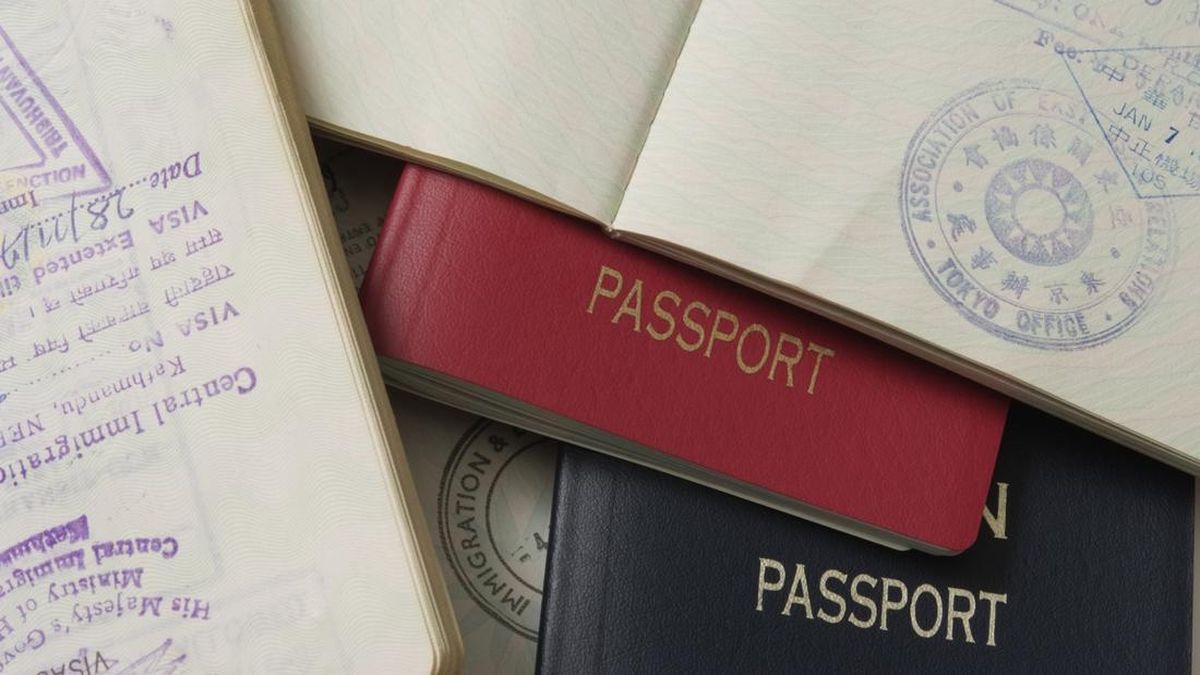
The common traveler grapples with the familiar anxieties of passport applications, lengthy renewal waits, and the stringent six-month validity rule that can derail international plans. Yet, for three unique individuals on Earth, these bureaucratic hurdles are entirely non-existent. These select figures possess the extraordinary privilege of traversing the globe without ever needing to present a passport at immigration checkpoints. The question that naturally arises is: who are they, and what underpins this exceptional exemption?
The Sovereign’s Exemption: The British Monarchy
At the forefront of this exclusive group is the reigning monarch of the United Kingdom, King Charles III. His Majesty does not carry a passport when traveling abroad. This is not merely a matter of royal prerogative but is intrinsically linked to the very foundation of the British passport issuance system.
According to information gleaned from aviation and travel insights, every British passport is issued in the name of the reigning monarch. The interior cover of a British passport bears an official endorsement from "His Britannic Majesty’s Secretary of State," a formal request for the passport holder’s unimpeded passage. The logic dictates that since the monarch is the ultimate authority by whom these documents are issued, it would be incongruous for the King himself to require a passport bearing his own name.
This tradition is not a recent development. The late Queen Elizabeth II, who undertook extensive international travel throughout her 70-year reign, visiting well over 100 countries, never possessed a personal passport.
However, it is crucial to note two important distinctions regarding this privilege: it applies exclusively to the reigning monarch. Queen Camilla, Prince William, Catherine, Princess of Wales, and indeed all other members of the Royal Family are required to carry passports when they travel internationally, though they typically utilize diplomatic passports.
A similar principle of sovereignty extends to other official documents. For instance, the monarch technically does not require a UK driving license, as such licenses are also issued in the monarch’s name. In practice, when the King embarks on a state visit, his private secretary will coordinate through diplomatic channels, providing official notification to the host nation, thereby obviating the need for a physical passport. This process ensures seamless travel arrangements, underpinned by established diplomatic protocols rather than individual documentation.
The Imperial Mandate: The Japanese Emperor
The Emperor of Japan, Naruhito, occupies a parallel position of distinction. A directive from the Japanese Ministry of Foreign Affairs, established on May 10, 1971, stipulates that it is inappropriate for the Emperor to hold a standard passport or to undergo the same immigration and visa procedures as ordinary citizens.
As the supreme head of state of Japan, the Emperor is considered to be above the administrative processes of immigration. When the Emperor undertakes international travel, the Japanese government will formally notify the receiving country in advance. Upon arrival, a special ministerial document is presented as a substitute for a passport.
This official directive from 1971 also extends to the Empress, currently Empress Masako. Like her husband, Empress Masako can undertake international journeys without a passport, relying on inter-governmental diplomatic coordination. Similar to the British system, this exemption is narrowly defined. The Crown Prince, Crown Princess, and other members of the Imperial Family are still required to possess and carry diplomatic passports for their overseas travel.
The Underlying Principle: Sovereignty, Not Popularity
The common thread that unites these extraordinary exemptions is rooted in the concept of sovereignty, rather than mere personal prominence. A passport, in essence, functions as an official request from one sovereign state to another, issued in the name of the head of state or the issuing authority. When an individual is that ultimate authority, the necessity of holding a document that requests passage on their own behalf becomes logically redundant.
Therefore, these exceptions are strictly confined to reigning monarchs and heads of state within specific legal frameworks. They do not extend to prime ministers, presidents in republican systems, or other members of royal or imperial families. The rationale is deeply embedded in the symbolic and legal embodiment of the state that the monarch or emperor represents on the global stage.
Historical Context and Precedents
The practice of heads of state traveling without personal passports has historical roots, evolving alongside the modern concept of international travel and border control. Prior to the widespread adoption of passports in the early 20th century, travel between nations was often less regulated. However, as national borders became more formalized, and the need for identification and authorization for entry became paramount, the passport system emerged.
For monarchs and emperors, their inherent authority and the diplomatic standing of their office predated and, in many ways, transcended the need for individual travel documents. The formalization of passport systems thus had to accommodate these unique constitutional positions.
In the United Kingdom, the practice dates back centuries. The monarch has always been the ultimate source of authority, and the issuance of passports in their name reflects this. When Queen Elizabeth II ascended to the throne, she inherited this privilege, just as King Charles III has. Her extensive travels, often to Commonwealth nations and beyond, were facilitated through diplomatic channels and established protocols that recognized her status as Head of State.
Similarly, in Japan, the Imperial institution holds a unique place in the nation’s history and constitution. The Emperor, as the symbol of the state and the unity of the people, is considered to be above the mundane administrative procedures that govern ordinary citizens. The 1971 directive from the Ministry of Foreign Affairs formalized a practice that likely existed in customary form for much longer, ensuring that the Emperor’s dignity and symbolic role were maintained during international engagements.
Supporting Data and Global Comparisons
While the UK and Japan provide prominent examples, understanding the nuances of passport exemptions requires looking at global practices. Most modern republics, even those with strong presidential systems, do not exempt their presidents from carrying passports. Presidents are typically heads of government as well as heads of state, and their travel is often managed through diplomatic means, but the personal travel document remains a requirement.
For instance, the President of the United States, while a head of state, travels with a US passport, often a diplomatic one for official duties. The Secretary of State or other high-ranking officials may carry diplomatic passports, but the presidential passport is a standard, albeit official, document.
The key differentiator lies in the constitutional nature of the office. Monarchies and empires often have a symbolic head of state whose authority is derived from lineage and tradition, separate from the day-to-day governance handled by elected officials. This separation allows for the unique exemption.
Broader Implications and Analysis
The existence of these passport exemptions highlights the enduring significance of state sovereignty and the symbolic power of heads of state. In an era of increasing globalization and interconnectedness, where borders are meticulously managed, these exceptions serve as a reminder of the historical and constitutional distinctions that continue to shape international relations.
For the individuals in question, the absence of a passport simplifies their international movements, eliminating potential delays and administrative burdens. This allows them to focus on their diplomatic and state duties without the encumbrance of routine travel documentation.
However, it also underscores the inherent inequality in international travel regulations. While the vast majority of the world’s population must adhere to strict passport and visa requirements, these few are afforded a level of freedom that is symbolic of their unique positions. This is not a matter of favoritism but a reflection of deeply entrenched legal and constitutional traditions.
The implications extend beyond mere convenience. The very act of a head of state traveling without a passport reinforces their status as the embodiment of their nation on the global stage. It is a subtle but powerful statement of their authority and the unique relationship between their office and the international community.
In conclusion, while the everyday traveler navigates the complexities of international documentation, the reigning monarch of the United Kingdom and the Emperor of Japan, along with their respective consorts, operate under a distinct set of rules. Their ability to traverse the globe without a passport is not a personal perk but a profound reflection of their sovereign status, a testament to traditions that continue to hold sway in the modern world of international diplomacy and travel.
Related posts: