Understanding the Crucial Distinctions Between Sekolah Kedinasan and Ikatan Dinas for Prospective Students


The landscape of higher education in Indonesia offers a diverse array of pathways, yet few are as highly sought after—or as frequently misunderstood—as the institutions collectively known as official schools or "sekolah kedinasan." As the 2026 academic recruitment cycle approaches, a significant number of high school graduates and their parents continue to grapple with the nuanced terminology that defines these government-affiliated institutions. Specifically, the terms "sekolah kedinasan" and "ikatan dinas" are often used interchangeably in public discourse, leading to misconceptions regarding tuition costs, employment guarantees, and post-graduation obligations. In reality, while these concepts are deeply intertwined, they represent distinct legal and administrative statuses that carry profound implications for a student’s career trajectory and financial responsibilities.
Understanding the difference between an official school and a service-bonding agreement is essential for making an informed decision. Choosing the wrong path based on a misunderstanding of these terms can result in unexpected financial burdens or the absence of the guaranteed civil service placement that many applicants erroneously assume is universal across all government-run colleges.
Defining the Institutional Framework of Sekolah Kedinasan
A "sekolah kedinasan," or official school, refers to a higher education institution that operates under the direct jurisdiction of a government ministry, a non-ministerial government agency (LPNK), or a state institution. Unlike general universities (Perguruan Tinggi Negeri or PTN) which fall under the Ministry of Education, Culture, Research, and Technology, official schools are established to fulfill the specific human resource needs of a particular government body. For instance, the Ministry of Finance oversees PKN STAN to produce tax and accounting experts, while the Ministry of Home Affairs manages IPDN to train future regional administrators.
The primary objective of these schools is "pola pembibitan"—a nurturing pattern designed to create a specialized workforce with technical competencies that are not typically prioritized in a standard academic curriculum. Because these institutions are funded by the state and tailored to specific bureaucratic functions, their admission processes, campus discipline, and curricula differ significantly from conventional universities. However, the mere fact that a school is an "official school" does not automatically mean it offers a "service-bond" status to every student.
The Concept of Ikatan Dinas: More Than Just a Scholarship
"Ikatan dinas," or service bonding, is a specific administrative status or contract attached to a student’s education. When a school or a specific study program is labeled as having an ikatan dinas status, it means that the government has entered into a formal agreement with the student. Under this agreement, the state typically covers the full cost of education, often including dormitory fees and a monthly living allowance (uang saku).
In exchange for this full financial support, the student is legally bound to serve the state for a predetermined period upon graduation. This service usually takes the form of being appointed as a Candidate Civil Servant (Calon Pegawai Negeri Sipil or CPNS). Graduates of ikatan dinas programs do not need to navigate the general job market; they are directly integrated into the ministry or agency that sponsored their education. This certainty of employment is the primary reason why these programs see an overwhelming number of applicants every year, often resulting in acceptance rates lower than 1%.
Conversely, a "non-ikatan dinas" official school operates more like a specialized state college. While the institution is still under a ministry, the students are often required to pay tuition fees (UKT), and there is no guarantee of employment upon graduation. Graduates receive a degree or diploma and must apply for jobs or participate in the general CPNS selection process like any other university graduate.
Core Differences: Funding, Employment, and Obligations
To provide a clearer picture for prospective candidates, the differences between these two paths can be categorized into three main pillars: financial support, career certainty, and flexibility.
1. Financial Responsibility and Subsidies
In an ikatan dinas setting, the state views the student as a future asset and an investment. Therefore, the "cost of investment" (tuition, books, uniforms) is borne by the state budget (APBN). In many cases, such as at the Sekolah Tinggi Ilmu Statistik (STIS) or the National College of State Statistics, students are provided with a stipend to ensure they can focus entirely on their rigorous training.
In non-ikatan dinas schools, such as certain programs within the Ministry of Health’s Polytechnics (Poltekkes) or the National Land College (STPN), students are generally responsible for their own tuition. While these schools might be more affordable than private universities due to government subsidies, they do not offer the "free education" model associated with service-bond programs.
2. Career Placement and CPNS Status
The most significant draw of ikatan dinas is the direct path to becoming an Aparatur Sipil Negara (ASN). Graduates are usually assigned to various regional or central offices based on the needs of the agency. For example, a graduate of the Politeknik Imigrasi (Poltekim) will be directly stationed at immigration checkpoints or offices across Indonesia.
Graduates of non-ikatan dinas schools, however, hold a degree that is highly respected in their specific field but must compete in the open market. A graduate from a Tourism Polytechnic (Poltekpar) under the Ministry of Tourism will have excellent skills for the hospitality industry but is not automatically a civil servant.
3. Post-Graduation Flexibility
While ikatan dinas offers security, it lacks flexibility. Graduates cannot simply resign upon finishing their studies; doing so usually incurs a heavy financial penalty, often requiring the individual to pay back the full cost of their education to the state. Furthermore, they must be willing to be stationed anywhere in the Indonesian archipelago. Non-ikatan dinas graduates have the freedom to work in the private sector, start their own businesses, or pursue further education immediately without state-imposed service obligations.
Profiles of Leading Official Schools in Indonesia
The landscape of these institutions is vast, but they are generally grouped by the ministries that oversee them. Understanding which schools offer ikatan dinas status is vital during the registration period.
1. Ministry of Finance (PKN STAN): Historically the most popular, the Polytechnic of State Finance (PKN STAN) offers various programs in accounting, tax, and customs. While its status has evolved, it remains a primary source for the Ministry of Finance’s workforce.
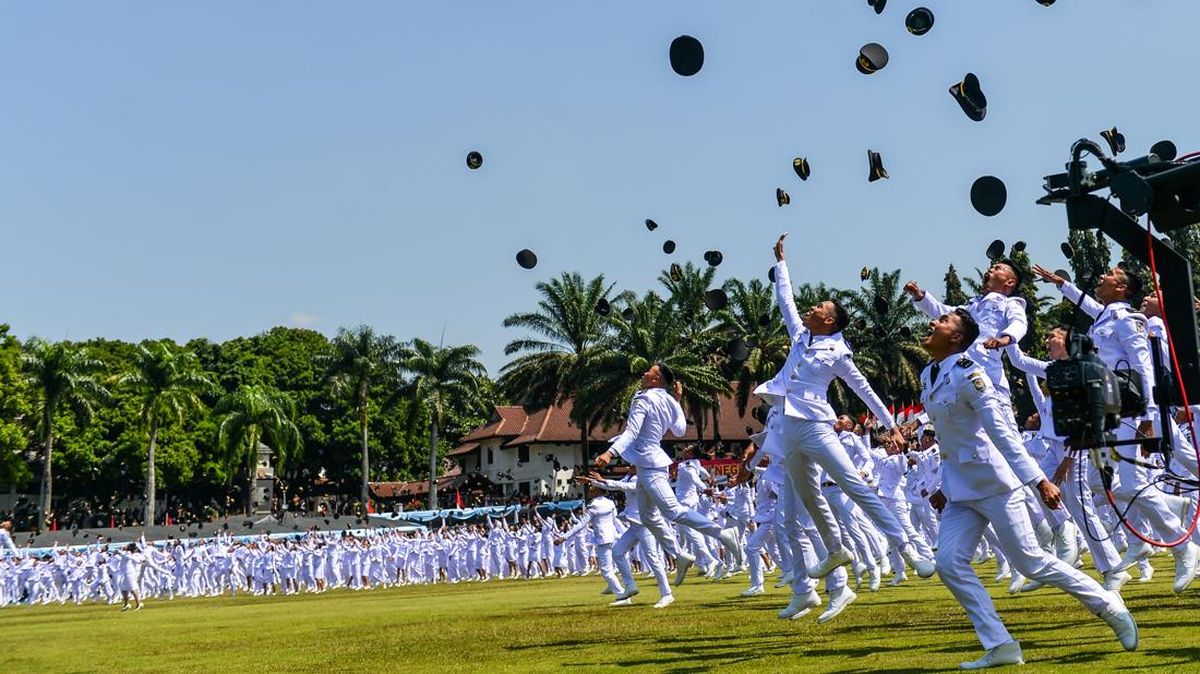
2. Ministry of Home Affairs (IPDN): The Institut Pemerintahan Dalam Negeri is the primary training ground for regional leaders. It is famous for its strict semi-military discipline and its guarantee of placement in local government structures.
3. National Statistics Agency (STIS): The Politeknik Statistika STIS produces data experts. It is one of the most competitive ikatan dinas schools due to the rising demand for data scientists within the government.
4. Ministry of Law and Human Rights (Poltekip and Poltekim): These schools train specialized officers for correctional facilities (prisons) and immigration services. Both offer full ikatan dinas status.
5. State Intelligence Agency (STIN): The Sekolah Tinggi Intelijen Negara is shrouded in more secrecy than others, training future intelligence officers with a direct service bond.
6. Ministry of Transportation: This ministry oversees a vast network of colleges for land, sea, and air transportation. Some programs are ikatan dinas (pola pembibitan), while others are regular professional programs.
7. Non-Ikatan Dinas Examples: The Ministry of Health oversees various Poltekkes across Indonesia. While these are "official schools," they generally do not offer automatic CPNS status. Similarly, the Sekolah Tinggi Pertanahan Nasional (STPN) under the National Land Agency (BPN) offers specialized land administration education but often operates on a non-ikatan dinas basis for many of its programs.
The Rigorous Selection Process: From SKD to Final Placement
The recruitment process for ikatan dinas schools is centralized and highly regulated. It usually begins with a registration portal managed by the National Civil Service Agency (BKN) via the SSCASN DIKDIN system. This ensures transparency and prevents nepotism, as the selection relies heavily on the Basic Competency Test (Seleksi Kompetensi Dasar or SKD).
The SKD is a computer-assisted test (CAT) that evaluates three areas: the National Insight Test (TWK), the General Intelligence Test (TIU), and the Personal Characteristics Test (TKP). Only those who pass the high passing grade and rank within the required quota can proceed to subsequent stages.
Following the SKD, candidates must typically undergo:
- Health Examinations: Rigorous physical checks to ensure the candidate can withstand the demands of the profession.
- Fitness Tests (Samapta): Physical endurance tests including running, push-ups, and pull-ups.
- Psychological Evaluations: To assess mental stability and suitability for government service.
- Interviews and Final Academic Checks: Conducted by the specific ministry to ensure the candidate aligns with the agency’s values.
The Evolution of Government Recruitment and Human Capital Strategy
The Indonesian government’s reliance on official schools is part of a broader "Grand Design" for ASN development. By controlling the education of its future employees, the state ensures that the bureaucracy is staffed by individuals who possess not only the necessary technical skills but also a standardized level of loyalty and administrative discipline.
In recent years, there has been a shift toward digital transformation within the bureaucracy. This has influenced the curricula of official schools, which now place a heavier emphasis on information technology, data integrity, and "e-government" services. Analysis suggests that the government is becoming more selective with ikatan dinas quotas, focusing on "critical occupations" such as data analysts, cyber security experts (trained at the National Cyber and Crypto Polytechnic), and specialized auditors, while reducing quotas for general administrative roles.
Socio-Economic Implications and Public Interest
The massive interest in ikatan dinas schools reflects the socio-economic reality of Indonesia, where "status" as a civil servant remains a symbol of stability and middle-class security. For many families, especially those from lower-income backgrounds, an ikatan dinas school is a golden ticket—a way to secure a prestigious career and a stable income without the burden of university debt.
However, experts warn that the high stakes of the selection process have created a lucrative industry of "bimbel" (tutoring centers) specifically for official school entrance exams. This raises concerns about the equality of opportunity, as students who can afford expensive preparatory courses may have an advantage over those who cannot. To counter this, the government has continuously refined the CAT system to ensure that the questions measure innate logic and character rather than just memorized patterns.
Final Recommendations for Candidates
As the distinction between sekolah kedinasan and ikatan dinas becomes clearer, prospective students must conduct diligent research. Before applying, a candidate should:
- Verify the Status: Check the official website of the ministry and the BKN portal to see if the specific year’s intake includes a "pola pembibitan" (service bond) or is a regular "mandiri" (independent) program.
- Assess Personal Interest: Joining an ikatan dinas school is a long-term commitment. One should not choose IPDN if they have no interest in regional bureaucracy, nor STIS if they struggle with mathematics and data.
- Prepare Early: Given that the SKD is the primary hurdle, preparation should begin at least a year in advance, focusing on both academic logic and physical fitness.
- Understand the Consequences: Be prepared for the reality of being stationed in remote areas and the legal ramifications of breaking the service contract.
In conclusion, while all ikatan dinas institutions are sekolah kedinasan, not all sekolah kedinasan offer ikatan dinas. The former provides a direct bridge to a lifelong career in the civil service at the cost of personal flexibility, while the latter provides specialized education that prepares students for a specific industry without the guarantee—or the restriction—of a government contract. Understanding this fundamental difference is the first step toward a successful and fulfilling career in the service of the nation.