Decoding the Subconscious: A Comprehensive Analysis of Dreams Involving Long Hair Through Psychological, Cultural, and Scientific Lenses

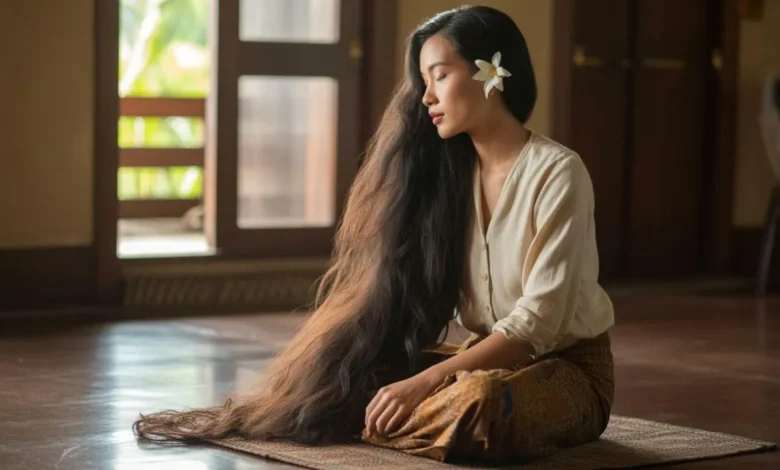
Dreams have long fascinated humanity, serving as nightly cinematic experiences that often leave lingering questions upon waking. Among the myriad visual motifs reported globally, dreaming of long hair stands out as one of the most symbolically rich and frequently experienced phenomena. Far from being a mere random firing of neurons, these visions often carry profound personal, cultural, and psychological significance. To fully understand what it means to encounter long tresses in the dreamscape, researchers must examine the subject through a multifaceted lens that bridges modern neuroscience, psychoanalytic theory, traditional Islamic dream interpretation, and Javanese folklore.
The Scientific Framework: Continuity Hypothesis and Neurological Processing
Modern scientific inquiry approaches dreaming not as a mystical portal to the future, but as an integral component of cognitive processing, memory consolidation, and emotional regulation. According to the continuity hypothesis of dreaming, heavily supported by contemporary sleep research and published literature in journals such as Consciousness and Cognition, the content of our dreams frequently mirrors the waking experiences, emotional states, and cognitive preoccupations of the dreamer.
When an individual dreams of long hair, neuroscientists and psychological researchers suggest examining recent waking life stressors or identity shifts. Hair, from a biological and social standpoint, is deeply tied to personal presentation, self-image, and individuality. Stressors that impact self-perception or trigger major life transitions often manifest symbolically during rapid eye movement (REM) sleep. Furthermore, physiological factors play a significant role. Clinical studies indicate that prolonged psychological stress can disrupt sleep architecture, leading to more vivid dreams that are easily recalled upon awakening. Interestingly, the very same high-stress environments that provoke vivid hair-related dreams can also trigger physiological consequences in reality, such as temporary hair shedding or structural changes, establishing a clear link between mental strain and somatic manifestations without implying any direct supernatural causation.
Psychoanalytic Perspectives: Identity, Vitality, and Expression
Within the realm of psychology, pioneers of the mind have long assigned deep archetypal meanings to hair. Sigmund Freud frequently analyzed hair in the context of libido, vitality, and repressed psychological desires, viewing it as a powerful symbol of personal energy. Carl Jung expanded upon this by examining hair through the framework of the persona—the social mask individuals wear—as well as the integration of the anima and animus, representing the unconscious feminine and masculine traits within the psyche.
Contemporary dream analysts continue to build upon these foundational theories. Dr. Michael Lennox, a recognized dream expert, notes that while hair traditionally symbolizes feminine beauty, grace, and magnetism in various cultural contexts, it is equally tethered to raw personal power, referencing historical and mythological archetypes where cascading locks represent immense inner strength.
Similarly, certified dream analyst Lauri Loewenberg emphasizes that the physical condition of the hair within the dream serves as an accurate emotional barometer for the dreamer’s waking mind. Healthy, lustrous, and flowing long hair often indicates a surplus of creative ideas, high confidence, and robust personal energy. Conversely, tangled, matted, or heavily damaged hair points directly to psychological burdens, overwhelming mental clutter, or unresolved conflicts that the individual struggles to untangle. When a dream features long hair being forcibly cut or sheared—a scenario frequently studied by British dream psychologist Ian Wallace—it often mirrors a waking-life sensation of compromised autonomy or a restriction of self-expression.
Cultural Symbolism: Islamic Tradition and Javanese Primbon
Beyond Western psychology, human civilizations have spent millennia codifying dream interpretations through religious and cultural frameworks. In Islamic tradition, dream interpretation (Ilm al-Ta’bir) holds a respected historical lineage, famously championed by scholars such as Imam Ibnu Sirin. Traditional Islamic scholarship categorizes dreams into three distinct categories: true visions from the Divine (Ru’ya), psychological reflections or mundane thoughts of the daily mind (Hadith an-Nafs), and disruptive illusions originating from external forces.
When evaluating dreams of long hair within this structured framework, classical texts such as Tafsir Ahlam an-Nabulsi suggest that hair growth often symbolizes blessings, long life, increased sustenance (rizq), and righteous deeds, provided the dream falls under the category of a truthful vision. The interpretation can also diverge based on gender dynamics; for women, long hair is traditionally associated with nobility, grace, and divine favor, whereas for men, it may symbolize an increase in worldly responsibilities, duties, or professional standing. Islamic scholars consistently caution, however, that dream interpretation should never serve as a definitive baseline for major life decisions. Instead, such visions are intended to encourage spiritual introspection, gratitude, and mindfulness.
In parallel, Indonesian culture—specifically within the traditions of Java—utilizes the Primbon as a comprehensive cultural and spiritual guidebook. Rooted in ancestral knowledge and the documentation of spiritual systems, the Primbon classifies dreams of long hair as sasmita, or mystical omens and subtle spiritual signals. Depending on the specific context of the dream—whether the hair is being brushed, washed, or admired—traditional Javanese interpretations frame these visions as reflections of social standing, honor, or impending shifts in one’s life chapter. Much like psychological frameworks, cultural scholars emphasize that these traditional guides should be treated as instruments for meditative self-reflection rather than absolute prophecies.
Practical Implications and Reflection
Ultimately, encountering long hair in the dreamscape functions less as a prophetic warning and more as a psychological mirror. Whether analyzed through the empirical lens of the continuity hypothesis, the depth psychology of Freud and Jung, the theological parameters of Islamic scholarship, or the ancestral wisdom of Javanese Primbon, the underlying message remains focused on self-awareness.
For individuals experiencing recurring dreams about hair, experts recommend engaging in deliberate self-reflection rather than unnecessary anxiety. Evaluating current stress levels, recognizing areas where personal expression feels restricted, and acknowledging personal achievements can resolve the underlying cognitive friction causing the dream. If sleep disturbances persist or trigger acute anxiety, consulting mental health professionals can provide effective coping mechanisms for managing the waking-life stressors that ultimately fuel the subconscious mind.