Exploring the Fascinating World of Amphibious and Semi-Aquatic Animals Across Global Ecosystems

The intricate balance of global ecosystems relies heavily on organisms capable of bridging distinct ecological boundaries. Among the most remarkable of these organisms are semi-aquatic and amphibious animals—creatures uniquely adapted to thrive in both terrestrial and aquatic environments. These species possess specialized physiological and behavioral traits that allow them to forage, seek shelter, and reproduce across dual habitats. Unlike species confined exclusively to land or water, these dual-habitat organisms serve as critical indicators of environmental health, playing dynamic roles in nutrient cycling and food web stability across terrestrial-aquatic ecotones.
Understanding the Evolutionary and Ecological Significance
The evolutionary transition between aquatic and terrestrial realms represents one of the most significant chapters in vertebrate and invertebrate history. Amphibious and semi-aquatic animals bridge this evolutionary gap through a myriad of physiological adaptations. These include specialized respiratory systems—such as cutaneous respiration, dual-stage gill-to-lung transformations, and highly vascularized tissues—alongside hydrodynamic body shapes, webbed digits, and water-repellent pelage or scales.
Ecologically, these animals function as vital ecological connectors. By transferring energy and nutrients from aquatic ecosystems to terrestrial landscapes (and vice versa), they support complex biodiversity networks. However, their reliance on dual habitats also renders them exceptionally vulnerable to anthropogenic pressures, including habitat fragmentation, climate change, water pollution, and agricultural expansion. Conservation biologists closely monitor these populations, as fluctuations in their numbers often signal broader environmental degradation within watersheds and wetlands.
Comprehensive Analysis of Key Semi-Aquatic and Amphibious Species
To better understand the diversity of life bridging land and water, zoologists categorize these animals across various taxonomic classes, ranging from apex reptilian predators to microscopic-skinned amphibians.
- Mugger Crocodile (Crocodylus palustris)
The mugger crocodile stands as a prominent apex predator native to the freshwater habitats of the Indian subcontinent and surrounding regions, including marshes, lakes, and sluggish rivers. Characterized by a remarkably broad snout—the widest of any living crocodilian—the mugger is an opportunistic carnivore whose diet spans fish, birds, reptiles, and medium-sized mammals.
Behaviorally, muggers exhibit sophisticated thermoregulation strategies. Because they are ectothermic, relying on external sources to regulate body temperature, they frequently haul themselves onto riverbanks during peak daylight hours to bask in the sun. Once their internal temperature stabilizes, they return to the water. While their terrestrial movement is often perceived as sluggish, muggers are capable of explosive, high-speed lunges over short distances. In the water, their powerful, laterally compressed tails propel them with stealth and speed, making them formidable ambush predators.
- American Alligator (Alligator mississippiensis)
Inhabiting the wetlands, swamps, and slow-moving rivers of the southeastern United States, the American alligator is another master of dual-habitat living. Similar to the mugger crocodile, the alligator divides its time between aquatic immersion and terrestrial basking, particularly during nesting seasons and warmer months.
Physiologically, alligators exhibit remarkable dual-locomotion capabilities. In water, they utilize undulating body movements and powerful tail sweeps to navigate complex aquatic vegetation. On land, despite their heavy armor and bulk, they can achieve burst speeds of up to 10 miles per hour (approx. 16 kilometers per hour) over short distances. Ecological studies conducted by wildlife management agencies in states like Florida and Louisiana emphasize the alligator’s role as a "keystone species." By excavating deep depressions known as "alligator holes," they retain water during seasonal droughts, providing crucial refuges for fish, birds, and other wildlife.
- North American Beaver (Castor canadensis)
Moving from reptiles to mammals, the North American beaver represents the pinnacle of semi-aquatic mammalian engineering. Found across diverse freshwater ecosystems—including ponds, streams, and boreal forests—beavers are renowned for their profound landscape-altering capabilities.
Beavers possess dense, oil-coated fur that traps air, keeping their skin completely dry and insulated against freezing northern waters. Their webbed hind feet and rudder-like tails transform them into exceptional swimmers. On land, however, they shift from aquatic navigation to intensive forestry, using specialized incisors to fell trees and harvest woody vegetation. As strict herbivores, beavers consume inner tree bark, aquatic plants, and herbaceous growth. Their construction of dams and lodges not only secures their own safety from predators but also creates expansive wetland habitats that elevate local biodiversity and improve water retention.
- Spotted Turtle (Clemmys guttata)
Among cheloniids, the spotted turtle is a striking semi-aquatic reptile easily identified by its smooth black carapace adorned with vibrant yellow or orange spots. Native to shallow, slow-moving freshwater bodies across eastern North America—such as bogs, fens, and vernal pools—this species exemplifies the delicate balance required of dual-habitat animals.
Spotted turtles alternate between aquatic foraging and terrestrial basking or aestivation. They are agile swimmers when navigating submerged root systems and mud. However, if startled while basking on logs or muddy banks, they immediately retreat into the water for safety. Conservation assessments by herpetologists indicate that spotted turtle populations are increasingly threatened by illegal pet trade collection and wetland drainage, underscoring the fragility of specialized semi-aquatic reptiles.
- Decapod Crabs and Semi-Aquatic Crustaceans
Crabs belonging to various semi-aquatic families demonstrate how invertebrates conquer the land-water divide. Distributed widely across tropical and subtropical coastlines, mangroves, and freshwater streams, these crustaceans possess specialized gill structures that remain functional as long as they are kept moist.
In the aquatic realm, crabs scour the benthic zone for detritus, mollusks, and small fish, using their prominent chelae (claws) for both feeding and territorial defense. When venturing onto land, many species can survive for extended periods—ranging from several hours to days—by retaining water in their branchial chambers. This dual capability allows them to exploit terrestrial food sources that are inaccessible to strictly aquatic organisms.
- Two-Lined Salamander (Eurycea bislineata)
The two-line salamander, native to the damp woodlands and stream margins of eastern North America, offers a fascinating look into amphibian evolutionary adaptations. These slender amphibians inhabit swift streams, seeps, and adjacent damp leaf litter.
Perhaps the most scientifically intriguing aspect of the two-lined salamander is its respiratory evolution. Lacking lungs entirely, these creatures rely exclusively on alternative breathing mechanisms. During their larval stage, they utilize external gills to extract oxygen from flowing water. Upon reaching adulthood, they absorb oxygen directly through their highly permeable, moist skin and the lining of their mouths—a process known as cutaneous respiration. This reliance on skin respiration restricts them to permanently damp or aquatic environments to prevent desiccation.
- Anuran Amphibians (True Frogs and Treefrogs)
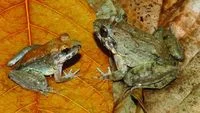
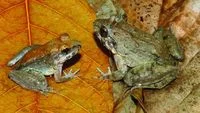
Encompassing over 5,000 recognized species worldwide, anurans (frogs and toads) represent the most diverse order of amphibians. Ranging from aquatic bullfrogs inhabiting permanent ponds to arboreal treefrogs clinging to high canopy foliage in tropical rainforests, anurans epitomize amphibious versatility.
Their life cycle typically begins as aquatic eggs, hatching into gill-breathing tadpoles before undergoing complete metamorphosis into air-breathing, tetrapod adults. As carnivorous predators, adult frogs consume vast quantities of insects, spiders, and small aquatic vertebrates, keeping pest populations in check. Their dual presence in water and on land makes them primary conduits for energy flow between aquatic and terrestrial food webs.
Chronology of Amphibious Evolution and Scientific Discovery
The scientific appreciation of semi-aquatic and amphibious animals has evolved significantly over the past two centuries. Historically, early naturalists cataloged these species primarily through morphological observation, noting the obvious anatomical overlaps between fish, reptiles, and mammals.
- 19th Century: Explorers and taxonomists systematically documented hundreds of semi-aquatic species during expeditions into the Americas, Asia, and Africa, noting their unique behavioral adaptations.
- Mid-20th Century: The advent of modern ecology and evolutionary biology allowed researchers to analyze the physiological mechanisms—such as cutaneous respiration and osmoregulation—that enable survival in dual habitats.
- Late 20th Century to Present: Conservation biologists began identifying semi-aquatic species, particularly amphibians and freshwater reptiles, as primary bioindicators. International monitoring frameworks now track these populations to gauge the impacts of global climate change, wetland loss, and industrial pollution.
Official Responses and Conservation Implications
Environmental protection agencies worldwide have increasingly shifted focus toward preserving the transitional zones—known as ecotones or riparian buffers—that connect terrestrial and aquatic habitats.
According to wildlife conservation authorities, the degradation of wetlands poses an existential threat to semi-aquatic biodiversity. When governments permit industrial runoff, deforestation, or urban encroachment near riverbanks and swamps, the delicate physiological balance required by amphibians, semi-aquatic reptiles, and mammals is severely disrupted.
Policy analysts and environmental NGOs urge lawmakers to implement stricter watershed protection laws, establish wildlife corridors, and restore degraded wetlands. Without these interventions, the unique evolutionary lineages that allow creatures to successfully navigate both land and water face an uncertain future. By safeguarding these dual habitats, global conservation efforts not only protect iconic species like crocodiles, beavers, and salamanders, but also ensure the long-term health of the interconnected ecosystems upon which all terrestrial life ultimately depends.