
Category International Affairs Page 2
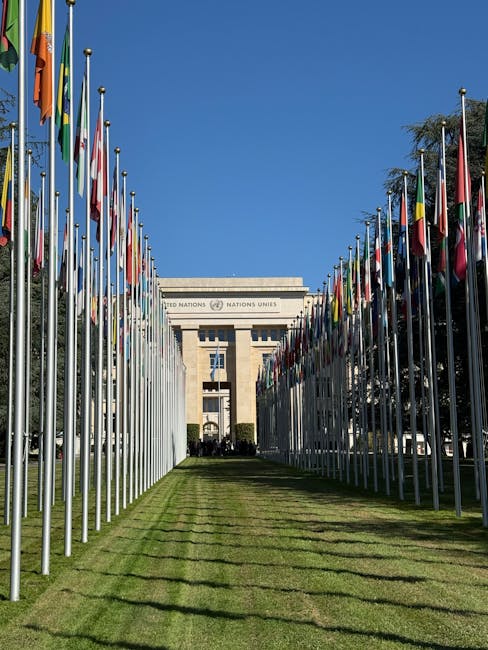
Navigating the Shifting Sands of Global Power: A Deep Dive into International Affairs
The geopolitical landscape is in perpetual flux, characterized by evolving alliances, emergent threats, and the persistent quest for stability. Understanding these intricate dynamics requires a nuanced examination of the forces shaping international relations. Page 2 of our comprehensive coverage delves into specific regions, contentious issues, and the theoretical frameworks that help us interpret this complex world. We will explore the growing assertiveness of major powers, the challenges posed by non-state actors, and the delicate balance between national sovereignty and the imperative for global cooperation.
The eastward expansion of NATO, a defensive alliance formed in the aftermath of World War II, continues to be a significant point of contention, particularly with Russia. Moscow views this expansion as a direct security threat, citing the proximity of military infrastructure to its borders. This perception has fueled historical grievances and contributed to a climate of mistrust, manifesting in various flashpoints, including the ongoing conflict in Ukraine. Ukraine, a sovereign nation with aspirations for closer ties with Western institutions, finds itself at the epicenter of this geopolitical struggle. The annexation of Crimea in 2014 and the subsequent support for separatists in the Donbas region underscore Russia’s willingness to employ military and political pressure to achieve its strategic objectives. The international community’s response has been largely characterized by sanctions, diplomatic condemnation, and military aid to Ukraine, but a comprehensive and lasting solution remains elusive. The implications of this conflict extend far beyond the immediate region, impacting global energy markets, exacerbating food insecurity, and raising fundamental questions about the future of European security architecture. Examining the historical context, the competing narratives, and the economic and humanitarian consequences is crucial for comprehending the enduring impact of this protracted crisis.
The rise of China as a global economic and military power presents another transformative element in international affairs. Beijing’s Belt and Road Initiative (BRI), a multi-trillion-dollar infrastructure development strategy, aims to connect Asia, Europe, and Africa through a vast network of roads, railways, and maritime routes. While proponents highlight its potential for economic growth and improved connectivity, critics raise concerns about debt sustainability for participating nations, the environmental impact, and China’s increasing geopolitical influence. The South China Sea, a vital shipping lane and a region rich in natural resources, has become a focal point of territorial disputes. China’s expansive maritime claims, often symbolized by the "nine-dash line," are contested by several Southeast Asian nations, including Vietnam, the Philippines, Malaysia, Brunei, and Taiwan. The presence of Chinese coast guard vessels and the construction of artificial islands have intensified tensions, leading to increased naval patrols by the United States and its allies. This maritime competition is not merely about territorial claims; it is intrinsically linked to freedom of navigation, access to resources, and the broader balance of power in the Indo-Pacific region. The United States, in response to China’s growing assertiveness, has pursued a strategy of "pivot to Asia" and strengthened its alliances with regional partners, leading to increased military exercises and diplomatic engagement. The interplay between economic interdependence and strategic rivalry between the US and China is a defining characteristic of contemporary international relations.
The enduring challenge of nuclear proliferation continues to cast a long shadow over global security. Iran’s nuclear program remains a source of deep concern for the international community, particularly the United States, Israel, and several Arab states. The Joint Comprehensive Plan of Action (JCPOA), an agreement reached in 2015 aimed at curbing Iran’s nuclear capabilities in exchange for sanctions relief, has faced significant headwinds since the US withdrawal in 2018. Tehran’s subsequent decision to enrich uranium beyond the JCPOA limits has further escalated regional tensions. The potential for Iran to acquire nuclear weapons has profound implications for regional stability, potentially triggering a nuclear arms race in the Middle East. Diplomatic efforts to revive the JCPOA or find alternative arrangements are ongoing, but progress has been slow and fraught with political obstacles. North Korea’s nuclear and ballistic missile programs represent another persistent threat. Pyongyang’s repeated missile tests and nuclear detonations have drawn widespread international condemnation and led to increasingly stringent UN sanctions. Despite numerous diplomatic engagements, including summits between North Korean leader Kim Jong Un and former US President Donald Trump, denuclearization has remained an elusive goal. The implications of these nuclear programs extend to the broader non-proliferation regime, testing its effectiveness and raising questions about the future of arms control.
The rise of non-state actors, particularly terrorist organizations and transnational criminal networks, presents a complex and evolving threat to international order. Groups like the Islamic State (ISIS) and Al-Qaeda, while significantly degraded in their territorial control, continue to pose ideological and operational threats. Their ability to recruit, radicalize, and inspire attacks globally, often through online propaganda, necessitates a multifaceted response that goes beyond traditional military interventions. This includes intelligence sharing, law enforcement cooperation, and addressing the root causes of extremism, such as poverty, political grievances, and social marginalization. Transnational criminal organizations, involved in drug trafficking, human smuggling, cybercrime, and illicit arms sales, destabilize societies, corrupt institutions, and undermine the rule of law. Their vast financial resources and sophisticated networks allow them to operate across borders with relative impunity, posing significant challenges to national security and economic stability. Combating these actors requires robust international cooperation, effective intelligence gathering and sharing, and the strengthening of legal frameworks to prosecute and disrupt their activities.
The digital realm has emerged as a new frontier in international affairs, with significant implications for security, diplomacy, and governance. Cyber warfare, cyber espionage, and the use of disinformation campaigns are increasingly employed by state and non-state actors to achieve strategic objectives. The attribution of cyberattacks can be notoriously difficult, leading to challenges in holding perpetrators accountable and deterring future aggression. The weaponization of information through social media and other online platforms has become a potent tool for influencing public opinion, interfering in elections, and exacerbating societal divisions within and between nations. This necessitates a focus on cybersecurity, digital resilience, and the development of norms and regulations for responsible behavior in cyberspace. The debate over internet governance, data privacy, and the future of digital technologies is a critical component of contemporary international relations, shaping the very fabric of global interaction.
Economic interdependence, while often a driver of prosperity and peace, also creates vulnerabilities and potential points of friction. Trade disputes, currency manipulation, and the weaponization of economic tools, such as sanctions, can significantly impact global markets and international relations. The rise of economic nationalism and protectionist policies in several major economies poses a challenge to the multilateral trading system. The COVID-19 pandemic highlighted the fragility of global supply chains and the urgent need for greater resilience and diversification. Debates surrounding the future of globalization, the role of international financial institutions, and the equitable distribution of economic benefits are central to understanding the current international economic order. The increasing emphasis on economic security, alongside traditional notions of national security, reflects the interconnectedness of these domains.
Climate change, a pervasive and existential threat, demands unprecedented levels of international cooperation. The scientific consensus on the human-induced nature of global warming is overwhelming, yet collective action to mitigate its effects has been slow and often insufficient. International agreements, such as the Paris Agreement, aim to limit global temperature rise, but their effectiveness depends on the commitment of individual nations to implement ambitious policies and transition to cleaner energy sources. The impacts of climate change, including rising sea levels, extreme weather events, and resource scarcity, can exacerbate existing geopolitical tensions, trigger mass migrations, and create new security challenges. Developing nations, often the most vulnerable to the impacts of climate change despite contributing the least to its causes, require significant financial and technological support for adaptation and mitigation efforts. The intersection of climate change and international affairs underscores the need for a paradigm shift in global governance, prioritizing long-term sustainability and collective action over short-term national interests.
The theoretical underpinnings of international relations provide frameworks for understanding these complex phenomena. Realism, with its emphasis on power, self-interest, and the anarchic nature of the international system, helps explain interstate conflict and the pursuit of national security. Liberalism, conversely, highlights the role of international institutions, cooperation, and democratic values in promoting peace and prosperity. Constructivism emphasizes the social construction of international reality, focusing on the role of ideas, norms, and identities in shaping state behavior. Understanding these diverse theoretical perspectives enriches our analysis of current events, allowing for a more comprehensive and nuanced interpretation of the forces driving global affairs. The ongoing interplay between these theoretical lenses shapes how scholars and policymakers alike approach the challenges and opportunities presented by the ever-evolving international landscape.
