Cosmic Architects: How Supermassive Black Holes Sculpt Galaxies and Trigger Star Formation

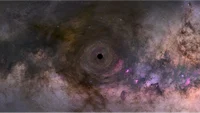
Recent astrophysical research has shed new light on the complex relationship between supermassive black holes and their host galaxies, revealing that these gravitational behemoths do much more than simply consume surrounding matter. According to a landmark study published in The Astrophysical Journal, the intense gravitational activity, radiation outflows, and shockwaves generated by active black holes play a decisive role in both hindering and promoting the birth of new stars.
This comprehensive investigation, which focused on nine local galaxies, offers unprecedented insight into the evolutionary cycles of cosmic structures. By analyzing the dynamic interplay between active galactic nuclei (AGN) and the interstellar medium, astronomers are rewriting textbooks on how galaxies mature over billions of years.
The Mechanics of Active Galactic Nuclei and Cosmic Feedback
At the heart of nearly all large galaxies lies a supermassive black hole, boasting masses millions or even billions of times greater than that of our Sun. While some of these cosmic entities remain relatively dormant—such as Sagittarius A*, the supermassive black hole at the center of our own Milky Way, whose consumption rate has been compared to a human eating a single grain of rice every million years—others are intensely active.
Active galactic nuclei represent the hyper-luminous centers of galaxies where supermassive black holes aggressively accrete vast quantities of gas and cosmic dust. As this material spirals inward, it forms a flattened, rotating structure known as an accretion disk. The extreme gravitational forces generate colossal friction, causing the infalling matter to heat up and glow brilliantly across the electromagnetic spectrum.
However, supermassive black holes are notoriously messy eaters. Rather than consuming every scrap of matter that crosses their event horizon, they channel a significant portion of the unconsumed gas and plasma toward their magnetic poles. From these poles, powerful twin jets of plasma are launched outward at nearly the speed of light, stretching thousands of light-years into intergalactic space.
When this immense energy and matter flow outward from the galactic core, they violently collide with surrounding gas clouds and the interstellar medium. This phenomenon, widely known in astrophysics as "AGN feedback," generates powerful, fast-moving shockwaves. For decades, scientists primarily associated AGN feedback with the quenching of star formation—a mechanism that sweeps galaxies clean of the cold gas necessary to build new stars. However, this new research demonstrates that the process is far more nuanced, frequently acting as a catalyst for stellar birth.
Mapping the Evolutionary Cycle: Methodology and Findings
To better understand these intricate dynamics, an international team of researchers utilized two of the world’s most advanced astronomical instruments: the Very Large Telescope (VLT) and the Multi Unit Spectroscopic Explorer (MUSE). By combining these powerful observation tools, the research team conducted a meticulous three-dimensional spatial analysis of nine nearby galaxies hosting active galactic nuclei.
The primary objective was to untangle three distinct yet interconnected components within the AGN environment: the radiation flow streaming from the active nucleus, the excitation of the surrounding interstellar medium caused by shockwaves, and the subsequent zones of active star formation.
The analytical results unveiled a remarkably consistent pattern across all nine observed galaxies. Researchers discovered that distinct arcs and rings of accelerated star formation reliably form at distances ranging between 2,600 and 20,000 years from the galactic center. Furthermore, the team observed luminous radiation cones extending outward from the accretion disks, accompanied by fast-moving shockwaves that propagated through the central regions in a direction strictly perpendicular to those radiation cones.
Peixin Zhu, a researcher at the Center for Astrophysics | Harvard & Smithsonian and a co-author of the study, highlighted the geometric consistency of these shockwaves as one of the most revealing discoveries of the project. According to Zhu, observing these phenomena consistently across multiple galactic test subjects confirms that black hole outflows and subsequent shockwave trajectories follow rigorous physical laws. When galactic jets are less powerful, stellar winds driven by the black hole still contribute significantly to the generation of these shockwaves.
Perspectives from the Scientific Community
The publication of this study marks a significant milestone in modern observational astrophysics, drawing commentary and analysis from leading researchers in the field. Lisa Kewley, a co-author of the study from the Center for Astrophysics | Harvard & Smithsonian, emphasized the transformative nature of these findings in a formal statement accompanying the release.
"We are witnessing firsthand that black holes are not merely passive drains in the universe pulling matter into oblivion," Kewley noted. "Instead, they are active architects that fundamentally reshape their surrounding environments, establishing a complex, self-regulating feedback loop with their host galaxies."
Other independent astrophysicists not directly involved in the study have praised the high-resolution mapping achieved through the VLT and MUSE instruments. For years, theoretical models predicted that AGN feedback could trigger star formation by compressing ambient gas clouds, but observational proof remained elusive due to the immense distances and technical limitations involved. By isolating the distinct signatures of radiation, shock excitation, and stellar nurseries, this research bridges the gap between theoretical astrophysics and empirical observation.
Broader Implications for Galaxy Evolution and Cosmology
The implications of this research extend far beyond the nine galaxies analyzed in the study; they touch upon fundamental questions regarding the formation and life cycle of the universe itself. Understanding how galaxies transition from active star-producers to quiescent, red masses is one of the grand challenges of modern cosmology.
Galaxies are dynamic ecosystems governed by a delicate balance between gravity, thermodynamics, and radiative pressure. If supermassive black holes solely suppressed star formation, the universe would contain far fewer massive, evolved galaxies than astronomers currently observe. By proving that AGN feedback can compress gas clouds to trigger new waves of stellar genesis, this study provides a crucial missing link in cosmological models.
Moreover, these insights refine our understanding of the Milky Way’s long-term future. While Sagittarius A* is currently quiescent, shifts in galactic dynamics or minor cosmic collisions could theoretically awaken our home galaxy’s central black hole, setting off similar feedback loops and transforming the stellar landscape of our cosmic neighborhood.
As observational technology continues to advance, researchers plan to expand their sample size, studying a broader spectrum of active galactic nuclei across different cosmic epochs. By mapping these cycles in younger, more distant galaxies, astronomers hope to trace the evolution of AGN feedback across billions of years of cosmic history, ultimately unlocking the comprehensive biography of how the universe’s most massive structures came to be.
Related posts: