The Unveiling of an Ancient Metropolis
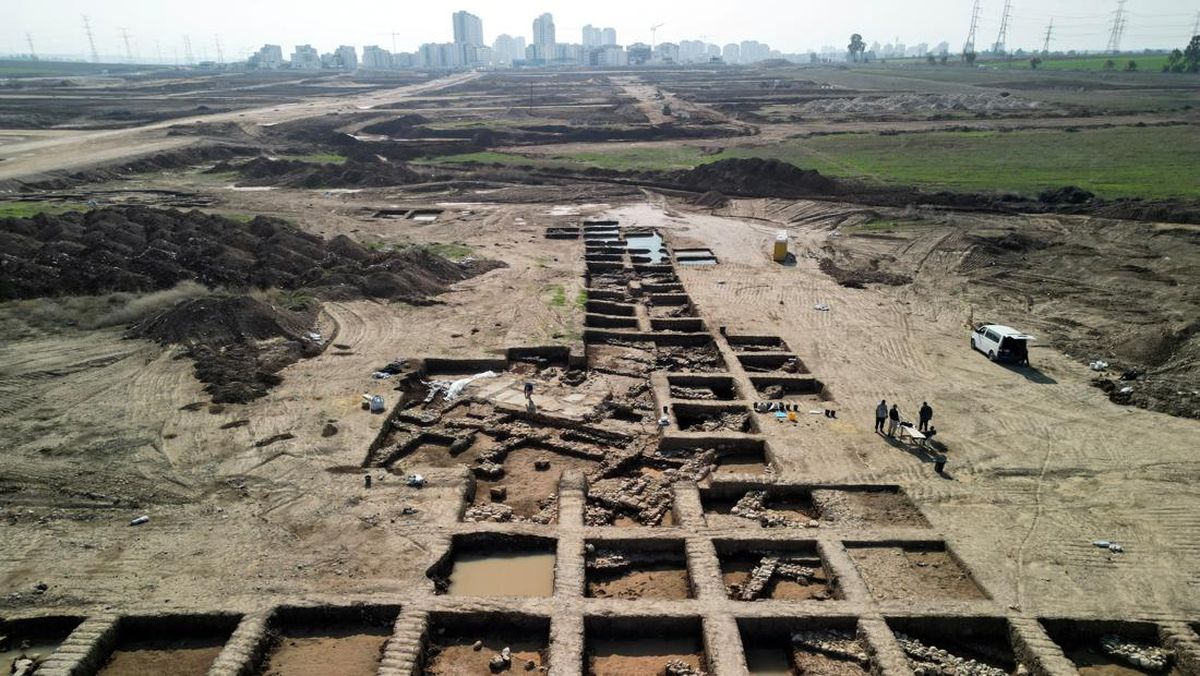
The unearthed city reveals a remarkably well-preserved urban plan, indicative of sophisticated foresight and administration. Archaeologists have systematically uncovered a meticulously organized network of streets, characterized by wide north-south thoroughfares that intersect with equally broad east-west avenues, effectively creating a grid pattern and delineating open public spaces. This layout suggests a deliberate approach to urban planning, common in Roman and Byzantine cities, designed to facilitate movement, trade, and communal gatherings. Such an organized infrastructure underscores the importance of this settlement, likely serving as a regional administrative or economic hub within the Dakhla Oasis.
At the heart of this ancient city lies a prominent Christian basilica, dating back to the 4th century. Its central position, directly facing one of the main streets, highlights the profound role of Christianity in the community’s life during this period. The basilica would have served as the spiritual, social, and possibly even administrative nexus for the inhabitants, reflecting the widespread adoption and institutionalization of the Christian faith across Egypt under Byzantine rule. The architectural style and scale of the basilica are currently under detailed study, but its discovery alone is a testament to the religious vitality of the oasis population.
Beyond its religious core, the city also featured robust defensive structures. The excavation team identified two strategically placed watchtowers and extensive fortifications, constructed from mud-brick, which would have provided protection against external threats. These defensive elements speak volumes about the security concerns of the era and the strategic value of the Dakhla Oasis, a fertile patch in the otherwise unforgiving desert, making it a desirable and vulnerable location. The presence of such defenses suggests that the city was not merely a quiet agricultural settlement but a significant outpost requiring constant vigilance.
Residential areas spread out from the central basilica, comprising numerous houses also built from mud-brick, a readily available and practical construction material in the desert environment. These homes were not just basic shelters; excavations have revealed a comprehensive domestic infrastructure, including private bread ovens, well-equipped kitchens, and installations for grinding grains. These findings offer a vivid picture of the daily routines and self-sufficiency of the city’s inhabitants. Remarkably, the mission was able to identify specific residences, most notably the house of a priest named Tisos and the dwelling of a physician known as Tabibos. Such personalized discoveries add a human dimension to the archaeological findings, allowing researchers to piece together individual stories and professional roles within the broader community. The existence of a dedicated physician’s residence, for instance, points to a level of organized healthcare and specialized professions beyond mere subsistence farming.
Windows into Daily Life: The Ostraca and Coinage
Among the most pivotal discoveries at Ain Al-Sabil are nearly 200 ostraca—fragments of pottery or limestone used as inexpensive writing surfaces. These shards bear inscriptions in both Coptic and Greek, offering an invaluable direct window into the daily minutiae of Byzantine life in the oasis. The texts encompass a diverse range of content, including detailed business transactions, formal commercial contracts, and intimate personal correspondence.
The deciphering of these ostraca is expected to illuminate the economic mechanisms of the city, detailing trade routes, agricultural output, taxation, and the legal frameworks governing commerce. They could also shed light on the social hierarchy, family structures, and even the literary practices of the time. The dual languages, Coptic (the late stage of the ancient Egyptian language, written in Greek script) and Greek (the administrative language of the Byzantine Empire), indicate a multilingual society, likely with different levels of literacy and official communication. For historians, these ostraca provide primary source material that is often rare for this period, offering direct evidence of the city’s economic organization and social interactions, rather than relying solely on official decrees or religious texts. They are crucial for understanding the grassroots level of daily existence, from the price of grain to personal greetings between family members.
Further enriching the chronological and economic understanding of the site is a substantial collection of well-preserved bronze coins, depicting various Byzantine emperors, alongside several gold coins minted during the reign of Constantius II (337–361 AD). These numismatic finds are vital for establishing a precise timeline for the city’s occupation and economic activity. The presence of coins from different emperors confirms the continuous habitation of the city through various phases of Byzantine rule, providing fixed points in the site’s chronology. The gold coins, particularly from Constantius II, suggest a period of significant prosperity or strategic importance early in the city’s Byzantine phase. Collectively, the coins indicate the city’s integration into the broader Byzantine monetary system and its participation in regional and possibly long-distance trade networks. They can also offer clues about inflation, wealth distribution, and the economic policies impacting the oasis.
Historical Context: Byzantine Egypt and the Dakhla Oasis
To fully appreciate the significance of this discovery, it is essential to place it within the broader historical context of Byzantine Egypt and the unique geographical setting of the Dakhla Oasis. Following the decline of the Western Roman Empire, Egypt remained a vital province of the Eastern Roman or Byzantine Empire, from the 4th to the 7th century AD. As the "breadbasket of the empire," Egypt’s agricultural output, particularly grain, was critical for feeding Constantinople and other imperial centers. During this period, Christianity became the dominant religion, profoundly influencing all aspects of Egyptian society, from governance to daily life, leading to the construction of numerous churches and monasteries across the land. The Byzantine administration maintained a complex bureaucratic system, often centered in urban areas, which facilitated trade, taxation, and imperial control.
The Dakhla Oasis, one of the seven major oases of Egypt’s Western Desert, has been a continuous locus of human settlement since prehistoric times. Its strategic location along ancient desert trade routes made it a crucial stop for caravans traversing the Sahara, connecting the Nile Valley with regions further west and south. Historically, the oasis supported a thriving agricultural economy, reliant on its underground water sources, producing dates, olives, cereals, and other crops. During the Roman and Byzantine periods, these oases were not isolated outposts but integral parts of the provincial administration, serving as agricultural centers, military garrisons, and nodes in the imperial communication network. The presence of a well-organized city like the one at Ain Al-Sabil underscores the Dakhla Oasis’s role as more than just a transit point; it was a settled, developed region with its own local economy and social complexities. Previous archaeological work in Dakhla has revealed a rich history spanning Pharaonic, Roman, and early Islamic periods, making the Byzantine discovery a vital piece in understanding the oasis’s continuous evolution.
The Western Desert of Egypt, though challenging for archaeological exploration due to its vastness and harsh conditions, has proven to be a treasure trove of historical discoveries. Its relative isolation has often led to the preservation of sites that might have been destroyed or built over in more densely populated areas. The dry climate is particularly conducive to the preservation of organic materials, such as papyri and textiles, and mud-brick structures, which would rapidly decay elsewhere. The successful excavation at Ain Al-Sabil highlights the increasing focus and investment by the Egyptian Supreme Council of Antiquities in exploring these remote, yet historically rich, desert landscapes.
The Excavation Journey: A Collaborative Endeavor
The discovery at Ain Al-Sabil is the culmination of extensive and meticulous work by the Egyptian archaeological mission under the auspices of the Supreme Council of Antiquities. While the exact timeline of the mission’s initiation is not specified in detail, such large-scale excavations typically involve years of preparatory surveys, painstaking digging, and careful documentation. Archaeological teams employ advanced techniques, including remote sensing and geophysical surveys, to identify potential sites before commencing physical excavation.
Once a site is deemed promising, the work involves systematically uncovering layers of earth, carefully cataloging every artifact, and mapping architectural features. The process is inherently slow and methodical, designed to preserve the integrity of the historical context. The discovery of a complete city layout, with its complex network of streets, structures, and artifacts, signifies a sustained commitment from the mission members, including archaeologists, conservators, epigraphers, and laborers. Their dedication to unearthing and interpreting this lost city underscores Egypt’s ongoing commitment to understanding and preserving its rich cultural heritage. The mission’s ability to identify specific individuals like Tisos and Tabibos, along with the wealth of ostraca and coins, speaks to the high level of detail achieved during the excavation and post-excavation analysis phases.
Profound Implications for Historical Scholarship
The rediscovery of this Byzantine city at Ain Al-Sabil carries profound implications for historical scholarship, potentially necessitating a re-evaluation of several aspects of late antique and early medieval Egyptian history.
Firstly, the detailed urban planning observed challenges any simplistic notion of oasis settlements as merely rudimentary outposts. This city demonstrates a high degree of organization and civic infrastructure, suggesting that Byzantine urbanism extended far beyond the Nile Valley, adapting to and thriving within desert environments. It provides crucial comparative data for understanding provincial urban development in the Byzantine Empire, especially in regions that were geographically distinct from the imperial core.
Secondly, the economic insights gleaned from the ostraca and coinage will be invaluable. They will allow historians to reconstruct local economies, understand the role of agriculture, craft production, and trade in sustaining the oasis population. The specific mention of business transactions and commercial contracts offers a granular view of economic practices, potentially revealing unique adaptations to the desert environment or deep integration into broader imperial trade networks. This can contribute to a more nuanced understanding of the economic diversity within Byzantine Egypt.
Thirdly, the religious landscape of the Dakhla Oasis during the 4th and 5th centuries AD will be significantly enriched. The central basilica confirms the strong Christian presence, but further study of religious texts on the ostraca, or additional religious artifacts, could shed light on specific theological practices, the organization of the church, and the daily spiritual life of the community. This adds to the broader narrative of Christianization in Egypt, particularly in its more remote regions.
Finally, the social and administrative structures revealed by the combination of urban layout, housing, and written records will offer new perspectives on governance and community organization. The identification of a priest and a physician, alongside evidence of a literate populace through the ostraca, points to a structured society with specialized roles and a degree of bureaucratic complexity. This helps to paint a fuller picture of how imperial administration functioned at the local level and how communities managed themselves.
Future Prospects and Conservation Challenges
The discovery at Ain Al-Sabil is not merely an end in itself but represents the beginning of a new chapter in understanding Egypt’s Byzantine past. The Supreme Council of Antiquities emphasized that this find is one of the most significant Byzantine settlements ever discovered in Egypt’s Western Desert, solidifying its place as a critical site for future research. Further excavation in the surrounding areas of Ain Al-Sabil may uncover additional structures, burial sites, or even satellite settlements, expanding the known boundaries of this ancient metropolis. Detailed analysis of the recovered artifacts, especially the ostraca, will continue for years, promising a steady stream of new information.
However, the preservation of such a significant site in a desert environment presents unique challenges. The mud-brick structures, while remarkably preserved due to the dry climate, are vulnerable to erosion from wind and occasional heavy rains, as well as potential human impact. Conservation efforts will be paramount to protect the integrity of the unearthed city, ensuring its long-term survival for future generations of researchers and the public. This will involve careful stabilization of structures, environmental monitoring, and potentially the development of protective shelters.
The Egyptian Ministry of Tourism and Antiquities will undoubtedly leverage this discovery to promote cultural heritage and potentially boost educational tourism in the New Valley Governorate. The Dakhla Oasis already attracts visitors interested in its natural beauty and ancient sites, and the addition of a well-preserved Byzantine city will only enhance its appeal. This discovery not only adds to the immense archaeological wealth of Egypt but also provides a tangible link to a pivotal period in the nation’s history, continuing to reveal the enduring legacy of human civilization in one of the world’s most ancient lands.
Related posts: