
Israel Flooding Tunnels Hamas
Israel’s Flooding of Hamas Tunnels: A Strategic Offensive and Its Ramifications
The Israeli military’s strategic decision to flood Hamas’s extensive network of underground tunnels in Gaza represents a significant and multifaceted operational maneuver. This tactic, deployed with increasing intensity during recent conflicts, aims to neutralize a critical component of Hamas’s military infrastructure, a subterranean labyrinth designed for combat, storage, and transit. The effectiveness and consequences of this strategy are far-reaching, impacting both military objectives and the broader humanitarian landscape. Understanding this operation requires a deep dive into the nature of the tunnels, the methods employed for flooding, and the projected outcomes and challenges.
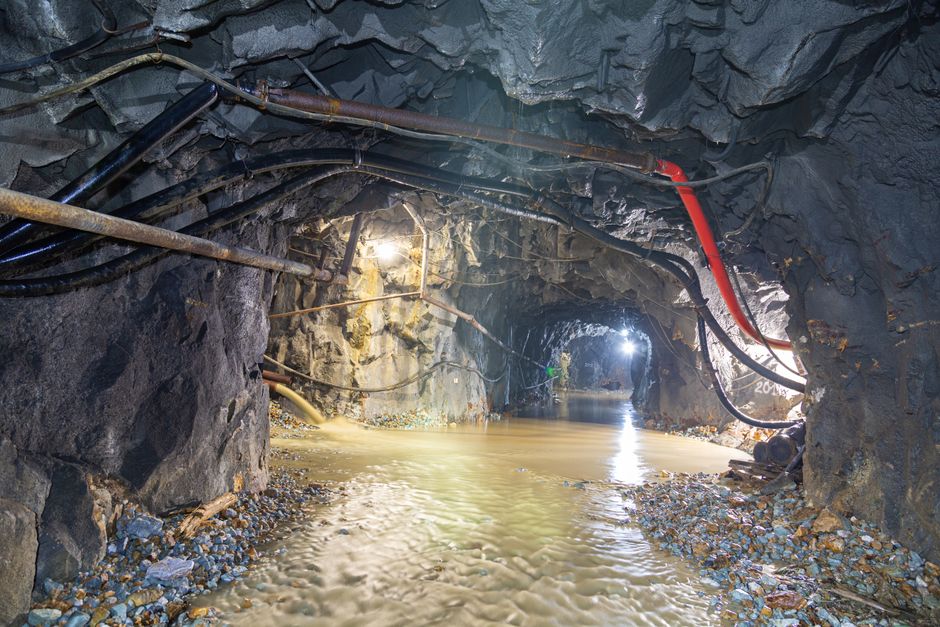
The subterranean network, often referred to as the "Gaza Metro," is a testament to Hamas’s strategic investment in underground warfare. These tunnels were not merely defensive emplacements but a comprehensive ecosystem facilitating Hamas’s operational capabilities. They serve as vital arteries for troop movement, allowing fighters to traverse Gaza unseen and unhindered by Israeli air superiority or ground forces. The tunnels provide secure locations for rocket launchers, command centers, and weapons storage facilities, making them difficult targets for conventional aerial bombardment. Furthermore, they are crucial for infiltration operations into Israel, enabling surprise attacks and the deployment of special forces. The sheer scale of this underground infrastructure, estimated by some to extend hundreds of kilometers, underscores its importance to Hamas’s long-term survival and operational readiness. Their construction often utilizes materials readily available in Gaza, with significant resources channeled into their development, reflecting a deliberate prioritization of this asymmetrical warfare capability. The tunnels are designed with varying levels of sophistication, some reinforced with concrete and equipped with ventilation systems, while others are more rudimentary excavations. This heterogeneity presents unique challenges for any counter-strategy.
The decision to flood these tunnels stems from the inherent difficulty in neutralizing them through conventional means. Bombing them often results in partial collapses, leaving them operational or creating new, unpredictable routes. Ground incursions are fraught with danger due to ambushes, booby traps, and the overwhelming advantage of fighting within a familiar, pre-prepared environment. Flooding offers a novel approach to render these subterranean assets unusable. The primary method involves pumping large quantities of seawater from the Mediterranean into the tunnel entrances. This process requires significant logistical support, including powerful pumps, dedicated water sources, and a robust pipeline infrastructure to reach the tunnel openings. The Israeli military has reportedly deployed specialized equipment for this purpose, some of which has been described as "heavy-duty pumping systems." The timing of these operations is also critical, often occurring during periods of heightened conflict to maximize immediate impact and disrupt ongoing Hamas operations. The sheer volume of water required to inundate the extensive tunnel network is staggering, necessitating sustained efforts over extended periods. The process is not instantaneous; it is a gradual but relentless inundation aimed at filling every accessible cavity and passage.
The strategic objective behind flooding the tunnels is multifaceted. Foremost is the degradation of Hamas’s military capabilities. By filling the tunnels with water, Israel aims to make them unusable for movement, storage, and as defensive positions. This effectively neutralizes a significant portion of Hamas’s strategic depth and its ability to launch surprise attacks. The flooding is intended to destroy weapons and ammunition stored underground, disrupt command and control structures, and prevent the construction of new tunnels or expansion of existing ones. Another key objective is to prevent tunnel-based infiltration into Israel. The tunnels have been a primary means for Hamas operatives to breach the border and carry out attacks, posing a direct security threat. Flooding aims to permanently seal these infiltration routes. Furthermore, the operation serves a psychological purpose, demonstrating Israel’s resolve and its capacity to counter even the most entrenched enemy tactics. By removing this perceived sanctuary, Israel seeks to undermine Hamas’s confidence and operational freedom. The sheer destructive power of the water, combined with the inability of Hamas to effectively counter it, can serve as a significant deterrent.
However, the operation is not without its considerable challenges and potential negative ramifications. The most significant concern is the humanitarian impact on the civilian population of Gaza. The tunnels are often located in densely populated urban areas, and the flooding process can have unintended consequences on civilian infrastructure. Seepage of saltwater into the ground can contaminate freshwater aquifers, a critical resource in Gaza, rendering them unusable for drinking and agriculture. This can exacerbate existing water scarcity issues and lead to long-term environmental damage. The structural integrity of buildings above or near the tunnels can also be compromised by the extensive inundation, potentially leading to collapses and further displacement of civilians. The psychological toll on the population, already living under blockade and frequent conflict, can also be significant, with the destruction of underground shelters and the pervasive threat of environmental contamination. Moreover, the effectiveness of the flooding as a long-term solution is debatable. Hamas has a proven track record of adaptation and resilience. It is conceivable that they could develop countermeasures, reinforce tunnels against water intrusion, or simply dig new tunnels in unaffected areas. The sheer cost and logistical complexity of flooding the entire network also present practical limitations.
The international community has reacted with a mixture of concern and understanding. While many nations acknowledge Israel’s right to self-defense and the threat posed by Hamas’s tunnel network, there are widespread calls for the minimization of civilian harm and adherence to international humanitarian law. Human rights organizations have raised serious questions about the potential for disproportionate impact on the civilian population and the long-term environmental consequences. The debate often centers on the proportionality of the military action and the adequacy of measures taken to protect civilians and civilian infrastructure. International law requires that military actions be conducted in a way that distinguishes between combatants and civilians and that precautions are taken to avoid civilian casualties and damage to civilian objects. The application of such principles to the complex and interconnected nature of tunnel warfare and its environmental impact is a subject of ongoing scrutiny and debate. The destruction of vital resources like freshwater aquifers by saltwater intrusion could be viewed as a violation of international law regarding the protection of civilian populations and their essential resources.
The long-term implications of this strategy are still unfolding. The success of the flooding operation will ultimately be judged by its ability to permanently neutralize the tunnel threat and whether it leads to a sustainable reduction in Hamas’s offensive capabilities. The environmental damage and humanitarian consequences will likely have lasting repercussions for Gaza. The ongoing cat-and-mouse game between Hamas’s subterranean warfare and Israel’s counter-strategies highlights the persistent challenges of asymmetrical conflict. The effectiveness of this specific tactic, while demonstrating Israeli ingenuity, also raises profound questions about the ethical and practical limits of military operations in densely populated urban environments with significant environmental vulnerabilities. The future may see further innovation in tunnel warfare by Hamas and corresponding technological or tactical responses from Israel, perpetuating a cycle of escalating countermeasures. The ultimate goal for Israel remains the enhancement of its security and the prevention of attacks, while the international community continues to press for resolutions that prioritize human safety and international law. The utilization of flooding as a military tool, particularly when it involves natural resources and civilian well-being, will undoubtedly be a subject of continued legal and ethical discussion in future conflicts. The intricate web of subterranean infrastructure, once a symbol of Hamas’s resilience, is now being targeted by a powerful, albeit potentially destructive, force of nature, reshaping the battlefield in profound ways.
