
Israel Hamas Gaza Hospital
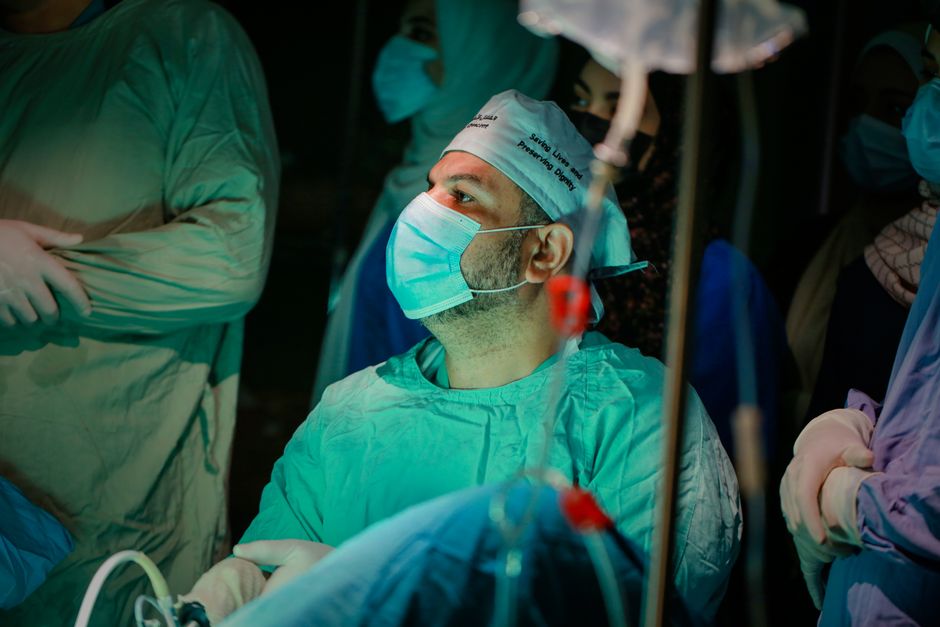
Al-Ahli Arab Hospital: A Flashpoint in the Israel-Hamas Conflict
The Al-Ahli Arab Hospital, a Baptist-run institution in Gaza City, has become a focal point of intense international scrutiny and a symbol of the devastating humanitarian impact of the Israel-Hamas conflict. The hospital, one of the oldest medical facilities in the Gaza Strip, has been caught in the crossfire of hostilities on multiple occasions, raising grave concerns about the protection of civilian infrastructure and healthcare facilities under international law. The complex and often contradictory narratives surrounding incidents at Al-Ahli Arab Hospital underscore the challenges of verifying information in a war zone and the critical need for impartial investigations into alleged violations.
The history of Al-Ahli Arab Hospital is intertwined with the broader narrative of the Israeli-Palestinian conflict. Founded in 1882, it has served the Palestinian population for over a century, providing essential medical services amidst challenging political and economic conditions. Its location in Gaza City, a densely populated urban area, has repeatedly placed it in proximity to areas of intense fighting. Over the years, the hospital has faced numerous challenges, including resource shortages, damage from previous conflicts, and the ongoing blockade of Gaza. These factors have historically hampered its ability to provide comprehensive care and maintain its infrastructure.
The most prominent and controversial incident involving Al-Ahli Arab Hospital occurred on October 17, 2023. Within hours of an explosion that caused a massive loss of life in the hospital’s vicinity, conflicting accounts emerged regarding the cause and perpetrator. The Palestinian Ministry of Health and Hamas immediately accused Israel of conducting an airstrike that hit the hospital, resulting in hundreds of casualties. They presented this as a deliberate act of targeting a civilian medical facility. Hamas has consistently maintained that Israel is responsible for the vast majority of civilian deaths in Gaza, often attributing them to indiscriminate bombing.
Conversely, the Israel Defense Forces (IDF) vehemently denied any responsibility for the explosion at Al-Ahli Arab Hospital. The IDF presented intelligence and forensic evidence suggesting that the blast was caused by a misfired rocket launched by the Palestinian Islamic Jihad (PIJ), a rival militant group to Hamas. The IDF released audio recordings and satellite imagery, arguing that their analysis indicated the trajectory of the rocket originated from within Gaza and that the damage pattern was inconsistent with an Israeli airstrike. They also highlighted that their intelligence suggested the PIJ had attempted to launch multiple rockets around the same time, and one had malfunctioned.
The immediate aftermath of the explosion saw a rapid escalation of international condemnation directed at Israel. Many governments and international organizations, initially relying on information from Palestinian sources, issued strong statements denouncing the alleged Israeli attack. This rapid attribution, often without independent verification, fueled widespread anger and protests globally. The narrative of an Israeli attack on a hospital, a protected site under the Geneva Conventions, resonated deeply and quickly became a central point of contention in the ongoing conflict’s information war.
The United Nations, along with numerous humanitarian organizations, launched investigations and called for thorough inquiries into the incident. The complexity of the situation, coupled with the destruction at the site and the difficulty of accessing Gaza, made independent verification exceptionally challenging. The UN Secretary-General, António Guterres, reiterated the UN’s commitment to upholding international humanitarian law and ensuring accountability for violations. The differing claims and the lack of definitive, immediate proof created an environment where accusations and counter-accusations flourished, making it difficult for the public and policymakers to ascertain the truth.
The implications of the Al-Ahli Arab Hospital incident extend far beyond the immediate casualty figures. It highlighted the profound challenges of applying international humanitarian law in urban warfare, where civilian infrastructure is often situated in close proximity to military targets. The principle of distinction, which mandates that parties to a conflict must distinguish between combatants and civilians, and between military objectives and civilian objects, is constantly tested. The prohibition of indiscriminate attacks, and the requirement to take all feasible precautions to avoid, and in any event to minimize, incidental loss of civilian life, wounded persons and damage to civilian objects, are also central to this debate.
The incident also underscored the critical role of media and information in shaping public opinion and influencing international policy during conflicts. The speed at which information, both verified and unverified, can spread globally, particularly through social media, has a significant impact on the narrative surrounding events. The weaponization of information, often referred to as disinformation or propaganda, is a constant feature of modern warfare, and the Al-Ahli Arab Hospital incident became a stark example of this phenomenon. Determining the factual basis of claims in real-time, especially when access to the scene is restricted, remains a formidable obstacle.
The international community’s response to the Al-Ahli Arab Hospital incident has been multifaceted. While some nations maintained their initial stance, others called for restraint and further investigation, acknowledging the conflicting evidence. The incident intensified calls for a de-escalation of hostilities and a renewed push for diplomatic solutions to the broader Israeli-Palestinian conflict. The protection of hospitals and healthcare workers is a fundamental tenet of humanitarian law, and any perceived violation triggers significant international outcry and demands for accountability.
From an SEO perspective, the terms "Israel Hamas Gaza hospital," "Al-Ahli Arab Hospital," "Gaza hospital explosion," "Gaza conflict," and "international humanitarian law" are highly relevant. The article aims to address the search intent of individuals looking for information about this specific event and its broader implications within the context of the ongoing conflict. Keywords such as "hospital bombing Gaza," "who attacked Gaza hospital," and "Gaza medical facilities" are also critical.
The article’s structure and content are designed to provide a comprehensive overview, addressing the core issues surrounding the Al-Ahli Arab Hospital incident. This includes detailing the accusations, the denials, the evidence presented by both sides, and the international response. Furthermore, by contextualizing the event within the framework of international humanitarian law, the article provides valuable insights into the legal and ethical dimensions of the conflict.
The long-term implications of the Al-Ahli Arab Hospital incident for the Gaza Strip are profound. The destruction of any medical facility, regardless of the cause, exacerbates the already dire humanitarian crisis in Gaza. Access to healthcare is a fundamental human right, and the damage to such critical infrastructure further limits the capacity of medical professionals to treat the wounded and sick. The incident also contributes to a climate of fear and insecurity for both civilians and healthcare workers, making it even more difficult to provide essential services.
The debate over responsibility for the Al-Ahli Arab Hospital explosion reflects the broader challenges of attribution in asymmetric warfare. Militant groups like Hamas and PIJ often operate from densely populated civilian areas, making it difficult for opposing forces to conduct military operations without risking civilian casualties. This dynamic complicates the application of international law and frequently leads to disputes over responsibility for harm to civilians and civilian objects.
Furthermore, the incident highlights the critical need for independent and transparent investigations into alleged violations of international law. Such investigations, conducted by credible international bodies, are essential for establishing facts, ensuring accountability, and preventing future transgressions. The politicization of such incidents, however, often hinders the pursuit of truth and justice.
The role of international diplomacy in addressing the humanitarian consequences of the conflict, including the protection of healthcare facilities, cannot be overstated. Sustained diplomatic efforts are required to de-escalate tensions, facilitate the delivery of humanitarian aid, and ultimately work towards a lasting political resolution to the Israeli-Palestinian conflict. The Al-Ahli Arab Hospital incident serves as a stark reminder of the urgent need for such efforts and the devastating human cost of continued hostilities. The hospital’s enduring significance lies not only in its medical services but also as a potent symbol of the vulnerability of civilian infrastructure in times of war and the complex, often tragic, realities faced by those caught in the crossfire. The ongoing search for truth regarding the October 17th incident at Al-Ahli Arab Hospital continues to be a crucial element in the broader understanding of the conflict’s impact and the international community’s efforts to uphold humanitarian principles.
