
Koch Chevron Deference Supreme Court
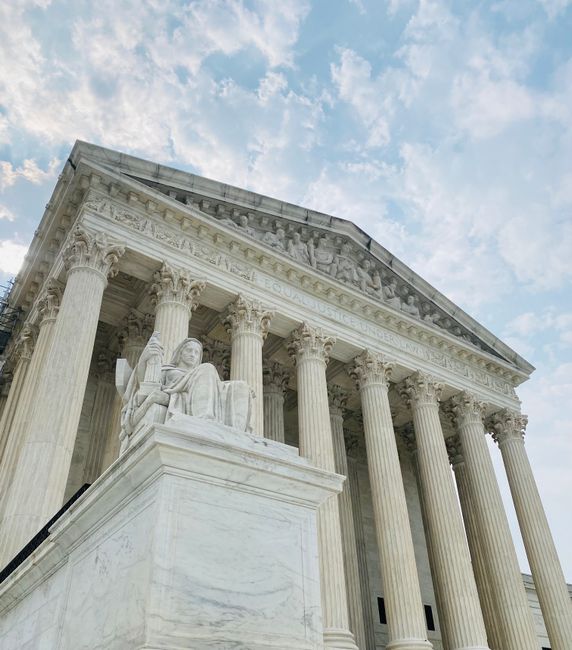
Chevron Deference: The Supreme Court’s Enduring Influence on Administrative Law
The doctrine of Chevron deference, established by the Supreme Court of the United States in Chevron U.S.A., Inc. v. Natural Resources Defense Council, Inc. (1984), stands as a cornerstone of modern administrative law. This seminal ruling profoundly reshaped the relationship between federal agencies and the judiciary, empowering administrative agencies to interpret ambiguous statutes enacted by Congress. The core principle of Chevron deference dictates that when a statute administered by an agency is ambiguous with respect to a specific issue, and the agency has adopted a reasonable interpretation of that ambiguity, courts must defer to the agency’s interpretation. This deference is not automatic; it is contingent upon specific conditions and has been a subject of intense legal and political debate, leading to numerous subsequent Supreme Court cases that have clarified, nuanced, and sometimes challenged its application. Understanding Chevron deference is crucial for comprehending the practical impact of federal regulations on industries, individuals, and the environment.
The genesis of Chevron deference lies in the Court’s recognition of the specialized expertise and delegated authority vested in administrative agencies. Congress, in its legislative capacity, often crafts statutes with broad language, leaving specific details and practical applications to be fleshed out by executive agencies. These agencies, through their staffs of experts and ongoing engagement with regulated entities, possess a unique understanding of the technical, economic, and scientific complexities inherent in the areas they oversee. The Chevron Court reasoned that to undermine these agency interpretations, especially when they are reasonable, would create regulatory instability and inefficiency. It would also, in effect, allow judges, who may lack specialized knowledge, to substitute their own policy preferences for those of the democratically accountable executive branch. The doctrine, therefore, aimed to promote judicial efficiency by avoiding unnecessary litigation over statutory interpretations and to foster coherent and consistent administrative policy.
The Chevron framework, as originally articulated, involves a two-step analysis. Step one requires a court to ascertain whether Congress has directly spoken to the precise question at issue. This involves a thorough examination of the statutory text, including its plain meaning, structure, and context. If the statute is clear and unambiguous on the point, the court must give effect to the unambiguously expressed intent of Congress, and the inquiry ends there. However, if the statute is silent or ambiguous, the court proceeds to step two. Step two of the Chevron analysis mandates that courts defer to the agency’s interpretation of the statute, provided that interpretation is "reasonable." The definition of "reasonable" in this context is broad, encompassing interpretations that are not arbitrary, capricious, or manifestly contrary to the statute. This allows agencies considerable latitude in filling statutory gaps and resolving ambiguities.
The impact of Chevron deference on agency rulemaking and adjudication has been profound. By granting agencies significant leeway in interpreting statutory mandates, the doctrine has empowered them to adapt regulations to evolving circumstances and to implement congressional intent in practical ways. This has been particularly evident in areas such as environmental regulation, where agencies like the Environmental Protection Agency (EPA) have wielded considerable interpretative power. Similarly, agencies responsible for economic regulation, such as the Securities and Exchange Commission (SEC) or the Federal Communications Commission (FCC), have relied on Chevron deference to shape their policies and enforce federal laws. Critics, however, argue that Chevron deference grants agencies too much power, allowing them to effectively legislate from the executive branch and to circumvent the traditional checks and balances of the legislative process. They contend that this can lead to an overreach of administrative power and a departure from the original intent of Congress.
The application and scope of Chevron deference have been consistently refined and debated through subsequent Supreme Court decisions. Mead Corp. v. United States (2001) significantly altered the landscape by clarifying when Chevron deference applies. The Mead Court held that Chevron deference is generally only appropriate when an agency interpretation is promulgated in the exercise of its rulemaking authority, such as through formal notice-and-comment rulemaking, or through other administrative adjudications that carry the force of law. Interpretations found in less formal documents, like opinion letters or policy statements, typically receive less deference, often being reviewed under the more deferential standard of Skidmore v. Swift & Co. (1944), which assesses the "power to persuade" based on the agency’s thoroughness, consistency, and justification. This distinction between formal and informal agency interpretations has become a critical element in Chevron analysis.
The two-step framework of Chevron has also faced scrutiny, with some justices questioning the clarity of the "ambiguity" determination at step one and the "reasonableness" standard at step two. Numerous cases have grappled with what constitutes sufficient ambiguity to trigger Chevron deference. For instance, in United States v. O’Melveny & Co. (1994), the Court emphasized that a statutory provision is not ambiguous simply because it is possible to interpret it in more than one way; rather, ambiguity exists when a statute has "no discernible meaning" or is susceptible to multiple plausible interpretations. The debate over what constitutes a "reasonable" agency interpretation at step two has also been robust, with courts often considering whether the agency’s interpretation is consistent with the statutory text, legislative history, and the overall purpose of the statute.
The political landscape surrounding administrative agencies has also fueled ongoing challenges to Chevron deference. During periods of shifting presidential administrations, different political ideologies often inform agency interpretations of statutes. This can lead to significant swings in regulatory policy, as agencies under one administration might interpret a statute in a way that is sharply at odds with an agency under a previous administration. Critics argue that Chevron deference, by insulating these shifting interpretations from robust judicial review, allows political agendas to unduly influence the implementation of federal law. Proponents, conversely, maintain that this adaptability is a necessary feature of administrative law, allowing agencies to respond to evolving societal needs and technological advancements within the framework of congressionally enacted laws.
More recent Supreme Court jurisprudence has seen a growing skepticism towards broad applications of Chevron deference. While the doctrine has not been outright overturned, there’s a discernible trend toward narrowing its reach or applying it more strictly. Cases like King v. Burwell (2015), which involved an interpretation of the Affordable Care Act, saw the Court engage in a more searching review of the statutory language before ultimately deferring to the agency’s interpretation, but only after a thorough textual analysis that many viewed as pushing the boundaries of step one. This case highlighted the ongoing tension between the Court’s role in interpreting statutes and its deference to agency expertise.
The economic and societal implications of Chevron deference are vast. Industries that are heavily regulated, such as energy, finance, and healthcare, are directly impacted by how agencies interpret the laws governing them. A broad interpretation of an agency’s statutory authority can lead to more stringent regulations, increased compliance costs, and potentially new market opportunities or constraints. Conversely, a narrower interpretation can result in a more permissive regulatory environment. Environmental advocacy groups, consumer protection organizations, and labor unions often rely on agencies to vigorously enforce laws and interpret them in ways that promote public welfare. The level of deference afforded to agency interpretations can therefore significantly influence the effectiveness of these efforts.
The debate over Chevron deference is also intricately linked to the broader discussion about the separation of powers and the balance of authority between the branches of government. Critics of Chevron often argue that it represents an unconstitutional delegation of legislative power to the executive branch. They contend that Congress should be more precise in its legislative drafting, leaving less room for agency interpretation. Supporters, however, argue that Chevron deference is a necessary tool for effective governance in a complex modern society, allowing agencies to implement broad statutory mandates in a practical and responsive manner. They point to the fact that agencies are ultimately accountable to the President, who is an elected official, and that Congress retains oversight authority.
The ongoing legal and political discourse surrounding Chevron deference suggests that its future remains a subject of intense interest and potential change. Future Supreme Court decisions could further refine or even significantly alter the doctrine. The composition of the Court and the prevailing legal philosophies of its justices will undoubtedly play a role in shaping these developments. Any significant modification to Chevron deference would have far-reaching consequences for administrative law, regulatory policy, and the balance of power within the federal government, impacting how laws are written, interpreted, and enforced for years to come. The quest for clarity and the appropriate level of judicial oversight in administrative agency actions will continue to be a defining feature of American jurisprudence.
