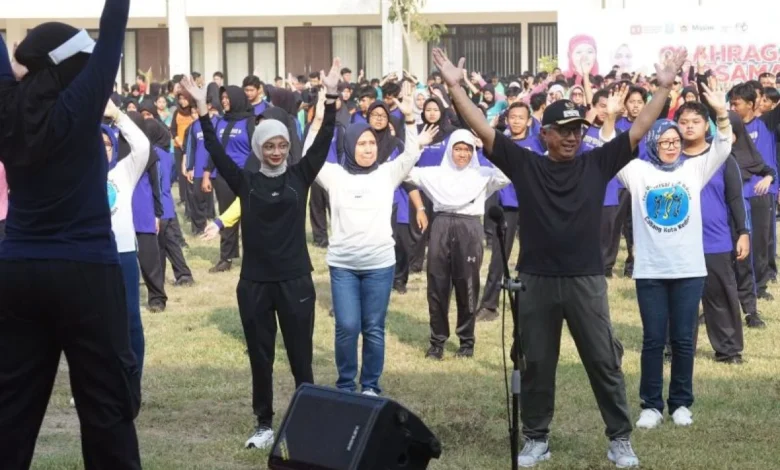
September 9th stands as a cornerstone in the Indonesian calendar, marking the annual celebration of National Sports Day, or Hari Olahraga Nasional (Haornas). While the day serves as a vibrant reminder of the nation’s athletic achievements, its origins are deeply rooted in the struggle for national identity during the early years of independence. Beyond the ceremonies and athletic competitions that characterize this date, Haornas represents a long-standing commitment to fostering a physically active society and nurturing the spirit of perseverance that first took hold in the city of Solo in 1948.
The Historical Genesis: From Political Struggle to Sporting Milestone
The inception of National Sports Day is inseparable from the geopolitical challenges faced by the young Republic of Indonesia in the late 1940s. Following the proclamation of independence in 1945, the nation sought international recognition and legitimacy on the global stage. In 1948, the Indonesian government aspired to participate in the XIV Olympic Games in London. However, the international community’s hesitation to recognize Indonesia’s sovereignty meant the young nation faced insurmountable administrative hurdles, preventing its athletes from competing under the Indonesian flag.
Refusing to be sidelined, Indonesian sports pioneers opted to demonstrate the nation’s vitality internally. This decision led to the inauguration of the first Pekan Olahraga Nasional (PON)—the National Sports Week—held in Solo, Central Java, from September 9 to 12, 1948. By successfully organizing a national-scale sporting event despite the ongoing revolutionary climate, Indonesia signaled to the world that it was a functional, organized, and unified state. The opening day of this event, September 9, would eventually be codified as the symbolic birthdate of Indonesia’s commitment to organized sports.
Chronology of Institutionalization
While the spirit of PON 1948 established the cultural significance of September 9, it took several decades for the date to be officially recognized as a national holiday. The following timeline outlines the evolution of Haornas from a commemorative date to an institutionalized national event:
- September 9, 1948: The inaugural PON is held in Solo, marking the first time Indonesian athletes compete under the banner of the newly formed Republic.
- September 9, 1983: President Soeharto officially declares September 9 as National Sports Day during the inauguration of the renovated Sriwedari Stadium in Surakarta. This marked the first official state-level recognition of the day.
- 1985: The legal framework for the celebration is solidified through the issuance of Presidential Decree (Keppres) Number 67 of 1985, which formally designated September 9 as the National Sports Day, emphasizing the need for sustainable sports development across the archipelago.
- 1986–Present: For over four decades, the date has been observed with varying degrees of focus, ranging from elite athlete development programs to grassroots public health campaigns aimed at increasing the national participation rate in physical activity.
The Philosophical Shift: Beyond Medals and Podium Finishes
In recent years, the Ministry of Youth and Sports (Kemenpora) has shifted the narrative surrounding Haornas. While the pursuit of medals in international arenas like the Olympics and Asian Games remains a high priority, there is a growing emphasis on the "democratization" of sports. The 2025 and 2026 guidelines released by the Ministry explicitly state that the core mission of Haornas is to transition sports from a competitive pursuit into a cultural pillar of Indonesian society.
This approach acknowledges that sports serve as a powerful tool for social cohesion. By promoting physical fitness, the government aims to combat the rising prevalence of sedentary lifestyles in urban centers, which are increasingly linked to non-communicable diseases. The current policy framework views sports as a medium to instill discipline, resilience, and teamwork—traits essential for the development of human capital in a competitive global economy.
Strategic Economic and Social Implications
The implications of robust sports development extend far beyond the stadium. Analysts and government officials have noted that the "Sports Industry" is becoming a significant contributor to the national economy. With the hosting of major events such as the upcoming PON, the government is leveraging sports tourism as a catalyst for regional development.
For instance, the initiative to turn regions like Sumba Timur into "sport tourism" hubs during the 2028 PON cycle highlights a strategic move to distribute economic benefits outside of major metropolitan areas. By investing in world-class facilities and infrastructure, the government creates a multiplier effect: hotels, local transport, culinary businesses, and hospitality services all thrive during these periods.
However, this growth requires significant capital. Recent budgetary discussions by Kemenpora underscore the financial demands of such ambitions, with proposals reaching IDR 1.5 trillion to establish national-standard academies and training centers. These investments are deemed necessary to bridge the gap between amateur talent and professional readiness.
Official Stance and Public Participation
In his recent statements, the Minister of Youth and Sports emphasized that the evolution of the sports sector must be balanced with economic and health considerations. "The development of sports is not merely about creating world-class athletes; it is about creating a healthy, productive generation," the Ministry noted in recent press briefings. By integrating health benefits with economic opportunity, the Ministry aims to create a sustainable cycle where public participation fuels grassroots talent identification, which in turn feeds into elite national teams.
For the general public, Haornas 2026—the 43rd anniversary of the official proclamation—is framed as a call to action. The government has encouraged a wide range of activities to mark the day:
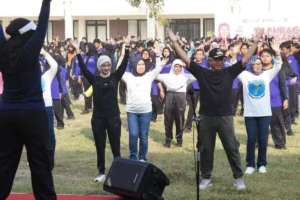
- Community-Led Initiatives: Neighborhoods and workplaces are encouraged to organize collective morning exercises or amateur tournaments to build local social capital.
- Educational Outreach: Schools are urged to host seminars on the history of Indonesian sports to foster a sense of pride and historical consciousness among the youth.
- Support for Athletics: Promoting the consumption of local sports content and attending domestic league games to support the domestic sports economy.
Challenges and Future Outlook
Despite the progress, the road ahead for Indonesian sports is not without obstacles. The primary challenge remains the equitable distribution of sports infrastructure. While major cities in Java have historically received the lion’s share of investment, the government’s current policy emphasizes a more decentralized approach to ensure that talent in eastern provinces is not overlooked.
Furthermore, the integration of technology in sports science is an area that requires more aggressive development. From data analytics to modern sports medicine, the standard for elite performance is rising globally. Indonesia’s ability to compete on the world stage will depend on its capacity to modernize its training facilities and adopt international best practices in athlete management.
As the nation celebrates the 43rd Haornas in 2026, the focus is clearly on sustainability. The legacy of the 1948 PON, which was born out of a desire for national recognition, has evolved into a modern blueprint for national health, economic prosperity, and social unity. The narrative of Indonesian sports is no longer just about the struggle for existence, but about the struggle for excellence in every facet of national life.
The momentum gathered every September 9 serves as a vital checkpoint. It is a time for the nation to pause, reflect on its sporting heritage, and recalibrate its efforts toward ensuring that the values of the playing field—fair play, grit, and collective effort—continue to guide the development of the country. As society moves forward, the integration of sports into daily life remains a critical mission, ensuring that the spirit of the pioneers who organized that first event in Solo continues to inspire future generations of Indonesians to lead active, disciplined, and healthy lives.
Related posts: