Scientists Uncover 4.1-Billion-Year-Old Martian Meteorite Revealing Ancient Water and Early Planet Evolution

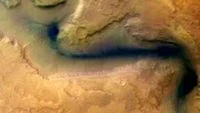
In a groundbreaking discovery that reshapes our understanding of planetary evolution within the inner solar system, an international team of planetary scientists has identified a rare Martian meteorite estimated to be more than 4.1 billion years old. Designated as Teghaza 001, the pink-hued rock has provided unprecedented chemical clues indicating that Mars once possessed abundant liquid water billions of years ago, long before it transitioned into the arid, freezing desert world observed today.
The findings, which were officially detailed in a study published in the prestigious journal Science in late October, offer a unique temporal window into the infant stages of the Red Planet. Researchers emphasize that examining this ancient specimen allows modern science to glimpse the primitive crust and mantle of Mars during an era roughly contemporaneous with the dawn of life on Earth.
Main Facts of the Discovery
Teghaza 001 was initially recovered in 2022 across the salt flats of Teghaza, situated in Mali, West Africa. The meteorite collection comprises eight distinct fragments with a cumulative weight of 798.5 grams, equivalent to approximately 1.76 pounds. The single largest fragment recovered from the strewn field weighs 442 grams, or nearly 0.97 pounds.
Unlike the vast majority of Martian meteorites cataloged to date, Teghaza 001 possesses a distinct pink coloration and an unorthodox chemical makeup. Yang Liu, a prominent planetary scientist at NASA’s Jet Propulsion Laboratory (JPL) in California and a lead researcher on the project, noted that the meteorite’s chemical composition diverges sharply from standard Martian samples previously studied in laboratories on Earth.
Chronology of the Research
The path to uncovering the true identity of Teghaza 001 was characterized by initial skepticism followed by technological innovation. When the sample was first brought to the research team, Yang Liu admits she was initially unenthusiastic about conducting a deep analysis. Having spent years analyzing shergottites—the dominant class of Martian meteorites that account for approximately 90 percent of all known rocks originating from the Red Planet—Liu assumed Teghaza 001 would share the same characteristics.
Standard shergottites analyzed in laboratories typically yield crystallization ages of less than 600 million years, reflecting a relatively young volcanic history for a significant portion of the Martian surface. However, persuaded by colleagues to examine the sample more closely, Liu and her team embarked on a rigorous analytical process.
To accurately date the rock, the team relied on a novel analytical technique developed by Hayward Melton, a doctoral student at the California Institute of Technology (Caltech). Traditional radiometric dating methods often require dissolving substantial portions of a meteorite sample, which can destroy rare structures and mix different mineral phases. In contrast, Melton’s pioneering method utilizes a focused laser beam to vaporize infinitesimally small spots on the sample. This micro-analytical approach allows scientists to target tiny mineral grains and crystals hidden within the rock without compromising its broader integrity.
Applying this laser technique to Teghaza 001 revealed that the meteorite crystallized during the first 400 million years of Martian history, placing its formation at roughly 4.1 billion years ago.
Supporting Data and Mineralogical Evidence
Central to confirming the age and history of Teghaza 001 is the presence of zircon, a remarkably resilient accessory mineral. Zircon crystals form when molten rock cools and solidifies. Because of its robust chemical structure, zircon effectively locks in uranium and lead isotopes, acting as an atomic stopwatch.
"Zircon is like a time capsule that allows us to determine the exact age of rock formation," explained Yang Liu.
Beyond its age, the laser-ablation analysis conducted using Melton’s methodology uncovered a deeper environmental history locked within the crystals. The data revealed that Teghaza 001 interacted extensively with liquid water while it was still deeply embedded within the ancient Martian crust. The sample contains unusually high concentrations of two distinct calcium-rich minerals, alongside oxygen isotope ratios that have never before been recorded in any previously analyzed Martian meteorite collection.
These chemical signatures serve as a chemical fingerprint of aqueous alteration, confirming that warm or temperate water circulated through the primordial Martian crust during the Noachian or early-Hesperian epochs—periods traditionally associated with wetter, potentially habitable conditions on the planet.
Official Responses and Scientific Implications
The academic community has received the publication of the Teghaza 001 findings with considerable enthusiasm. Astrobiologists and planetary geologists have long sought pristine samples from the Noachian period of Mars to understand how the planet lost its dense atmosphere and surface water reserves. Because plate tectonics largely recycled Earth’s oldest crust, finding pristine materials from the first 500 million years of planetary history is virtually impossible on our home planet, making ancient meteorites from Mars and the Moon invaluable archives.
The implications of this study extend far beyond the laboratory bench in California. By establishing that water was chemically active within the Martian crust over four billion years ago, the research reinforces models suggesting that early Mars possessed a hydrologic cycle capable of supporting subsurface hydrothermal systems. While modern Mars is locked in a deep deepfreeze with a thin carbon dioxide atmosphere, its distant past may have closely mirrored the environmental conditions found on primordial Earth.
Future Research Directions and Exploration Strategies
Buoyed by the success of analyzing Teghaza 001, the international research consortium has outlined ambitious next steps. Scientists are actively collaborating to identify up to 13 potential geographic locations across deserts and arid regions worldwide where additional fragments of this specific ancient impact event might have landed. Recovering more pieces of Teghaza 001—or finding related impactites from the same parent ejection event—could allow researchers to map out spatial variations in the ancient Martian crust and verify whether global or localized water systems dominated the planet’s infancy.
As analytical techniques continue to evolve, blending high-resolution mass spectrometry with advanced laser micro-sampling, researchers anticipate that meteorites resting silently in museum drawers and private collections may hold even deeper secrets. The story of Teghaza 001 demonstrates that the answers to Mars’ climatic collapse are written not just in the data returned by rovers traversing Gale or Jezero craters, but also in the ancient space rocks that occasionally fall to Earth.