Sumpah Pemuda: The Defining Milestone of Indonesian National Consciousness and the Blueprint for Modern Unity

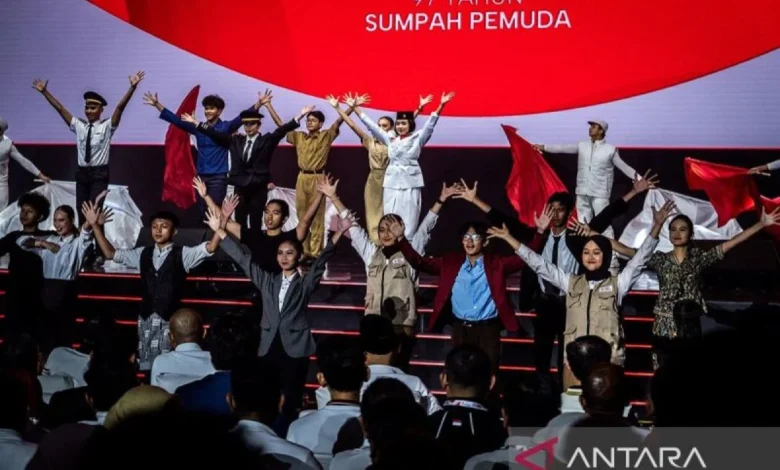
The Sumpah Pemuda, or Youth Pledge, commemorated annually on October 28, stands as the foundational bedrock of the Indonesian nation-state. Born from the fervent intellectual and political activism of the early 20th century, this historic oath transcended the fragmented tribal and regional identities of the Dutch East Indies, coalescing them into a singular, unified identity: one motherland, one nation, and one language. While the proclamation itself occurred in 1928, its resonance remains a critical lens through which modern Indonesia evaluates its socio-political cohesion and national integrity.
The Historical Genesis: A Gradual Awakening
The path to the Sumpah Pemuda was not a spontaneous uprising but a meticulously cultivated movement driven by the "Ethical Policy" implemented by the Dutch colonial government at the turn of the century. Although intended to educate a local elite for administrative purposes, these educational opportunities inadvertently provided a platform for the burgeoning indigenous intelligentsia to encounter ideas of nationalism, self-determination, and democracy.
By the early 1920s, a mosaic of youth organizations had sprouted across the archipelago. These included the Jong Java, Jong Sumatranen Bond, Jong Bataks Bond, Jong Celebes, and Jong Ambon. While these groups were initially rooted in provincial or ethnic loyalties, their leaders—many of whom were students studying in urban centers like Jakarta (then Batavia)—began to recognize that their common struggle against colonial hegemony necessitated a unified front.
The pivotal shift occurred with the realization that regionalism was a tool effectively utilized by the colonial administration to maintain "divide and rule" policies. The intellectual pivot toward a pan-Indonesian identity began in earnest with the First Youth Congress in 1926. Though the 1926 congress failed to reach a definitive consensus on the structure of a unified movement, it successfully established the interpersonal networks and the ideological framework that would culminate in the landmark events of 1928.
Chronology of the Second Youth Congress
The road to October 1928 was paved by the Perhimpunan Pelajar-Pelajar Indonesia (PPPI), an organization representing students from various regions. The preparations were rigorous, involving strategic meetings on May 3 and August 12, 1928, to finalize the logistical and ideological agenda of the Second Youth Congress.
The congress took place over two days, October 27–28, 1928, spanning three distinct locations in Jakarta:
- October 27, 1928: The opening session at the Gedung Katholieke Jongenlingen Bond, where discussions centered on the significance of the national movement and the role of youth.
- October 28, 1928 (Morning): The second session held at the Oost-Java Bioscoop, focusing on the critical roles of education and democratic awareness in the liberation movement.
- October 28, 1928 (Evening): The final session at the Indonesische Clubgebouw on Jalan Kramat 106. It was during this session that the synthesis of the movement was finalized.
The atmosphere was electric with revolutionary fervor. A seminal moment occurred when W.R. Supratman performed "Indonesia Raya" on his violin. Though the lyrics were not yet sung to avoid immediate censorship by the Dutch colonial authorities, the melody became an instant symbol of the movement, solidifying the emotional bond between the delegates. The final draft of the oath, articulated by Muhammad Yamin and formally recited by the congress chairman, Sugondo Djojopuspito, remains the definitive statement of the Indonesian independence movement.
The Text of the Pledge: Linguistic and Political Significance
The three-part pledge, transcribed in the colonial-era spelling (Van Ophuijsen) but now standardized in modern Bahasa Indonesia, reads:
- Kami putra dan putri Indonesia, mengaku bertumpah darah yang satu, tanah Indonesia (We, the sons and daughters of Indonesia, acknowledge one motherland, the land of Indonesia).
- Kami putra dan putri Indonesia, mengaku berbangsa yang satu, bangsa Indonesia (We, the sons and daughters of Indonesia, acknowledge one nation, the nation of Indonesia).
- Kami putra dan putri Indonesia, menjunjung bahasa persatuan, bahasa Indonesia (We, the sons and daughters of Indonesia, uphold the language of unity, the Indonesian language).
The significance of the third point cannot be overstated. By choosing a standardized version of Malay—the lingua franca of the archipelago—as the "language of unity," the youth effectively bypassed the linguistic hierarchy of the time, which favored Dutch and Javanese. This decision democratized communication across the archipelago, providing a linguistic vehicle for national discourse that was accessible to all ethnic groups.
Socio-Political Analysis: Why It Remains Vital
Sociologists and historians argue that the Sumpah Pemuda was the first "national consensus" that successfully anticipated the complexities of a post-colonial state. Unlike many other nations that formed after independence, Indonesia utilized a pre-existing national identity forged by the youth to underpin its statehood.
1. Managing Diversity (Bhinneka Tunggal Ika)
The pledge serves as the ideological anchor for the national motto, Bhinneka Tunggal Ika (Unity in Diversity). It posits that cultural, religious, and linguistic differences are not impediments but constituents of a singular national identity. This concept remains the primary defense against contemporary threats of sectarianism and regional separatism.
2. The Role of the Youth as a Catalyst
The 1928 congress serves as a historical precedent for the "student-led movement" archetype in Indonesian politics. From the 1945 revolution to the 1966 transition and the 1998 Reformasi, the youth have consistently acted as the "moral force" of the nation. The Sumpah Pemuda validates the idea that the youth are not merely future leaders, but active agents of change.
3. Economic and Global Integration
In the 21st century, the definition of "tumpah darah" (motherland) has expanded. While the 1928 delegates focused on territorial integrity against colonialism, contemporary observers note that modern patriotism involves protecting the nation’s digital sovereignty, natural resources, and environmental sustainability. The pledge is now viewed as an invitation for the youth to engage in global competition while maintaining an unwavering commitment to national interests.
Contemporary Perspectives and Official Responses
Government officials and educational institutions consistently reiterate that the Sumpah Pemuda is not a static historical relic. On the occasion of the anniversary, the Ministry of Youth and Sports typically emphasizes the need for digital literacy and innovation.
"The challenges of 1928 were the shackles of colonial rule," noted a policy analyst familiar with the government’s youth outreach programs. "Today, the shackles are misinformation, intolerance, and economic inequality. The spirit of the Sumpah Pemuda is the spirit of critical thinking and solidarity. If the youth of 1928 could bridge ethnic divides with nothing but a shared vision, the youth of today have even greater tools at their disposal to ensure that Indonesia remains a united, prosperous, and democratic nation."
Furthermore, academic institutions have intensified efforts to contextualize the pledge for Gen Z and Generation Alpha. Recent research by the Indonesian Institute of Sciences (LIPI) suggests that while young Indonesians are highly connected to global cultures, their identification with the Indonesian language and national symbols remains exceptionally high, largely due to the cultural legacy of the Sumpah Pemuda.
The Ongoing Legacy: A Foundation for the Future
The legacy of October 28, 1928, is inextricably linked to the trajectory of the Republic of Indonesia. It provided the moral authority for the proclamation of independence seventeen years later. Without the consensus reached in the youth congress, the diverse regions of the Dutch East Indies might have pursued fragmented, tribal-based independence movements, potentially leading to a partitioned archipelago.
The endurance of the Sumpah Pemuda lies in its simplicity. It requires no complex legal framework to understand; it requires only a commitment to the "other" as a compatriot. As Indonesia navigates the complexities of the 21st century—marked by rapid urbanization, climate change, and the digital transformation—the oath acts as a compass.
It reminds the nation that the state was not merely a product of diplomatic negotiation at the end of the war, but a deliberate, conscious choice by a generation that valued the collective over the individual. As long as the youth of Indonesia continue to view their identity through the lens of unity, the Sumpah Pemuda will remain the most significant document in the nation’s political history, serving as a constant reminder that Indonesia is not just a geographical entity, but a shared responsibility.
In conclusion, the Sumpah Pemuda is more than a date on the calendar; it is a living document. Its survival depends on the ability of each subsequent generation to reinterpret its values in a way that remains relevant to their era. Whether through digital innovation, social activism, or the simple act of fostering dialogue across cultural divides, the youth of Indonesia remain the stewards of the vow taken in 1928. By honoring the past, the nation secures its future, ensuring that the dream of a unified Indonesia remains a vibrant, evolving reality for generations to come.