
Supreme Court Texas Border Barbed Wire
Supreme Court Texas Border Barbed Wire: A Legal and Logistical Battleground
The United States Supreme Court’s recent involvement in the Texas border dispute, specifically concerning Governor Greg Abbott’s deployment of razor-sharp barbed wire and other physical barriers along the Rio Grande, has thrust the issue into the national spotlight. This legal confrontation is not merely about a physical obstruction; it represents a complex interplay of federal authority, state sovereignty, immigration policy, and human rights concerns. The razor wire, a potent symbol of a hardened border, has become the focal point of a legal battle that questions the extent to which a state can unilaterally enforce immigration laws and secure its borders when such actions intersect with federal jurisdiction and international agreements. The controversy stems from Texas’s Operation Lone Star, a state-funded initiative aimed at deterring illegal immigration and combating drug smuggling. Central to this operation is the extensive use of formidable barriers, including concertina wire, deployed along the riverbank. Critics argue these barriers are inhumane, dangerous, and an infringement upon federal authority over immigration. Supporters contend they are a necessary measure to protect Texas from an overwhelming influx of migrants and to address border security failures at the federal level. The Supreme Court’s intervention signifies the gravity of the situation and the deep divisions over how to manage the U.S.-Mexico border.
The legal crux of the matter lies in the Supremacy Clause of the U.S. Constitution, which establishes that federal laws are paramount when they conflict with state laws. Immigration law is primarily a federal domain, and the Supreme Court has historically upheld this principle. Texas, however, has asserted its right to self-defense and to protect its citizens, arguing that the federal government has failed to adequately secure the border. Governor Abbott’s administration has invoked state authority to arrest and detain migrants, prosecuting them for state trespassing laws, and using the razor wire as a deterrent and impediment. This approach directly challenges the established federal framework for immigration enforcement. The legal arguments presented before the Supreme Court revolve around whether Texas’s actions are preempted by federal law, whether they violate established property rights along the border, and whether the use of such barriers constitutes an undue burden on federal immigration authorities. The state’s defense hinges on its inherent sovereign powers and its duty to protect its populace, particularly in the face of what it describes as a crisis.
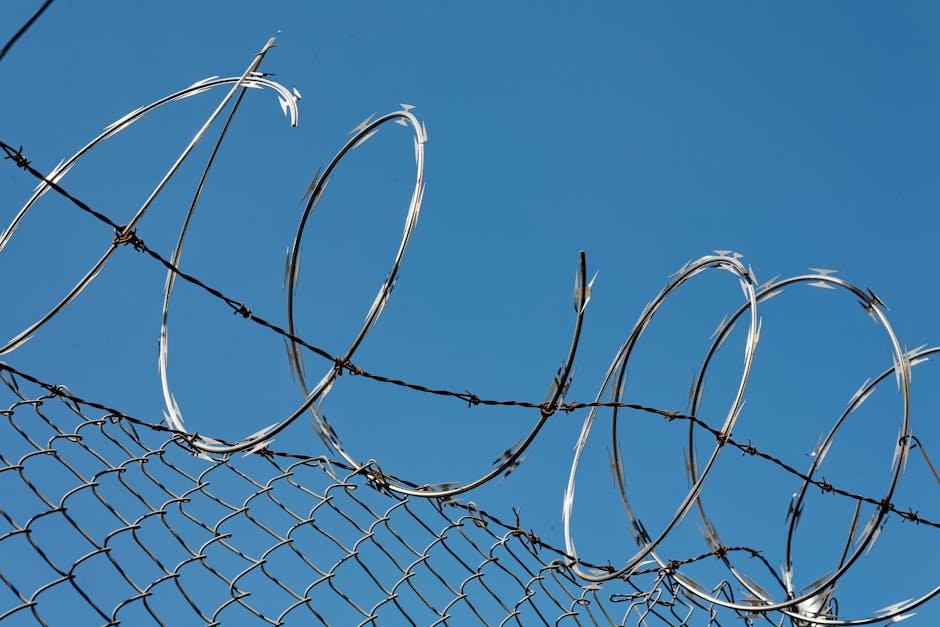
The physical deployment of barbed wire along the Rio Grande is not a new tactic, but its scale and the direct confrontation it has instigated with federal agencies represent an escalation. The wire is often strung tightly along the riverbank, sometimes multiple layers deep, making passage extremely difficult and dangerous. Reports and images have emerged of migrants, including women and children, sustaining injuries from the sharp metal. This has drawn sharp criticism from human rights organizations and legal advocates who decry the humanitarian cost and the ethical implications of using such a weaponized barrier. The U.S. Border Patrol has also expressed concerns, noting that the wire can impede their own operations and create hazards for their agents. This has led to a contentious relationship between state law enforcement and federal border officials, further complicating an already complex border management situation. The visual impact of the razor wire is undeniable, symbolizing a hardening of the border and a stark contrast to previous approaches that emphasized processing and humanitarian concerns.
The legal arguments before the Supreme Court have touched upon several key areas. Firstly, the issue of federal preemption is paramount. Texas’s actions are alleged to interfere with the federal government’s exclusive authority to regulate immigration. Attorneys for the Biden administration have argued that state-imposed barriers and enforcement measures create a patchwork of immigration laws, undermining national policy and potentially leading to international incidents. Secondly, property rights along the border are a significant concern. Many of the areas where the wire is deployed are privately owned, and the construction of these barriers has raised questions about trespass and eminent domain. Thirdly, the use of force and the potential for injury have been central to the arguments made by civil rights groups who have filed lawsuits challenging the state’s tactics. They argue that the razor wire constitutes an unreasonable and dangerous use of force, violating constitutional protections.
The Supreme Court’s decision, when it comes, will have far-reaching implications. If the Court sides with Texas, it could embolden other states to take similar unilateral actions to manage their borders, potentially leading to a fragmentation of immigration enforcement across the country. This could create significant legal and logistical challenges for federal agencies and international relations. Conversely, if the Court upholds federal authority, it would reinforce the established legal framework and limit the ability of states to implement their own border security measures that conflict with federal law. This outcome would likely lead to renewed pressure on the federal government to address border security issues more effectively, as states might feel their hands are tied. The ruling will also be closely watched by immigration advocates, human rights organizations, and border communities, all of whom have a vested interest in the outcome.
Beyond the immediate legal battle, the deployment of barbed wire highlights the broader challenges facing the U.S.-Mexico border. These include the sheer volume of asylum seekers, the push and pull factors driving migration, the role of international cooperation, and the need for comprehensive immigration reform. The razor wire, while a tangible barrier, is a symptom of deeper, more complex issues. The debate over its use is a proxy for a larger national conversation about who should control the border, what constitutes humane border management, and what the role of federal versus state governments should be in addressing immigration. The legal battles and policy debates surrounding this issue are likely to continue for years to come, reflecting the enduring and multifaceted nature of border security in the United States.
The operational challenges presented by Texas’s barbed wire are considerable. Federal border patrol agents have reported difficulties in apprehending individuals who have already crossed the border due to the presence of the wire. In some instances, agents have had to cut through the wire to reach migrants in distress, leading to further friction with state authorities. The cost of deploying and maintaining these barriers is also a significant factor, with Texas investing millions of dollars in Operation Lone Star. These resources, critics argue, could be better allocated to more effective, evidence-based solutions for border management and humanitarian assistance. The effectiveness of the razor wire as a deterrent is also debated, with many arguing that desperate migrants will find ways to circumvent or overcome such obstacles, often at great personal risk. The constant physical presence of the wire also creates a tense and militarized atmosphere along the border, impacting the lives of residents and the environment.
Furthermore, the legal arguments extend to the interpretation of existing statutes and the historical precedents set by previous Supreme Court rulings. The doctrine of implied preemption, which holds that federal law can preempt state law even without explicit language to that effect, is likely to be a key consideration. The Court will have to weigh whether Texas’s actions create an actual conflict with federal law or whether they fall within a gray area where states can supplement federal efforts. The specific statutes under which Texas is prosecuting migrants, such as trespassing laws, will also be scrutinized to determine if they are being used in a manner that supersedes federal immigration enforcement. The delicate balance between state and federal power is at the heart of this dispute, and the Supreme Court’s ruling will provide crucial clarity on the boundaries of each.
The humanitarian dimension of the barbed wire controversy cannot be overstated. Accounts from medical professionals and humanitarian aid organizations detail injuries sustained by migrants attempting to cross the Rio Grande, including severe lacerations, hypothermia, and even drownings in their efforts to avoid or navigate the wire. The psychological toll on individuals, particularly families with children, who are confronted with such a formidable and potentially dangerous obstacle, is also a significant concern. The use of the wire as a tool to deter asylum seekers raises questions about whether the United States is upholding its international obligations and its own stated values of providing refuge to those fleeing persecution. The visual evidence of the razor wire, often juxtaposed with images of vulnerable individuals, has fueled a powerful public debate about the nation’s approach to immigration and the ethics of border enforcement.
The political ramifications of the Supreme Court’s decision on the Texas border barbed wire are also substantial. Governor Abbott has positioned himself as a strong defender of state sovereignty and a challenger to what he perceives as federal inaction. A victory for Texas would be a significant political win for him and a boost for conservative factions advocating for stricter border enforcement. Conversely, a ruling in favor of the federal government would be a setback for Abbott and a validation of the Biden administration’s legal arguments. The issue of border security is a dominant theme in American politics, and the Supreme Court’s engagement with this specific aspect of it will undoubtedly influence public discourse and electoral considerations leading up to future elections.
In conclusion, the Supreme Court’s involvement in the Texas border barbed wire dispute represents a critical juncture in the ongoing debate over immigration policy and border security. The legal arguments concerning federal preemption, state sovereignty, and human rights are complex and deeply contested. The physical presence of the razor wire serves as a potent symbol of the challenges and divisions at the U.S.-Mexico border. The ultimate ruling of the Supreme Court will have profound and lasting implications for the balance of power between federal and state governments, the future of immigration enforcement, and the humanitarian treatment of migrants seeking entry into the United States. The debate transcends mere legal technicalities, touching upon fundamental questions of national identity, responsibility, and the very principles that govern a society.
