
The Evolution Of The Perfect Cut Out Chocolate Sugar Cookie A Culinary Deep Dive Into A Beloved Recipe
The Evolution of the Perfect Cut-Out Chocolate Sugar Cookie: A Culinary Deep Dive
The cut-out chocolate sugar cookie, a seemingly simple confection, is a testament to culinary evolution, a recipe refined over generations through experimentation, regional adaptation, and an unwavering pursuit of that elusive perfect balance of crisp edges, tender crumb, and profound chocolate flavor. Its journey from a basic sweet biscuit to a meticulously engineered delight is a fascinating exploration of baking science and tradition. At its core, the chocolate sugar cookie is a celebration of a few key ingredients: flour, sugar, fat, leavening, eggs, and cocoa powder. However, the precise ratios and specific types of these components dictate the final outcome, and it’s in the subtle adjustments that the magic happens. The flour provides structure; all-purpose flour is standard, but some bakers experiment with a blend of all-purpose and cake flour to achieve a more tender texture, reducing gluten development. Sugar, beyond its sweetness, contributes to crispness and browning. Granulated sugar is the go-to for its ability to create sharp edges and a good spread, while brown sugar, with its molasses content, can add moisture and a slightly chewier texture, a trade-off that some bakers embrace. Fat, the unsung hero of cookie texture, is predominantly butter for its flavor and crispness. Some recipes might incorporate shortening for increased tenderness and stability, especially in warmer climates, but the rich, buttery aroma and taste remain the gold standard for many. Leavening agents, typically baking soda and baking powder, control the spread and lift. Baking soda reacts with acidic ingredients (like cocoa powder or brown sugar), while baking powder contains both acid and base, providing a more consistent lift. The interplay between these two is crucial; too much can lead to a cookie that spreads too thinly and burns, while too little results in a dense, hard disc. Eggs bind the ingredients, contribute to richness, and aid in browning. The yolk adds fat and emulsifies, while the white provides structure. Finally, cocoa powder is the defining element of the chocolate variety. The type and quality of cocoa powder significantly impact the flavor profile, ranging from the mild, reddish-brown Dutch-processed cocoa to the intensely flavored, darker natural cocoa. The choice between them influences both taste and the cookie’s interaction with leavening agents.
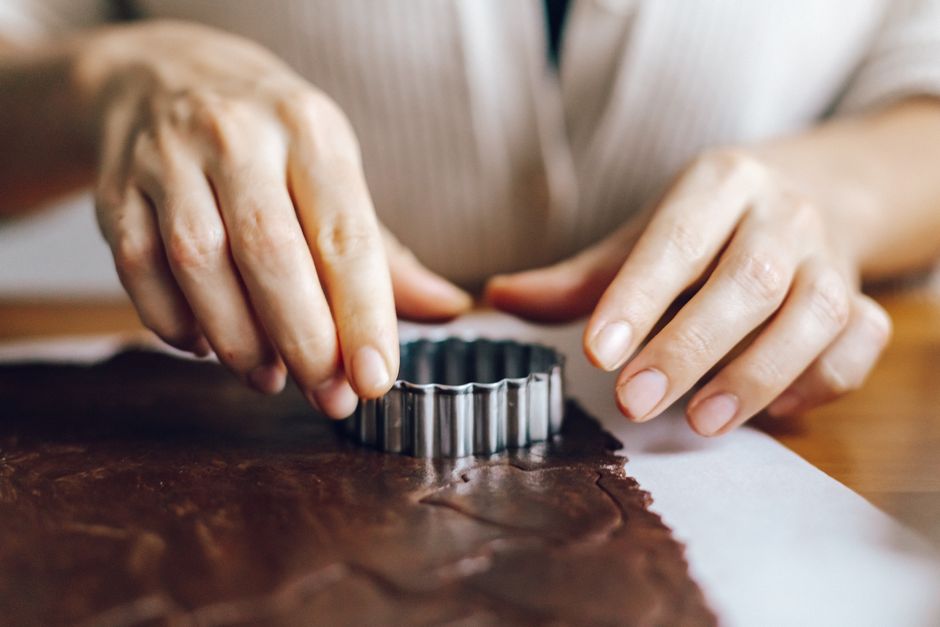
The foundational cut-out sugar cookie, the ancestor of its chocolate counterpart, likely emerged from European baking traditions, where simple sweetened biscuits were common. The addition of cocoa powder, a relatively latecomer to European kitchens, brought a new dimension. Early chocolate cookie recipes were often less refined, relying on simpler methods and perhaps less precise measurements. The concept of a "cut-out" cookie, however, required a specific dough consistency. Unlike a drop cookie, which relies on gravity and the dough’s inherent spread, a cut-out cookie needs to hold its shape during baking. This necessitates a firmer dough, one that is pliable enough to roll but stiff enough to retain the intricate details of cookie cutters. The evolution of the perfect cut-out chocolate sugar cookie has been a journey of achieving this delicate balance. Early iterations might have been too crumbly, too spread out, or lacking in intense chocolate flavor. Through trial and error, bakers began to understand the impact of chilling the dough. Chilling solidifies the fat, preventing it from melting too quickly in the oven, thus controlling spread and maintaining shape. It also allows the flour to hydrate, making the dough easier to handle and contributing to a more tender crumb. The precise chilling time is a point of contention among enthusiasts, with some advocating for a minimum of one hour, while others suggest overnight for optimal flavor development and texture. The rolling process itself is another area of refinement. A dough that is rolled too thinly will bake quickly and become brittle, while one rolled too thickly will be soft and potentially underbaked in the center. The ideal thickness, often cited as 1/4 inch, ensures a satisfying chewiness within a crisp exterior. The type of rolling pin also plays a role; a heavier pin can exert more consistent pressure, while adjustable rolling pins with guide rings are invaluable for achieving uniform thickness, a crucial element for even baking and a professional finish.
The cocoa powder’s impact on the dough’s moisture content is a critical consideration in the evolution of the chocolate sugar cookie. Cocoa powder is inherently dry and absorbent. If not compensated for, it can lead to a dry, brittle cookie. Bakers learned to adjust the liquid content of the dough, often by slightly increasing the egg or adding a touch more milk or cream, to counteract the drying effect of the cocoa. The type of cocoa powder also influences this. Natural cocoa powder is acidic and reacts with baking soda, producing a lighter, airier cookie. Dutch-processed cocoa powder, on the other hand, has been treated with an alkali to neutralize its acidity. It has a milder flavor and a darker color and requires baking powder for leavening, as it doesn’t react with baking soda. The choice between them often comes down to personal preference for flavor and texture. Some recipes might even incorporate a blend of both to achieve a complex chocolate profile and a desired crumb. The sugar-to-fat ratio is another area of intense focus. A higher sugar content generally leads to crispier cookies and more browning. However, too much sugar can make the cookie too sweet and detract from the chocolate flavor. The type of fat, as mentioned, is crucial. Butter provides superior flavor, but its lower melting point means the cookie will spread more. Some modern recipes might advocate for a blend of butter and shortening to achieve a balance of flavor and structural integrity, especially for intricate cut-outs that need to hold their form. The introduction of extracts, beyond vanilla, also marks an evolutionary step. A hint of espresso powder can deepen the chocolate flavor without adding a coffee taste, a technique often employed in more sophisticated recipes. Almond extract, used judiciously, can complement the chocolate and add another layer of complexity.
The baking process itself is where the final touches are applied, and understanding oven dynamics is paramount. Oven temperature and baking time are directly linked to the desired outcome. A slightly lower oven temperature (around 325-350°F) combined with a longer baking time promotes even baking and helps to develop that signature crisp edge without burning. Overbaking, even by a minute, can turn a perfectly tender cookie into a dry, crumbly disaster. Conversely, underbaking will result in a cookie that is too soft and may not hold its shape once cooled. The visual cues are important: the edges should be set and slightly darker, while the center may appear slightly underbaked. The cookies will continue to bake on the hot baking sheet after being removed from the oven, a process known as carryover cooking. This is a critical phase in achieving the perfect texture. Cooling racks are indispensable for preventing the bottoms of the cookies from becoming soggy. Allowing them to cool completely on a wire rack ensures air circulation and a uniformly crisp texture. The evolution of the perfect cut-out chocolate sugar cookie also encompasses the art of decorating. While the cookie itself is a triumph of flavor and texture, icing and other embellishments elevate it to a festive centerpiece. Simple royal icing, with its smooth finish and ability to harden completely, is a classic choice. The precise consistency of the icing, achieved through careful measurement of powdered sugar and liquid, is key to achieving clean lines and intricate designs. Fondant, while less common for everyday cookies, offers a smooth, malleable surface for elaborate decorations. Edible glitter, sprinkles, and edible markers add further personalization. The development of more sophisticated piping techniques and the availability of a wider array of edible decorative elements have transformed the humble cut-out cookie into a canvas for culinary artistry.
Furthermore, the concept of "flavor layering" has become increasingly sophisticated in modern cookie recipes. Beyond just the cocoa powder, bakers are exploring ways to enhance the chocolate experience. Incorporating finely chopped dark chocolate chips into the dough, for example, creates pockets of melted chocolate, adding textural contrast and an intensified chocolate hit. Using high-quality cocoa powder, whether natural or Dutch-processed, is no longer an afterthought but a deliberate choice based on desired flavor nuances and how it interacts with other ingredients. The fat component has also seen experimentation. While butter remains king for flavor, some recipes might incorporate a small amount of melted coconut oil for a subtle tropical note and a slightly different crispness, though this is a more niche adaptation. The evolution also touches upon health-conscious modifications. While not the focus of the "perfect" traditional cookie, the desire for gluten-free or vegan alternatives has led to extensive research and development in substituting traditional flours and fats. These adaptations, while moving away from the classic recipe, showcase the enduring appeal of the cut-out cookie format and the constant drive to make this beloved treat accessible to a wider audience. The precision required for cut-out cookies also lends itself well to understanding the Maillard reaction and caramelization. The browning of the edges and bottom of the cookie is a direct result of these chemical processes, driven by the interaction of sugars and amino acids at high temperatures. Mastering these reactions is key to achieving both visual appeal and optimal flavor. The subtle sweetness of the cookie is designed to complement, not overpower, the rich chocolate notes. The balance here is delicate; too much sugar can mask the chocolate, while too little can result in a bland cookie.
The sheer versatility of the cut-out chocolate sugar cookie is a testament to its enduring popularity and its evolutionary journey. It transcends holidays and seasons, adaptable to any theme or celebration through its decoration. The crisp yet yielding texture, the deep chocolate flavor, and the ability to hold intricate shapes have cemented its status as a perennial favorite. The meticulous process of chilling, rolling, cutting, and baking, while demanding precision, rewards the baker with a truly satisfying culinary creation. The ongoing dialogue among bakers, recipe developers, and food bloggers continuously refines techniques and explores new ingredient combinations, ensuring that the evolution of the perfect cut-out chocolate sugar cookie is an ongoing, delicious journey. From the simplest rustic decoration to the most elaborate royal icing masterpiece, the cookie serves as a delicious foundation, a blank canvas for creativity. The development of specialized tools, like silicon baking mats that ensure even heat distribution and prevent sticking, further streamlines the process, making the pursuit of perfection more accessible. The understanding of gluten development and how to minimize it, through techniques like not overmixing the dough once the flour is added, is a crucial aspect of achieving that desired tender crumb. The temperature of the ingredients themselves plays a significant role; softened, but not melted, butter is essential for proper creaming with sugar, a process that incorporates air, contributing to the cookie’s structure and lightness. Cold eggs, on the other hand, can help to firm up the dough, making it easier to handle. The sequence of adding ingredients, often referred to as the creaming method, where butter and sugar are beaten together until light and fluffy, followed by eggs and then dry ingredients, is a time-tested technique that optimizes the cookie’s texture. This methodical approach, honed over decades, is what separates a good chocolate sugar cookie from a truly perfect one. The inherent challenge of a cut-out cookie lies in its structural integrity while maintaining a tender mouthfeel. This necessitates a dough that is firm enough to withstand the cutting and handling but not so firm that it bakes into a rock. The precise balance of flour, fat, and sugar, coupled with proper chilling and baking, is the culmination of this evolutionary process.
