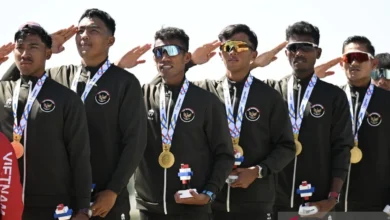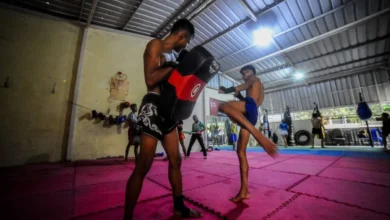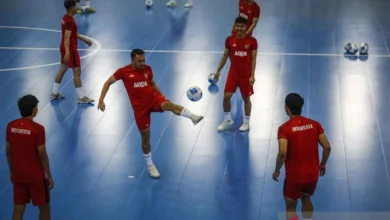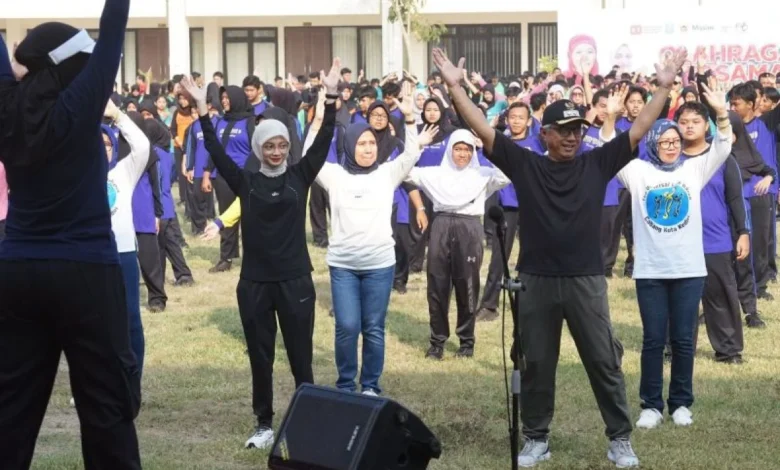
Every year on September 9, Indonesia commemorates National Sports Day, known as Hari Olahraga Nasional (Haornas). This annual observance serves as a profound reflection on the nation’s athletic journey, tracing back to the inaugural Pekan Olahraga Nasional (PON) held in Surakarta, Central Java, in 1948. More than just a date on the calendar, Haornas represents the intersection of nationalism, physical health, and the continuous effort to weave sports into the fabric of daily Indonesian life. As the nation marks the 43rd anniversary of the official designation of Haornas in 2026, the occasion invites a broader analysis of how sports policy, national identity, and public health initiatives have evolved over nearly eight decades.
The Genesis of Indonesian Sports Diplomacy
The roots of National Sports Day are deeply embedded in the post-independence struggle of the late 1940s. Following the proclamation of independence in 1945, the young Indonesian republic faced immense diplomatic and military pressure. In 1948, the nation aspired to demonstrate its sovereignty on the international stage by participating in the XIV Olympic Games in London. However, the international community had yet to grant widespread diplomatic recognition to Indonesia, and the Olympic Committee faced insurmountable administrative hurdles regarding the participation of an Indonesian contingent.
Rather than succumbing to these obstacles, the Indonesian leadership pivoted toward a domestic solution that would prove historically significant. They organized the first-ever Pekan Olahraga Nasional (PON), which took place in Solo from September 9 to 12, 1948. By hosting this event, Indonesia sent a clear message to the world and its own citizens: the nation was organized, capable, and united. The opening date of this inaugural event, September 9, was later immortalized as the foundational date for what would eventually become the official National Sports Day.
Institutionalization and the 1983 Milestone
While the spirit of PON 1948 provided the cultural foundation, the formal establishment of Haornas as a state-sanctioned observance did not occur until several decades later. On September 9, 1983, President Soeharto inaugurated the renovated Sriwedari Stadium in Surakarta, a historic venue that hosted the first PON. During this ceremony, the President officially declared September 9 as National Sports Day.
This declaration was later codified through Presidential Decree (Keppres) Number 67 of 1985. The legal framework served a dual purpose: it enshrined the historical significance of the 1948 PON while providing a strategic mandate for the government to foster sports development across the archipelago. The decree emphasized the need for a systematic, sustainable approach to training athletes and promoting physical fitness as a pillar of national development. By elevating sports to a matter of presidential decree, the Indonesian government signaled that physical education and athletic excellence were not merely extracurricular activities, but essential components of national character building.
The Evolution of the Sports Landscape
Since the 1980s, the scope of National Sports Day has expanded significantly. In its early years, the focus was primarily on high-performance sports and the organization of large-scale competitions. However, in recent decades, the Ministry of Youth and Sports (Kemenpora) has shifted its rhetoric to emphasize "Sport for All"—the idea that sports should be an accessible, daily practice for every Indonesian citizen, regardless of age or background.
Data from the Central Statistics Agency (BPS) over the last decade indicates a gradual increase in the number of Indonesians participating in regular exercise. This shift is attributed to a combination of public awareness campaigns, the modernization of urban public spaces, and the integration of physical education into the national school curriculum. Despite these gains, health officials continue to highlight the necessity of improving participation rates in rural areas to combat sedentary lifestyles and the rising incidence of non-communicable diseases.
The Role of Sports in National Development
The impact of sports on Indonesia’s economy and social structure is profound. Modern studies suggest that the sports industry contributes significantly to the national GDP, encompassing everything from infrastructure construction and apparel manufacturing to tourism and broadcasting rights. The concept of "sport tourism" has become a central pillar of government strategy. For instance, the preparations for upcoming national events, such as the 2028 PON, are being explicitly linked to the development of regional economies, with areas like Sumba Timur being positioned as major hubs for athletic tourism.
Moreover, the Ministry of Youth and Sports has recently advocated for a significant increase in budget allocations—proposing figures in the range of IDR 1.5 trillion—to build state-of-the-art academies and high-performance training centers. This financial commitment reflects a broader shift toward professionalization. The goal is to move beyond periodic event hosting and toward a continuous, talent-identification ecosystem that can produce world-class athletes capable of competing on the global stage.
Beyond the Podium: Social and Psychological Benefits
While the pursuit of gold medals often dominates the headlines, the official stance of the government during Haornas emphasizes the intrinsic benefits of physical activity. The 2025 and 2026 guidelines issued by Kemenpora highlight that sports are essential for building discipline, resilience, and national unity. In a diverse nation of over 270 million people, sports serve as a unique "social glue" that transcends regional, ethnic, and religious differences.
From an educational standpoint, school-based sports programs are viewed as critical interventions for developing character. Participation in team sports teaches the value of cooperation, the ethics of fair play, and the capacity to handle both victory and defeat with grace. These attributes are viewed as vital for the next generation of Indonesian leaders, creating a direct link between the physical training grounds of today and the social stability of the nation tomorrow.
Challenges and Future Prospects
As Indonesia approaches the 43rd anniversary of the official Haornas in 2026, the government faces several challenges. Infrastructure maintenance, the equitable distribution of training facilities, and the need for a robust sports science curriculum remain at the forefront of the national agenda. Additionally, the emergence of new, niche sports and the rise of digital integration in athletic training require a flexible policy approach.
The government’s current strategy involves balancing the demands of elite performance with the necessity of mass participation. There is a growing understanding that elite success is a byproduct of a healthy, active population. By encouraging citizens to participate in local clubs, municipal leagues, and school events, the government hopes to create a bottom-up pipeline that feeds talent into national programs.
Celebrating Haornas in the Modern Era
For the average citizen, September 9 is a day of action. Activities across the country typically range from morning gymnastics and mass marathons to community-led charity matches. In 2026, the celebration of Haornas carries a tone of forward-looking optimism. As the nation prepares for various multi-sport events, including the upcoming beach-based games in Ancol, the focus remains on inclusivity.
The commemoration serves as a yearly check-in for the government and the public alike. It asks: Have we provided the necessary facilities? Are we fostering a culture of health? Are we supporting our local heroes? The answers to these questions are found not in policy documents, but in the parks, stadiums, and schoolyards across the 17,000 islands of the Indonesian archipelago.
Conclusion: A Legacy of Resilience
From the humble, makeshift stadiums of 1948 to the technologically advanced training complexes planned for the future, the journey of Indonesian sports is a reflection of the nation’s resilience. The history of Haornas is the history of a young country asserting its place in the world. As the nation moves forward, the spirit of the first PON—the determination to participate and the commitment to excellence—remains the guiding light. National Sports Day, therefore, is not merely a celebration of the past; it is a vital catalyst for the future, reminding every Indonesian that the pursuit of a healthy, active life is a fundamental act of national progress. Through consistent investment, public participation, and a shared vision of athletic excellence, the tradition of September 9 will continue to inspire generations of Indonesians to reach for higher standards of performance and well-being.
Related posts: