
Venezuela Presidential Election Opposition
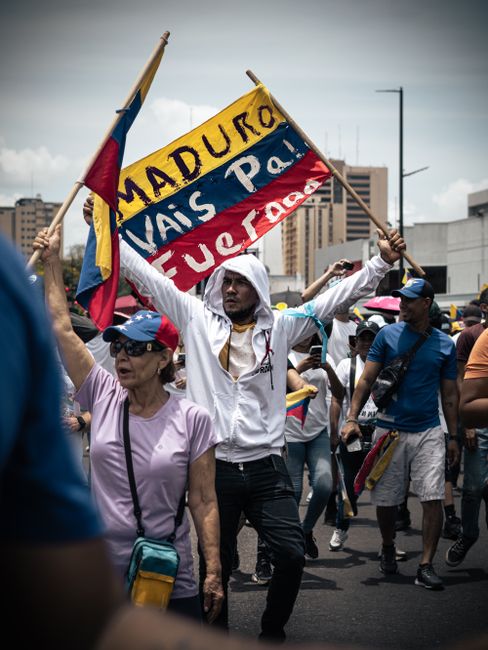
Venezuelan Presidential Election Opposition: A Path Fraught with Challenges
The landscape of Venezuelan presidential elections, particularly from the perspective of the opposition, has been a continuous struggle against a deeply entrenched incumbent government. Since Hugo Chávez’s rise to power in 1999, opposition parties and candidates have faced a formidable array of systemic, legal, and socio-political hurdles. The opposition’s journey has been characterized by internal divisions, strategic missteps, external pressures, and a persistent fight for democratic space. Understanding this complex dynamic requires examining the historical context, the evolving nature of the opposition, the electoral framework as it has been manipulated, and the international community’s role in this protracted political crisis. The concept of a unified and effective opposition has often been an aspiration rather than a consistent reality, leading to a fragmentation that has historically benefited the ruling party.
The origins of the contemporary Venezuelan opposition can be traced back to the broad coalition that opposed Hugo Chávez in his early years. This initial bloc, comprised of traditional political parties, civil society organizations, and segments of the business elite, coalesced around a shared desire to reverse Chávez’s socialist policies and perceived authoritarian tendencies. However, this early unity proved fragile. The 2002 coup attempt against Chávez, which the opposition initially supported, ultimately backfired, consolidating his power and leading to a significant crackdown on dissent. This event marked a turning point, demonstrating the risks involved in direct confrontation and prompting a re-evaluation of strategies. Subsequent electoral cycles, including the 2006 and 2012 presidential elections, saw Chávez and later Nicolás Maduro win decisively, often attributed to the opposition’s inability to present a united front or a compelling alternative vision that resonated with a sufficient portion of the electorate. Internal rivalries, ideological differences, and a lack of cohesive leadership have been persistent challenges, hindering the development of a truly formidable electoral force.
The electoral framework itself has been a central battleground. The National Electoral Council (CNE), the body responsible for organizing and overseeing elections, has been consistently accused by the opposition and international observers of bias and a lack of independence. This alleged bias manifests in various ways, including restrictive campaign regulations, unequal access to media, the use of state resources for campaigning by the ruling party, and accusations of electoral fraud or irregularities. The opposition has frequently pointed to the disqualification of prominent opposition leaders from participating in elections as a deliberate tactic to weaken their chances. These disqualifications, often based on administrative or legal technicalities, have severely hampered the opposition’s ability to field its most popular candidates, forcing them to rely on less recognized figures or to engage in internal primary processes that can further expose divisions. The manipulation of electoral rules and processes has become a hallmark of the Venezuelan political system, making it exceedingly difficult for the opposition to achieve victory through purely electoral means.
The fragmentation of the opposition is a recurring theme that directly impacts its electoral viability. Over the years, various factions have emerged with differing strategies and objectives. Some have advocated for boycotting elections deemed unfair, believing that participation legitimizes a fraudulent system. Others have insisted on participating, hoping to leverage any potential opening or to expose the irregularities to a wider audience. This strategic divergence has often led to a dilution of electoral support. When a significant portion of the opposition abstains, it can inadvertently benefit the ruling party by reducing voter turnout and allowing them to win with a smaller, more mobilized base. Conversely, when the opposition participates but fails to present a united candidate, votes are split, and the ruling party can secure victory with a plurality. The effort to establish a unified primary to select a single opposition candidate for the 2024 presidential election, culminating in the selection of María Corina Machado, was a significant step. However, Machado’s subsequent disqualification by the government, even after winning a widely recognized primary, underscores the persistent challenges of the electoral system and the ruling party’s control over its mechanisms.
The economic and humanitarian crisis in Venezuela has also profoundly impacted the opposition’s electoral prospects. Mass emigration has depleted the country’s human capital, including many potential opposition voters and activists. Those who remain often face severe economic hardship, making their immediate survival a greater priority than political participation. The government’s control over essential services and social programs has also been used as a tool for political leverage, potentially influencing voting behavior. The opposition has struggled to articulate a credible and comprehensive economic recovery plan that addresses the immediate needs of the population while also offering a long-term vision for rebuilding the nation. The perception of economic mismanagement by the ruling party, while a source of discontent, does not automatically translate into unwavering support for the opposition, especially if the opposition is seen as lacking concrete solutions or a stable leadership.
International pressure and diplomacy have played a dual role in the Venezuelan presidential election opposition’s struggle. Initially, many countries recognized opposition-led interim governments or called for new elections. Sanctions were imposed on individuals and entities associated with the Maduro regime. However, the effectiveness of these measures has been debated. While they may have put pressure on the government, they have not fundamentally altered the power dynamics within Venezuela. Furthermore, shifting geopolitical alliances and the complex global landscape have at times led to a waning of international attention or a recalibration of diplomatic approaches. The opposition has often relied on international support for legitimacy and resources, and any perceived withdrawal or dilution of this support can have a significant impact on their morale and capacity. The international community’s role in facilitating a negotiated solution or in ensuring free and fair elections remains a critical, albeit often contentious, factor.
The Venezuelan opposition’s journey is a case study in the difficulties of challenging a consolidated authoritarian regime through electoral means. The challenges are multifaceted, encompassing systemic manipulation of the electoral process, internal divisions, economic hardship, and the complexities of international involvement. While the desire for democratic change remains strong among a significant portion of the Venezuelan population, the path to achieving it through presidential elections has been consistently obstructed. The future of the opposition’s electoral strategy will likely depend on its ability to overcome internal divisions, forge a broader societal consensus, present a compelling and pragmatic vision for the country’s future, and navigate the deeply entrenched obstacles within the Venezuelan political and electoral system. The ongoing disqualification of key opposition figures and the continued control of electoral institutions by the ruling party suggest that the path forward will remain arduous, demanding resilience, strategic adaptability, and a sustained commitment to democratic principles. The effectiveness of the opposition is not solely defined by electoral victories but also by its ability to mobilize, organize, and advocate for democratic reforms, even in the face of significant adversity. The current landscape suggests that any significant shift in Venezuela’s presidential election dynamics will require a confluence of internal opposition strength and sustained, coordinated international engagement.
