
Xi Jinping Military Purge
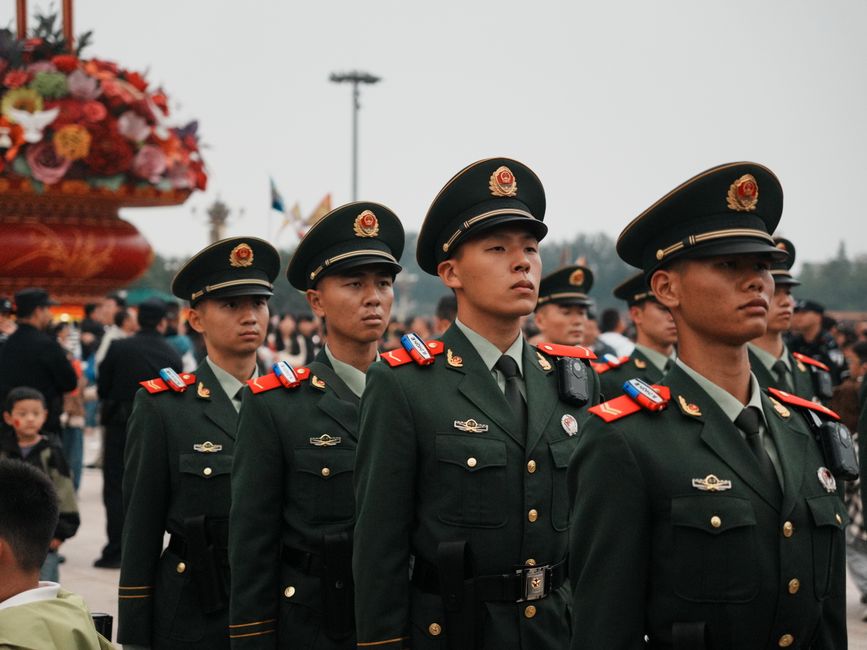
Xi Jinping’s Military Purge: Reshaping the PLA for Absolute Loyalty and Combat Readiness
Xi Jinping’s extensive and ongoing military purge within the People’s Liberation Army (PLA) represents a fundamental reshaping of China’s armed forces, driven by an imperative for absolute political loyalty and enhanced combat readiness. This multi-year campaign, characterized by the swift and often opaque removal of high-ranking officials, is not merely an anti-corruption drive but a strategic imperative aimed at consolidating Xi’s personal power, eradicating potential dissent, and ensuring the PLA remains an instrument of the Chinese Communist Party (CCP) under his direct command. The sheer scale and ruthlessness of these purges have sent shockwaves through the military establishment, signaling a decisive break from past practices and ushering in a new era of stringent ideological control and operational efficiency.
The genesis of Xi Jinping’s military purge can be traced to his ascension to the paramount leadership positions in 2012-2013. Immediately upon taking power, Xi recognized that the PLA, despite its numerical strength, was deeply intertwined with corruption and factionalism, posing a significant impediment to his broader reform agenda and his vision of a resurgent China. Former leaders like Jiang Zemin had fostered a system where loyalty was often exchanged for patronage, leading to a military that was perceived as less politically reliable and potentially susceptible to external influences. Xi’s initial anticorruption campaign, launched across all sectors of Chinese society, naturally extended its reach to the PLA, where the scale of illicit activities was reportedly staggering. However, the military purge quickly transcended mere anticorruption efforts, evolving into a systematic effort to reorient the PLA towards Xi’s direct authority.
Key to understanding the scope of the purge is the identification and removal of individuals perceived as threats to Xi’s absolute control. This includes long-serving officers with established power bases, those associated with previous leadership factions, and any who expressed or were suspected of harboring dissent. The initial and most prominent targets were those closely linked to Jiang Zemin, such as former Central Military Commission (CMC) Vice Chairmen Xu Caihou and Guo Boxiong, both of whom were investigated and convicted for massive corruption. Their downfall not only exposed systemic rot but also served as a stark warning to others within the senior ranks. Beyond these high-profile cases, countless other generals, admirals, and senior officers across various branches of the PLA – the Army, Navy, Air Force, Rocket Force, and Strategic Support Force – have been investigated, demoted, sidelined, or disappeared from public view. The lack of transparency surrounding many of these removals makes it difficult to ascertain the precise numbers, but anecdotal evidence and reports from Chinese media suggest a significant turnover at the highest echelons.
The purges are not solely about removing problematic individuals; they are fundamentally about rebuilding the PLA in Xi’s image. This involves a dual focus: ensuring unwavering political loyalty to the CCP and Xi himself, and enhancing the PLA’s professional competence and combat effectiveness. Ideological indoctrination has been significantly amplified. Military personnel are subjected to intensified political education sessions emphasizing Xi Jinping Thought on Socialism with Chinese Characteristics for a New Era, particularly its military components. The aim is to instill a deep-seated loyalty to the Party and its supreme leader, ensuring that the PLA functions as a loyal instrument of political power rather than an independent entity. This emphasis on political commissars and ideological alignment within military units reflects a historical CCP strategy of maintaining civilian control over the armed forces, now amplified under Xi’s personalistic leadership.
Concurrently, Xi has undertaken significant organizational reforms within the PLA. These reforms have aimed to streamline command structures, reduce bureaucratic bloat, and improve joint operations capabilities. The establishment of the Strategic Support Force (SSF) in 2015, for example, consolidated critical cyber, space, and electronic warfare capabilities, creating a more centralized and agile force designed to address modern warfare challenges. Other reforms have involved the reorganization of theater commands, aimed at breaking down traditional service-centric silos and fostering greater inter-service cooperation. These structural changes, while presented as modernization efforts, also serve to weaken the power bases of older, entrenched commands and create new avenues for loyalists to rise.
The impact of these purges on the PLA’s operational readiness is a subject of ongoing debate among defense analysts. On one hand, the removal of corrupt and inefficient officers, coupled with modernization efforts, could theoretically lead to a more effective fighting force. The emphasis on joint operations and advanced technologies suggests a PLA better equipped to confront contemporary threats and pursue Beijing’s geopolitical ambitions. The intense training regimens and the focus on real-world combat scenarios indicate a shift towards a more professional and capable military.
However, the abrupt and widespread nature of the purges also raises concerns about potential disruptions to institutional knowledge and experience. The rapid turnover of senior leadership may lead to a loss of experienced commanders, potentially impacting morale and unit cohesion. Furthermore, the climate of fear and suspicion engendered by the purges might discourage initiative and risk-taking among officers, fostering a culture of caution over innovation. The opaque nature of the dismissals also makes it difficult to assess the true caliber of those appointed to replace them. While many new appointees are likely loyalists, their professional qualifications and experience in high-pressure command roles are not always immediately apparent.
The economic implications of the military purge are also noteworthy. The vast sums of money allegedly siphoned off through corruption within the PLA represent a significant drain on resources. By purging corrupt officials and reforming procurement processes, Xi aims to redirect these funds towards genuine military modernization and development. This can include investing in advanced weaponry, research and development, and improving the welfare of deserving personnel. The economic windfall from curbing corruption could, in theory, fuel the PLA’s transformation into a technologically superior force.
The international implications of Xi Jinping’s military purge are profound. A more professional, ideologically aligned, and potentially more capable PLA under Xi’s direct command is a key factor in China’s growing assertiveness on the global stage. The PLA’s enhanced capabilities and unwavering loyalty are crucial for Beijing’s pursuit of its territorial claims, its global economic interests, and its challenge to the existing international order. Military modernization, coupled with a unified command structure, allows China to project power more effectively and respond more decisively to perceived threats or challenges. The purges, therefore, are not just an internal CCP matter but a critical element in the broader geopolitical landscape.
Looking ahead, the sustainability and long-term consequences of Xi Jinping’s military purge remain to be seen. The sheer scale of the operation suggests a deep-rooted problem of corruption and factionalism that will require sustained vigilance. The success of Xi’s reforms will ultimately be judged by the PLA’s ability to maintain both absolute loyalty to the Party and demonstrable combat readiness in the face of evolving global security challenges. The continuous emphasis on political loyalty, coupled with the ongoing drive for modernization, suggests that the PLA will continue to be a central pillar of Xi Jinping’s power and a formidable instrument of Chinese foreign policy for the foreseeable future. The purge represents a fundamental redefinition of the relationship between the CCP, its leader, and its military, prioritizing absolute control and unwavering adherence to the Party’s will above all else.
