
Supreme Court Arguments Social Media
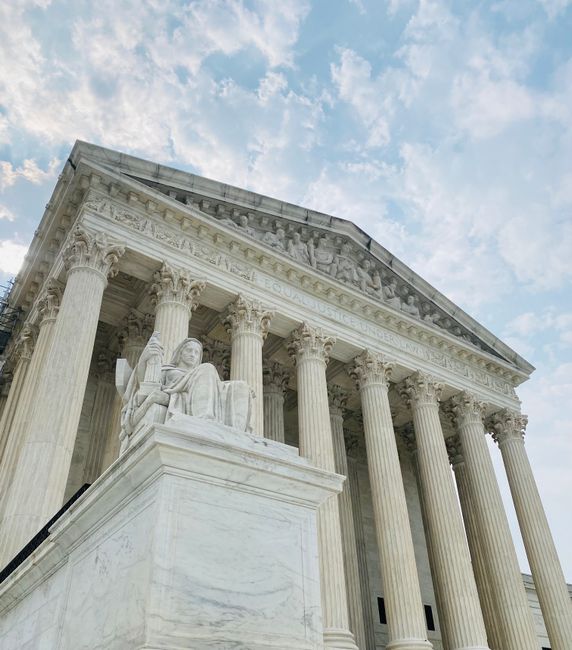
The Supreme Court and the Evolving Battlefield of Social Media Speech
The Supreme Court, the ultimate arbiter of American law, is increasingly finding itself entangled in the complex and rapidly evolving landscape of social media. As platforms like X (formerly Twitter), Facebook, Instagram, and TikTok become indispensable tools for communication, political discourse, and public assembly, the constitutional principles governing free speech are being tested in unprecedented ways. The core of these legal battles revolves around the First Amendment’s guarantee of freedom of speech and how it applies to private platforms that have become de facto public squares. These cases are not merely academic exercises; they have profound implications for how information is disseminated, how public opinion is shaped, and the very nature of democratic participation in the 21st century. The justices grapple with questions of censorship, viewpoint discrimination, algorithmic amplification, and the responsibility of platforms for the content their users post. The outcomes of these cases will set precedents that will guide legal interpretation for years to come, shaping the digital public sphere for generations.
One of the most fundamental tensions arises from the nature of social media platforms. They are, by definition, private companies. However, their sheer size and influence mean that they function, in many respects, as public forums. This duality creates a legal quandary: can private entities, exercising control over vast audiences, be subject to the same free speech restrictions as government entities? The Supreme Court has historically held that the First Amendment primarily restricts government action, not the conduct of private businesses. However, the sheer scale and ubiquity of major social media platforms have blurred these lines. When millions of Americans rely on these platforms to express themselves, organize politically, and access information, their content moderation policies can have a profound impact on public discourse, mimicking the effects of government censorship. This has led to arguments that these platforms have, in practice, assumed a public function, and therefore, their speech-related actions should be subject to constitutional scrutiny. This debate is central to understanding the Supreme Court’s engagement with social media issues.
The concept of "state action" is a critical legal doctrine in First Amendment jurisprudence. For the First Amendment to apply, speech must be restricted by a government actor. In the context of social media, litigants often argue that platforms engage in state action either through direct government compulsion or by acting as a de facto public forum. For instance, if a government official uses a social media account to interact with constituents, and then blocks that official for their speech on that account, it raises the question of whether the platform’s actions are attributable to the government. This has been a recurring theme in recent Supreme Court cases. The Court has explored scenarios where government officials encourage or pressure platforms to remove content, blurring the line between private moderation and government censorship. Conversely, platforms argue that they are simply exercising their own editorial discretion, a right traditionally afforded to publishers. The difficulty lies in discerning when a platform’s moderation decisions are independent and when they are influenced or dictated by governmental pressures, thereby implicating the First Amendment.
Algorithmic amplification and de-amplification represent another frontier of legal concern. Social media platforms do not simply host content; they actively curate and promote it through complex algorithms. These algorithms can determine what users see, how widely certain messages spread, and which voices are amplified or suppressed. When these algorithms appear to favor certain viewpoints over others, or when they disproportionately de-amplify content from particular groups, it raises questions of whether this constitutes a form of unconstitutional viewpoint discrimination, even if not explicitly intended. Critics argue that these algorithmic choices, while framed as technical decisions, have a significant impact on the marketplace of ideas, and that platforms, by wielding such power, assume a responsibility akin to that of traditional media gatekeepers. The Supreme Court’s challenge is to determine if and how First Amendment principles can be applied to these opaque and dynamic algorithmic processes, especially when they result in perceived censorship or suppression of disfavored viewpoints.
The legal battles surrounding social media speech often center on specific content moderation decisions. These can range from the removal of posts, to the suspension of accounts, to the de-platforming of individuals. The Supreme Court has had to consider cases involving allegations that platforms have censored political speech, de-platformed users for expressing controversial opinions, or discriminated against certain groups. These cases highlight the tension between a platform’s right to set its own terms of service and a user’s expectation of free expression. The legal frameworks that govern these situations are still being developed, and the Court’s decisions will have a significant impact on how platforms can manage content and how users can express themselves online. The challenge for the judiciary is to balance the legitimate interests of platforms in maintaining order and preventing harm with the fundamental right to free speech.
Government officials’ use of social media has been a particularly fertile ground for Supreme Court litigation. Cases involving public officials blocking constituents on their social media accounts have reached the highest court. The argument is that when a public official uses a social media account to conduct official business and engage with the public, that account can become a public forum. Blocking individuals from such a forum, especially based on their viewpoint, could then be considered a violation of the First Amendment. These cases require the Court to define what constitutes an "official" use of social media and when a platform becomes a public space. The nuances are significant: is it only official pronouncements, or does it include all interaction by an elected representative with their constituents? The answers will shape how politicians communicate with the public in the digital age and the extent to which citizens can engage with their representatives online without fear of being silenced.
The question of whether social media platforms are more like publishers or common carriers is another critical aspect of the Supreme Court’s deliberations. Publishers exercise editorial control over the content they disseminate, and they have a First Amendment right to choose what to publish. Common carriers, on the other hand, are obligated to carry all lawful content offered to them, without discrimination. Platforms like X and Facebook have historically argued they are more akin to publishers, thus retaining broad discretion over content. However, the sheer volume of user-generated content and the infrastructure-like nature of these platforms lead some to argue they function more like common carriers, with a duty to be neutral conduits of information. This distinction has significant implications for their liability and their ability to moderate content. If they are deemed common carriers, their ability to censor would be severely curtailed.
The Children’s Online Privacy Protection Act (COPPA) and its application to social media has also seen Supreme Court involvement, though not directly in a First Amendment context. While not about free speech per se, these cases touch upon how platforms collect and use data, and the government’s ability to regulate these practices. The intersection of data privacy and speech rights is a complex area. Concerns about data collection and profiling can indirectly impact free speech by shaping the content users are exposed to and the incentives platforms have for content promotion. As the Court navigates these issues, it must consider the interplay between privacy regulations and the open exchange of ideas online.
The concept of "de-platforming" – the removal of an individual or entity from a platform – is a particularly contentious issue that has been on the Supreme Court’s radar. When a prominent figure is de-platformed, the impact on their ability to communicate and engage in public discourse can be substantial. This raises questions about whether such actions, particularly if perceived as politically motivated, constitute a form of censorship. The legal challenges often hinge on whether the de-platforming was based on a violation of the platform’s terms of service, or if it was a decision driven by external pressure or the platform’s own perceived ideological leanings. The Supreme Court’s role is to interpret whether such private actions can infringe upon constitutionally protected speech rights, especially when the platform has become essential for public participation.
The ongoing evolution of social media presents a moving target for legal interpretation. New platforms emerge, existing ones change their policies, and the ways in which people use these technologies are constantly shifting. This dynamic environment poses a significant challenge for the Supreme Court, which relies on established legal principles to adjudicate cases. The justices must not only interpret existing law but also anticipate how these principles will apply to future technological developments. The cases before the Court are not isolated incidents; they are part of a broader societal negotiation about the role of technology in public life and the future of free expression in a digital age.
The implications of Supreme Court rulings on social media speech are far-reaching. They will influence the balance of power between platforms and users, shape the regulatory landscape for online communication, and ultimately impact the health of democratic discourse. Decisions that favor platform autonomy could lead to more curated online environments, while rulings that emphasize user rights might necessitate greater transparency and accountability from platforms. The Court’s engagement with these complex issues underscores the profound impact of technology on fundamental rights and the enduring relevance of the First Amendment in the digital public square. The ongoing cases and future litigation will continue to define the boundaries of free speech in an increasingly interconnected world.
