Indonesian Teenager Firoos Ghathfaan Ramadhan Honored by BRIN for Discovering NASA Security Vulnerability


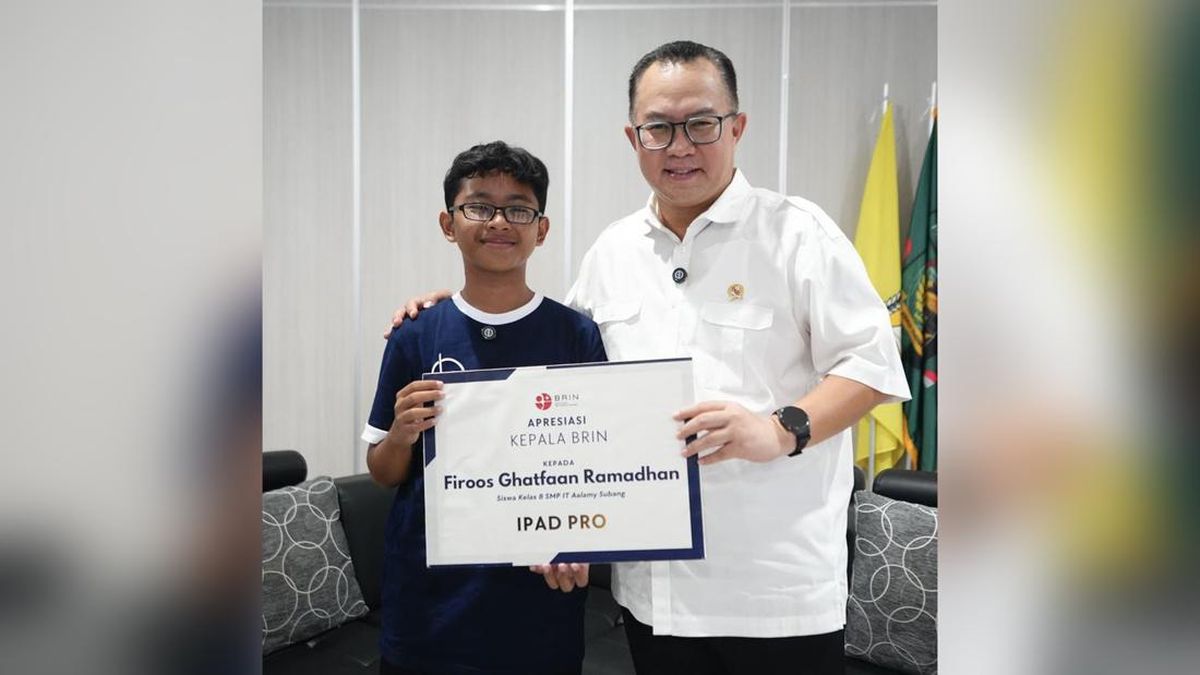
Jakarta, Indonesia – A remarkable display of burgeoning talent in the field of cybersecurity has garnered national attention and international recognition, as Firoos Ghathfaan Ramadhan, a 14-year-old eighth-grade student from SMP IT Aalamy Subang, West Java, was formally honored by the National Research and Innovation Agency (BRIN) for discovering a critical security flaw within the systems of the National Aeronautics and Space Administration (NASA). This significant achievement, which saw Firoos inducted into NASA’s prestigious Hall of Fame for his responsible disclosure, underscores the potential of young Indonesian innovators on the global stage and highlights the critical importance of ethical hacking in safeguarding digital infrastructures worldwide.
The recognition from BRIN came directly from its Head, Arif Satria, who personally presented Firoos with a premium tablet as a token of appreciation. The ceremony took place at Firoos’s school in Subang on Thursday, April 30, amidst an atmosphere of pride and encouragement. This direct engagement by a high-ranking government official like Arif Satria serves as a powerful testament to Indonesia’s commitment to nurturing its next generation of scientists and technologists, particularly those demonstrating exceptional aptitude in crucial domains like cybersecurity. Satria’s visit, notably following a regional activity focused on superior rice seed harvesting in Subang, symbolically linked the nation’s foundational agricultural strength with its burgeoning digital future, showcasing a holistic approach to national development.
The Discovery: Unearthing a NASA Vulnerability
Firoos Ghathfaan Ramadhan’s journey to international recognition began with his keen interest and self-taught proficiency in cybersecurity. His discovery centered on a vulnerability identified within an external link associated with NASA’s vast digital ecosystem. While the specifics of the flaw, such as the exact nature of the external link or the potential exploit it presented, were not publicly detailed to maintain security protocols, such vulnerabilities typically range from cross-site scripting (XSS) to open redirect flaws, or even potential avenues for phishing attacks that could compromise user data or internal systems if exploited maliciously. For an organization as critical and expansive as NASA, which manages sensitive scientific data, space mission communications, and public interfaces, even seemingly minor flaws can pose significant risks. The complexity and sheer volume of NASA’s digital assets make securing them an immense and ongoing challenge, often requiring the vigilance of a global community of security researchers.
Responsible Disclosure: A Model for Ethical Hacking
What truly set Firoos apart, and earned him praise from both NASA and BRIN, was his unwavering commitment to responsible disclosure. Upon identifying the flaw, Firoos did not attempt to exploit it for personal gain or public notoriety. Instead, he meticulously documented his findings and promptly reported them to NASA’s security team through appropriate channels. This adherence to ethical hacking principles is paramount in the cybersecurity community. Responsible disclosure involves privately notifying the affected organization about a vulnerability, allowing them sufficient time to patch the flaw before any public announcement is made. This approach minimizes potential harm to users and the organization, fostering a collaborative environment between security researchers and developers.
Arif Satria emphasized this critical aspect of Firoos’s actions during the appreciation ceremony. "Alhamdulillah, today I had the opportunity to visit SMP IT Aalamy Subang and meet Ananda Firoos. He is an eighth-grade student who successfully earned a Hall of Fame recognition from NASA for finding a flaw in NASA’s external links," Satria stated, adding, "Firoos submitted his findings as material for system improvement. He found vulnerabilities in various institutions, not only NASA but also several institutions in Indonesia. However, he submitted these inputs for improvement and did not misuse them for malicious purposes." This highlights Firoos’s consistent ethical approach, suggesting his discoveries extend beyond NASA, further cementing his reputation as a responsible and skilled "white-hat" hacker. His actions serve as a powerful example for other aspiring cybersecurity enthusiasts, demonstrating that true skill lies not just in finding vulnerabilities, but in using that knowledge to enhance security.
NASA’s Hall of Fame: Recognizing Global Vigilance
NASA’s decision to induct Firoos into its Hall of Fame is a significant honor within the cybersecurity world. Organizations like NASA, Google, Microsoft, and Facebook often maintain such "Hall of Fame" lists to publicly acknowledge and appreciate external security researchers who responsibly report vulnerabilities in their systems. This practice serves multiple purposes: it encourages more researchers to participate in improving security, it builds trust within the security community, and it publicly demonstrates the organization’s commitment to security and its willingness to engage with external talent. For NASA, which operates at the forefront of technological innovation and national security, recognizing individuals like Firoos underscores its proactive stance on cybersecurity and its reliance on a global network of ethical hackers to identify and mitigate potential threats before they can be exploited by malicious actors. The inclusion signifies that Firoos’s discovery was deemed substantial enough to warrant formal recognition, placing him among an elite group of security contributors worldwide.
National Recognition: BRIN’s Endorsement of Young Talent
The National Research and Innovation Agency (BRIN) plays a pivotal role in shaping Indonesia’s scientific and technological landscape. Arif Satria’s personal visit and the presentation of a premium tablet to Firoos are more than just symbolic gestures; they are a clear articulation of BRIN’s strategic vision to foster innovation from a young age. This act of appreciation is intended to serve as a powerful motivator for Firoos to continue his learning and contributions, while also inspiring countless other young Indonesians to explore careers in science, technology, engineering, and mathematics (STEM), particularly in critical areas like cybersecurity.
Satria articulated this broader vision, expressing hope that Firoos’s achievement would "become a great person, a beneficial person, and capable of making Indonesia even greater and more advanced." This statement reflects the government’s long-term goal of building a robust innovation ecosystem, powered by indigenous talent. BRIN’s mandate includes not only conducting research but also identifying and nurturing promising individuals who can contribute to national development. By spotlighting Firoos, BRIN aims to cultivate a culture of innovation and responsible technological engagement across the archipelago, ensuring that Indonesia remains competitive and secure in the rapidly evolving digital era.
A Chronology of Achievement
While specific dates for Firoos’s discovery and NASA’s initial recognition are not fully detailed in the public statement, a general chronology can be inferred:
- Undisclosed Period (Likely Late 2023 – Early 2024): Firoos, driven by his passion for cybersecurity, meticulously researches and discovers a security vulnerability within an external link associated with NASA’s systems.
- Prompt Reporting: Following ethical hacking protocols, Firoos responsibly reports his findings directly to NASA’s security team.
- Validation and Verification: NASA’s cybersecurity experts validate the reported vulnerability, confirming its existence and potential impact.
- NASA Hall of Fame Induction: Recognizing the significance of his contribution and his responsible actions, NASA inducts Firoos Ghathfaan Ramadhan into its official Hall of Fame for security researchers. This recognition occurred "previously" ("sebelumnya berhasil masuk") relative to the BRIN visit.
- April 30, 2024: Head of BRIN, Arif Satria, visits SMP IT Aalamy Subang to personally present Firoos with an appreciation award (premium tablet) and commend him for his achievement and ethical conduct. The visit followed other local engagements in Subang, underscoring the integration of such recognition into broader national development activities.
The Global Cybersecurity Landscape: A Constant Battle
Firoos’s achievement comes at a time when global cybersecurity threats are escalating dramatically. In 2023 alone, the average cost of a data breach reached an estimated USD 4.45 million globally, highlighting the severe financial and reputational impact of security incidents. Governments, critical infrastructure, and private corporations face a constant barrage of sophisticated cyberattacks, ranging from ransomware and phishing to state-sponsored espionage. The demand for skilled cybersecurity professionals far outstrips supply, with an estimated global workforce gap of over 4 million, according to some industry reports.
In this context, bug bounty programs and responsible disclosure initiatives have become indispensable tools for organizations seeking to bolster their defenses. These programs incentivize independent security researchers, often referred to as "white-hat" hackers, to find and report vulnerabilities before malicious actors can exploit them. While Firoos’s discovery may not have been part of a formal paid bug bounty, his actions perfectly embody the spirit and value of such community-driven security efforts. His contribution exemplifies how individual vigilance, combined with ethical principles, can significantly enhance the collective security posture of even the most robust organizations.
Indonesia’s Digital Ambition: Fostering the Next Generation
Indonesia, as Southeast Asia’s largest economy, is rapidly embracing digital transformation. The government has articulated ambitious goals to become a leading digital nation, requiring a highly skilled workforce in critical areas like artificial intelligence, data science, and, crucially, cybersecurity. Initiatives led by agencies like BRIN and the Ministry of Communication and Informatics (Kominfo) are focused on improving digital literacy, expanding access to STEM education, and creating pathways for young talent to flourish.
Firoos Ghathfaan Ramadhan stands as a shining example of the success of these ongoing efforts. His story provides tangible evidence that Indonesian youth possess the intellect, curiosity, and drive to compete and excel on the international stage. His achievement will undoubtedly inspire other students, parents, and educators to recognize the value of digital skills and ethical conduct in the digital realm. It also reinforces the notion that geographical location or age are no barriers to making significant contributions to global technological advancement and security.
Voices of Pride and Encouragement
While Firoos himself maintained a humble profile, the impact of his achievement resonated deeply within his community. Sources close to SMP IT Aalamy Subang indicated immense pride among the school faculty and his peers. An unnamed school official, speaking generally about Firoos, might have remarked, "Firoos has always been exceptionally curious and dedicated. We are incredibly proud of his ethical approach and his commitment to using his skills for good. He is a true role model for all our students." His parents, equally proud, would likely emphasize the importance of nurturing children’s passions responsibly. "We always encouraged Firoos’s interests in computers, but also taught him the importance of integrity. His recognition from NASA and BRIN validates that approach," a hypothetical family statement could convey.
Cybersecurity experts, both within Indonesia and internationally, would likely laud Firoos’s technical acumen and ethical maturity. "This is precisely the kind of talent and responsible action the cybersecurity industry desperately needs," commented a hypothetical senior cybersecurity analyst. "It demonstrates that critical thinking and a deep understanding of systems can emerge at any age, and that ethical hacking is a powerful force for good." Such reactions underscore the broad positive sentiment surrounding Firoos’s accomplishment.
Beyond the Bug: Implications for Future Generations
Firoos Ghathfaan Ramadhan’s story transcends the mere discovery of a technical flaw. It carries profound implications for inspiring future generations, promoting ethical engagement with technology, and bolstering national cybersecurity capabilities. For Indonesia, it is a powerful narrative that can be leveraged to encourage greater investment in STEM education, particularly in remote or underserved areas, demonstrating that talent can emerge from anywhere with the right support and access to resources.
His responsible disclosure sets a crucial precedent, teaching young digital natives that powerful technical skills come with significant ethical responsibilities. In an increasingly interconnected world, where cyber threats constantly evolve, cultivating a generation of ethical hackers who can identify and mitigate risks is not just beneficial, but essential for national security and economic stability. Firoos’s achievement highlights that even a 14-year-old, armed with curiosity and integrity, can contribute significantly to the safety and reliability of global digital infrastructure.
In conclusion, Firoos Ghathfaan Ramadhan’s recognition by both NASA and BRIN is a landmark event, celebrating not only a technical feat but also the profound importance of ethical conduct in the digital age. As Indonesia continues its journey toward becoming a digitally advanced nation, individuals like Firoos serve as beacons of inspiration, demonstrating the immense potential of its youth to drive innovation, ensure security, and make meaningful contributions on the global stage.
Related posts: