
Tag Middle East Conflict
The Israeli-Palestinian Conflict: A Deep Dive into its Historical Roots, Political Complexities, and Enduring Humanitarian Crisis
The Israeli-Palestinian conflict, a multifaceted and deeply entrenched geopolitical struggle, has its origins in the late 19th and early 20th centuries, fueled by the rise of Zionism and Arab nationalism. The Zionist movement, advocating for a Jewish homeland in Palestine, gained momentum in response to pervasive antisemitism in Europe. Simultaneously, Arab nationalism emerged as a force seeking self-determination and independence from Ottoman and later British colonial rule. The region, historically inhabited by both Jewish and Arab populations, became a focal point for these competing aspirations. The Balfour Declaration of 1917, issued by the British government, expressed support for "the establishment in Palestine of a national home for the Jewish people," a declaration that was seen by many Arabs as a betrayal of promises made to them during World War I, particularly regarding their independence. Following World War I, Britain was granted a mandate over Palestine by the League of Nations, a period marked by increasing Jewish immigration and growing Arab resistance to what they perceived as a colonial imposition. The underlying tension between the two communities, each laying claim to the same land, began to manifest in sporadic outbreaks of violence.
The post-World War II era witnessed a significant escalation of the conflict. The Holocaust, a horrific genocide of European Jews, amplified international sympathy for the Zionist cause and the need for a Jewish refuge. In 1947, the United Nations Special Committee on Palestine (UNSCOP) recommended the partition of Palestine into separate Arab and Jewish states, with Jerusalem designated as an international city. The Jewish leadership accepted the partition plan, while the Arab leadership rejected it, viewing it as an unjust division of their ancestral lands. This rejection set the stage for the 1948 Arab-Israeli War, also known to Israelis as the War of Independence and to Palestinians as the Nakba (catastrophe). The war resulted in the establishment of the State of Israel on a larger territory than originally envisioned by the UN partition plan, and the displacement of hundreds of thousands of Palestinians, who became refugees in neighboring Arab countries and within the remaining Palestinian territories. The armistice lines drawn after the war created a new reality on the ground, with Israel controlling the majority of the territory, Jordan occupying the West Bank and East Jerusalem, and Egypt controlling the Gaza Strip.
The territorial disputes and the unresolved issue of Palestinian refugees became enduring sources of friction. The Six-Day War of 1967 marked a pivotal moment, dramatically reshaping the geopolitical landscape. In a preemptive strike, Israel attacked Egypt, Syria, and Jordan, swiftly conquering the Sinai Peninsula, the Gaza Strip, the West Bank (including East Jerusalem), the Golan Heights, and the Chebaa Farms. This swift victory placed a large Palestinian population under Israeli military occupation, a situation that has persisted for over five decades and is a central grievance of the Palestinian people. The occupation brought with it the establishment of Israeli settlements in the West Bank and Gaza Strip, a policy widely condemned by the international community as illegal under international law and a significant obstacle to peace. The occupation also led to the imposition of movement restrictions, economic limitations, and human rights concerns for Palestinians living in these territories.
The political landscape of the Israeli-Palestinian conflict is characterized by deeply entrenched narratives and competing claims to legitimacy. On the Israeli side, the narrative emphasizes historical and religious ties to the land, the right to self-defense, and the need for secure borders. The establishment of Israel is viewed as a fulfillment of ancient prophecies and a response to centuries of persecution. For Palestinians, the narrative centers on dispossession, displacement, and the denial of their right to self-determination and statehood. They view the establishment of Israel as an act of colonialism that deprived them of their homeland and continues to oppress them. The Palestinian Liberation Organization (PLO), founded in 1964, initially sought the liberation of all of historical Palestine, but later, under Yasser Arafat, embraced a two-state solution, advocating for an independent Palestinian state alongside Israel. Hamas, a militant Islamist organization that controls the Gaza Strip, has a more radical stance, often calling for the destruction of Israel and the establishment of an Islamic state in its place. These differing ideological frameworks and political objectives create significant challenges for any peace process.
Numerous peace initiatives and negotiations have been undertaken throughout the decades, often with international mediation, but have consistently failed to achieve a lasting resolution. The Oslo Accords of the 1990s, a groundbreaking series of agreements between Israel and the PLO, created the Palestinian National Authority (PNA) and envisioned a phased approach towards a two-state solution, with a Palestinian state emerging from the West Bank and Gaza. However, the implementation of the Oslo Accords was fraught with difficulties, including continued settlement expansion, acts of violence from both sides, and a lack of trust. Subsequent peace efforts, such as the Camp David Summit in 2000 and the Annapolis Conference in 2007, also faltered due to fundamental disagreements over key issues, including the borders of a future Palestinian state, the status of Jerusalem, the right of return for Palestinian refugees, and security arrangements for Israel. The fragmentation of Palestinian leadership, with the PNA governing parts of the West Bank and Hamas controlling Gaza, further complicates diplomatic efforts.
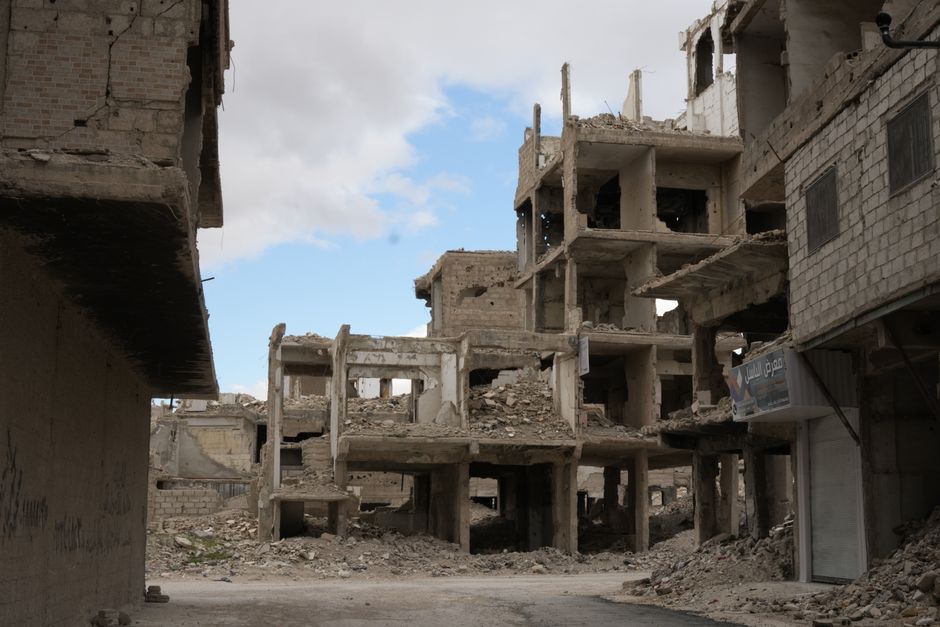
The humanitarian crisis in the Palestinian territories, particularly in Gaza, is a severe and ongoing consequence of the conflict. Gaza, a densely populated strip of land under a blockade imposed by Israel and Egypt since 2007, faces dire living conditions. The blockade restricts the movement of goods and people, leading to widespread poverty, unemployment, and shortages of essential resources like clean water, electricity, and medical supplies. Recurring cycles of violence between Israel and Hamas have resulted in significant loss of life, destruction of infrastructure, and psychological trauma for the civilian population. The West Bank, while not under the same level of blockade, experiences significant restrictions on movement due to Israeli checkpoints and the separation barrier, impacting economic development and access to services. The ongoing occupation and its associated policies have led to a severe erosion of human rights for Palestinians, including limitations on freedom of movement, arbitrary arrests, and the displacement of communities due to settlement expansion and military operations.
The international community plays a significant role in the Israeli-Palestinian conflict, both in terms of mediation and humanitarian aid. The United Nations, through various agencies, provides substantial assistance to Palestinian refugees and supports development projects. The UN Security Council has passed numerous resolutions condemning Israeli settlements, calling for a two-state solution, and upholding international law. However, the effectiveness of these resolutions is often hampered by political divisions and the veto power of permanent members of the Security Council. The United States has historically been a key mediator and a strong ally of Israel, providing significant military and financial aid. Other international actors, including the European Union and various Arab nations, also engage in diplomatic efforts and provide humanitarian assistance, but often with differing approaches and levels of influence. The lack of a unified and decisive international approach has been a contributing factor to the protracted nature of the conflict.
The impact of the conflict extends far beyond the immediate region, influencing global politics, security, and international relations. The conflict fuels regional instability, exacerbates sectarian tensions, and provides fertile ground for extremist ideologies. The ongoing violence and humanitarian suffering generate global concern and inspire activism and solidarity movements worldwide. The quest for a just and lasting peace remains an urgent priority, requiring a comprehensive approach that addresses the core grievances of both Israelis and Palestinians. This necessitates a recognition of the legitimate aspirations of both peoples for security, self-determination, and a life of dignity. A resolution would likely involve difficult compromises on all sides, a commitment to international law, and a renewed dedication to multilateral diplomacy. The path forward is fraught with challenges, but the potential for a more peaceful and prosperous future for both Israelis and Palestinians hinges on a willingness to engage in genuine dialogue, acknowledge mutual suffering, and prioritize a shared humanity over deeply entrenched animosities. The resolution will likely require addressing the complex issues of borders, settlements, Jerusalem, refugees, and security in a manner that respects the rights and aspirations of all parties involved. The enduring legacy of the conflict underscores the profound human cost of unresolved political disputes and the critical need for sustained diplomatic engagement and a commitment to justice.
