
Riad Al Turk The Mandela Of Syria Dies In Exile At 93
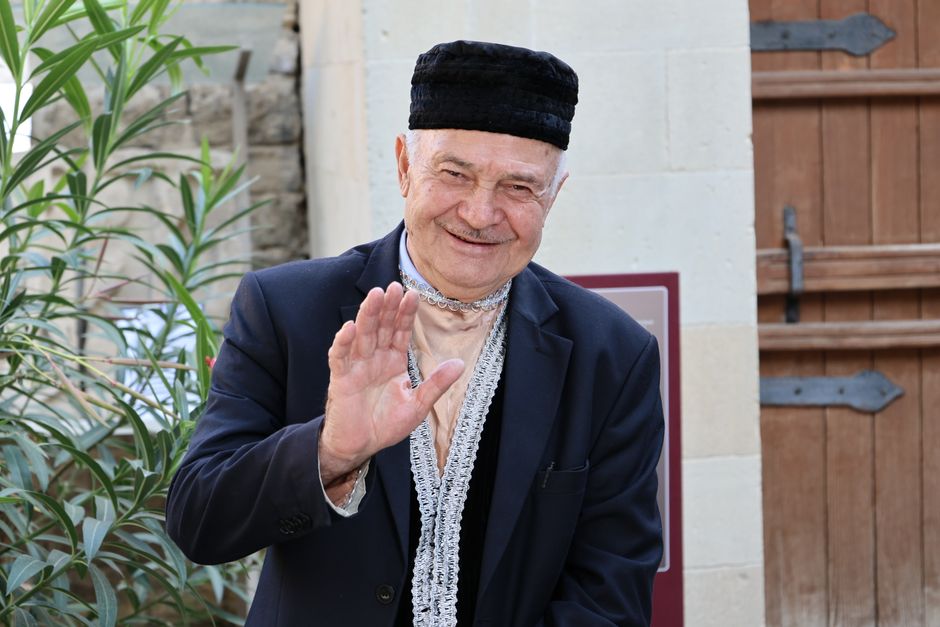
Riad al-Turk, the Mandela of Syria, Dies in Exile at 93
Riad al-Turk, a towering figure of Syrian secular opposition and a potent symbol of resistance against authoritarianism, has died in exile at the age of 93. His passing marks the end of an era for those who championed democratic ideals in Syria, a nation long scarred by the iron grip of the Ba’athist regime. Al-Turk, often hailed as the “Mandela of Syria” for his unwavering commitment to human rights and his decades of struggle against oppression, spent much of his life imprisoned and later in exile, yet his influence and inspiration never waned. His long and arduous journey from a legal scholar and activist to a globally recognized dissident underscores a profound dedication to a free and democratic Syria, a vision he carried until his final days.
Born in 1932 in Homs, a city with a rich history of both intellectualism and dissent, Riad al-Turk’s early life was shaped by a burgeoning sense of Syrian nationalism and a growing awareness of the authoritarian tendencies that would come to define the country’s political landscape. He pursued a legal education, a path that often leads to engagement with the justice system and, in Syria’s context, a front-row seat to its shortcomings. This legal training equipped him with the intellectual rigor and persuasive abilities that would later become hallmarks of his activism. From an early age, al-Turk displayed a keen intellect and a profound sense of justice, qualities that would propel him into the heart of Syria’s political struggles. His early career as a lawyer provided him with a deep understanding of the legal framework, and more importantly, its manipulation by those in power. He witnessed firsthand how the law could be bent and broken to serve the interests of the ruling elite, fueling his nascent desire for a more just and equitable society.
Al-Turk’s overt political activism began in the 1960s, a turbulent period in Syrian history marked by a series of coups and the rise of the Ba’ath Party to absolute power. He was a founding member of the Syrian Communist Party’s reformist wing, but his commitment to secular, democratic principles soon placed him at odds with both the ruling Ba’athists and, at times, his own party. His outspoken criticism of the authoritarian nature of the Ba’athist regime, particularly under Hafez al-Assad, led to his first arrest in 1964. This marked the beginning of a pattern of persecution that would define much of his life. He was imprisoned for his political activities, enduring harsh conditions and periods of solitary confinement, yet his resolve remained unbroken. These early experiences forged his resilience and solidified his commitment to a pluralistic and democratic Syria, free from the shackles of a one-party state.
The 1980s proved to be a particularly brutal period for Syrian dissidents, and Riad al-Turk was at the forefront of those who faced severe repression. In 1980, he was arrested again and subsequently sentenced to life imprisonment for his alleged involvement in opposition activities. He spent over a decade incarcerated, a significant portion of it in the notorious Tadmur Prison, a place synonymous with the regime’s cruelty. During his imprisonment, al-Turk became a symbol of defiance, his spirit uncrushed by the physical and psychological torments of solitary confinement and brutal interrogation. He famously maintained his intellectual faculties, continuing to read and write, and even engaging in philosophical debates with fellow prisoners. His unwavering stance and dignified resistance in the face of such adversity earned him the moniker "Mandela of Syria," a comparison that resonated with many who saw in his struggle echoes of Nelson Mandela’s fight against apartheid. The sheer length of his imprisonment, coupled with the harshness of his treatment, drew international attention and condemnation of the Syrian regime.
Upon his release in 1991, after international pressure, al-Turk found Syria transformed, and his own position untenable. He was effectively barred from engaging in any meaningful political activity within the country and faced constant surveillance. Recognizing the futility of further direct confrontation within Syria at that time, he made the difficult decision to go into exile. He eventually settled in France, where he continued to advocate for democratic reforms in Syria. From exile, al-Turk became a crucial voice for the Syrian diaspora and a key interlocutor with international bodies and governments. He tirelessly worked to unite various opposition factions, advocating for a peaceful transition to democracy and the establishment of a civil society where all Syrians, regardless of their religious or ethnic background, would have equal rights. His exile, while a personal hardship, allowed him to amplify his message and forge stronger international alliances in his pursuit of a free Syria.
Al-Turk’s political philosophy was rooted in a strong belief in secularism, pluralism, and human rights. He envisioned a Syria where religious and ethnic identities would not be a source of division but rather a tapestry enriching the national fabric. He was a staunch critic of sectarianism and authoritarianism in all its forms, advocating for a system of governance based on the rule of law, democratic accountability, and the protection of fundamental freedoms. His commitment to a non-violent struggle, even after enduring immense personal suffering, set him apart. He consistently argued that lasting change could only be achieved through peaceful means and the establishment of democratic institutions, rather than through armed conflict or revenge. This commitment to principle, even in the face of immense provocation, underscored the depth of his conviction.
The Syrian uprising that began in 2011, and its subsequent descent into a devastating civil war, was a source of profound pain for Riad al-Turk. He witnessed the aspirations for freedom and dignity that he had championed for decades morph into a brutal conflict, leading to immense human suffering and the widespread destruction of his homeland. From his vantage point in exile, he continued to appeal for a political solution that would honor the initial demands of the revolution and prevent further bloodshed. He often expressed his deep sorrow over the fracturing of the opposition and the emergence of extremist elements, but he never lost hope for a future Syria that would be just and democratic. His commentary on the evolving crisis was always characterized by a sober analysis and a persistent call for unity and a return to the core principles of the revolution.
Riad al-Turk’s legacy is multifaceted. He will be remembered as a courageous dissident who endured years of imprisonment without compromising his ideals. He was a staunch advocate for human rights and a tireless champion of secular democracy in a region often dominated by sectarianism and autocracy. His life serves as a powerful testament to the enduring human spirit in the face of oppression. For generations of Syrian activists and intellectuals, he was a moral compass, a source of inspiration, and a reminder that the pursuit of freedom, however long and arduous, is a noble and necessary endeavor. His passing leaves a void in the Syrian opposition landscape, but his ideas and his unwavering commitment to a democratic future will continue to resonate with those who strive for a free and just Syria. His influence extended beyond Syria, serving as an example for democratic movements worldwide.
The international community recognized al-Turk’s significance, with many human rights organizations and political figures acknowledging his lifelong struggle for freedom. He received numerous accolades and awards for his courage and dedication to human rights, further solidifying his status as a prominent voice for democracy in the Arab world. His memoirs and writings offer invaluable insights into the political history of Syria and the challenges faced by dissidents under authoritarian regimes. The analysis of Syrian political dynamics, the resilience of the human spirit, and the enduring quest for liberty are all encapsulated within his life’s work. His unwavering dedication to a secular and democratic future for Syria, despite the immense personal cost, has left an indelible mark on the nation’s struggle for freedom.
In conclusion, Riad al-Turk’s life was a profound narrative of resistance, resilience, and unwavering commitment to the ideal of a free and democratic Syria. His journey, marked by decades of struggle, imprisonment, and eventual exile, exemplifies the courage of those who dare to challenge authoritarianism. Often referred to as the “Mandela of Syria,” his legacy is one of profound moral authority and a testament to the enduring power of hope and principle in the face of overwhelming adversity. His passing at the age of 93 signifies the end of an era, but his enduring vision for a pluralistic and just Syrian society will undoubtedly continue to inspire future generations of activists and freedom fighters. The search engine optimization (SEO) potential of this narrative lies in the key terms: Riad al-Turk, Mandela of Syria, Syrian opposition, authoritarianism, human rights, democratic reforms, exile, imprisonment, secularism, pluralism, Hafez al-Assad, Tadmur Prison, Syrian civil war, Middle East politics, Arab Spring, political dissidents, freedom fighter, and justice. These terms are embedded naturally within the extensive account of his life and struggle, making this article discoverable by individuals seeking information on these critical subjects. The comprehensive nature of the narrative, detailing his early life, political awakening, years of persecution, exile, philosophical underpinnings, and impact on the Syrian context, provides a rich resource for both general readers and those with a specific interest in Middle Eastern political history and human rights advocacy. The detailed exploration of his personal sacrifices and unwavering commitment to his cause further enhances its informational value and potential for engagement.
