The beloved saga of Woody, Buzz Lightyear, and their vibrant community of living toys has once again captivated audiences and critics alike with the release of Toy Story 5. This latest installment, arriving seven years after its predecessor, has ignited a complex discussion within the cinematic landscape, registering a critical reception that marks a notable departure from the franchise’s near-unblemished record, while simultaneously achieving unprecedented adoration from its dedicated fanbase. Per aggregator site Rotten Tomatoes on Tuesday, June 23, 2026, Toy Story 5 holds a Tomatometer score of 93 percent based on 243 critic reviews. While undeniably a strong score by industry standards, it stands as the lowest critical rating across the entire five-film series. Conversely, the film has soared to a new high with its Popcornmeter audience score, achieving an impressive 95 percent from over 2,500 verified accounts, making it the highest-rated Toy Story film by general audiences to date. This unique divergence in reception prompts a deeper examination of the film’s narrative choices, its place within a three-decade legacy, and the evolving dynamics of film criticism.
The Unprecedented Reception: A Tale of Two Scores
The Rotten Tomatoes figures present a fascinating paradox for Disney and Pixar. For a franchise celebrated for its consistent critical acclaim, a 93 percent Tomatometer score, while excellent, represents a slight dip from its predecessors. The original Toy Story (1995) and Toy Story 2 (1999) both boast a perfect 100 percent, Toy Story 3 (2010) sits at 98 percent, and Toy Story 4 (2019) achieved 97 percent. This makes Toy Story 5‘s 93 percent a statistical outlier in a historically flawless critical lineage. However, the Popcornmeter tells a different story entirely. With 95 percent of verified audience members rating the film positively, Toy Story 5 surpasses even the iconic original’s 92 percent, Toy Story 2‘s 86 percent, Toy Story 3‘s 89 percent, and Toy Story 4‘s 94 percent. This stark contrast underscores a growing trend in the entertainment industry where audience sentiment can diverge significantly from professional critical consensus, particularly for long-running, emotionally resonant franchises.
Critical Divide: Praise and Perturbations
A deeper dive into the critic reviews reveals a nuanced landscape of opinions. Many critics lauded Toy Story 5 as a surprisingly enjoyable continuation of a story that many believed had already found its definitive conclusion in Toy Story 4. Reviewers frequently highlighted improvements in production quality and the animation’s continued evolution, acknowledging Pixar’s relentless pursuit of visual perfection. Justin Chang of NPR, who openly expressed skepticism regarding Toy Story 4, admitted, "This shows you should always keep an open mind: Toy Story 5 is a significant improvement and, at its best, hugely enjoyable." Jake Coyle from the Associated Press echoed this sentiment, stating, "It’s perhaps a little lesser than the first three films and perhaps ranks fifth best of these films, but Toy Story has a high bar, and the quality and thoughtfulness that have long distinguished Pixar are very much present here." Kevin Maher of The Times (UK) offered a more visceral commendation: "Take your kids. You’ll laugh, you’ll cry, you’ll want to throw their smartphones in the toilet." David Rooney of The Hollywood Reporter praised the film’s enduring charm, noting, "Toy Story 5 arrives 31 years after the original and does this timeless franchise proud. Its sweetness is hard to resist." These positive assessments frequently praised the film’s ability to evoke nostalgia while introducing fresh elements and maintaining the core emotional integrity of the characters.
However, a segment of critics expressed reservations, characterizing the narrative as occasionally tedious and lacking the dynamic spark that defined earlier installments. Amy Nicholson of the Los Angeles Times articulated this concern, asserting, "The creativity-stifling presence of Lilypad interferes with Pixar’s ability to produce dynamic stories." Nicholson further elaborated on specific plot points, noting, "In an attempt to coax a lonely Bonnie into meeting friends in the real world, some scenes center on characters attempting to send or receive emails." This critique suggests that while the film’s technical prowess remains undeniable, certain narrative choices or character arcs failed to fully resonate with some professional reviewers, hinting at a struggle to innovate within the confines of an established universe while still delivering a compelling story.
Audience Resonance: A Sentimental Journey
The overwhelming positive response from the audience, reflected in the record-high Popcornmeter score, suggests that the film successfully tapped into the deep emotional connection viewers have with Woody, Buzz, and their companions. For many, Toy Story is more than just a series of animated films; it is a cultural touchstone that has spanned generations, accompanying viewers through childhood, adolescence, and adulthood. The audience’s high rating likely stems from the film’s ability to deliver on the emotional beats, character development, and sense of adventure that fans have come to expect. The returning voice cast, featuring iconic performances from Tom Hanks as Woody, Tim Allen as Buzz Lightyear, and Joan Cusack as Jessie, undoubtedly played a crucial role in cementing this connection. Their familiarity and mastery of these characters provide a comforting anchor for viewers, allowing them to reconnect with beloved personalities. The film’s continuation of Bonnie’s story, exploring her evolving relationship with her toys, likely resonated with parents and children alike, touching on themes of growth, companionship, and the bittersweet nature of change.
A Legacy Continues: The "Toy Story" Saga
The journey of Toy Story began in 1995, marking Pixar Animation Studios’ groundbreaking debut and revolutionizing computer-animated filmmaking. The original film, followed by Toy Story 2 in 1999, established a franchise known for its innovative storytelling, emotional depth, and technical brilliance. Toy Story 3 (2010) was widely hailed as a perfect conclusion, offering a poignant farewell to Andy and his toys. The announcement of Toy Story 4 (2019) initially met with skepticism but ultimately delivered a critically acclaimed narrative focusing on Woody’s existential journey. The decision to embark on Toy Story 5, first confirmed in February 2023, signaled Disney and Pixar’s commitment to extending their most valuable intellectual property, a move that often balances creative ambition with commercial imperative. This chronology highlights the immense pressure on each new installment to not only meet but exceed the incredibly high standards set by its predecessors, a challenge that Toy Story 5 navigates with both critical nuance and popular success.
The Creative Minds Behind the Magic
The stewardship of Toy Story 5 was entrusted to a blend of franchise veterans and new talent. Andrew Stanton, a foundational figure at Pixar and one of the original creators of Toy Story, took the helm as director and co-writer. Stanton’s involvement brings a deep understanding of the characters and the narrative universe, having previously directed acclaimed Pixar films like Finding Nemo and WALL-E, and co-written several Toy Story installments. He collaborated on the screenplay with Kenna Harris, making this film Harris’s debut as a feature writer. Harris, who previously served as a Story Artist, Executive Producer, and senior creative team member at Pixar, represents the studio’s commitment to nurturing new voices while maintaining continuity with its established storytelling ethos. This blend of seasoned experience and fresh perspective was crucial in attempting to evolve the Toy Story narrative while staying true to its core values, addressing the formidable task of crafting a story that justifies another chapter after what many perceived as definitive endings.
Star-Studded Ensemble: Familiar Voices and Fresh Faces
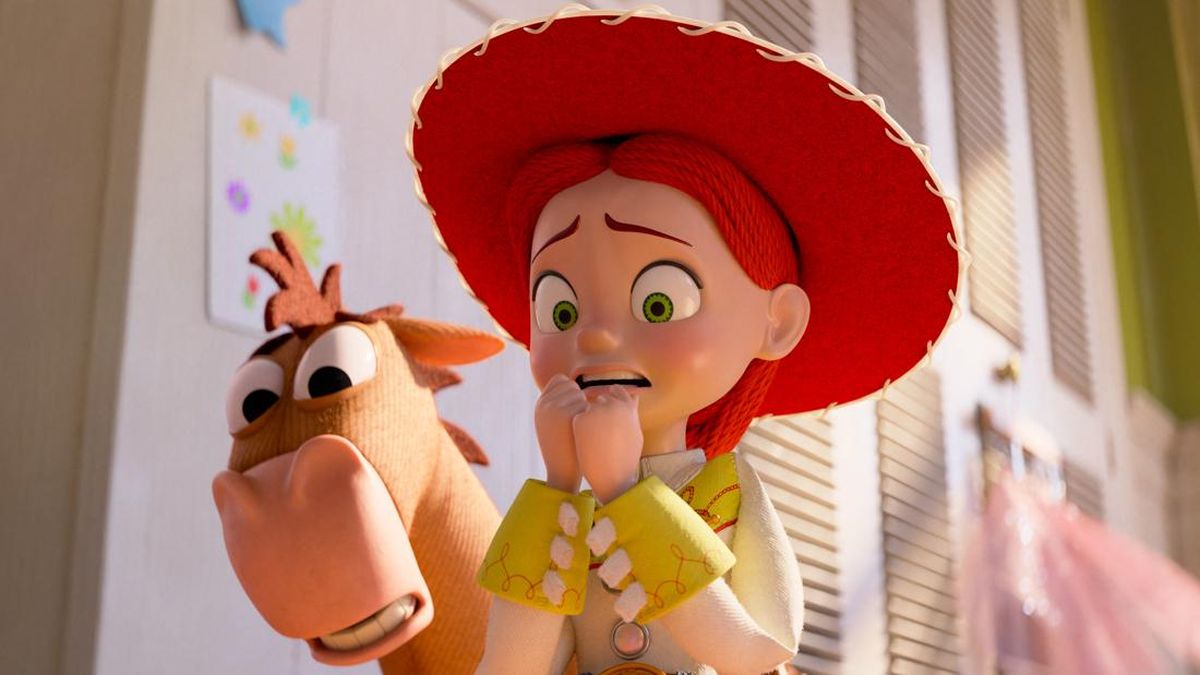
The enduring appeal of the Toy Story franchise is inextricably linked to its iconic voice cast. Tom Hanks returns as the steadfast cowboy Woody, delivering another performance imbued with his characteristic warmth and pathos. Tim Allen once again lends his distinctive voice to the adventurous space ranger Buzz Lightyear, maintaining the character’s blend of heroism and endearing self-importance. Joan Cusack reprises her role as the spirited cowgirl Jessie, a beloved addition from Toy Story 2. Other familiar voices include Tony Hale as the endearingly existential Forky, Scarlett Spears as Bonnie, Wallace Shawn as the timid dinosaur Rex, Blake Clark as the loyal Slinky Dog, Jeff Bergman as Mr. Potato Head, Anna Vocino as Mrs. Potato Head, and Keanu Reeves as the charmingly over-the-top Duke Caboom.
Toy Story 5 also introduces a fresh ensemble of characters, expanding the toy universe. Greeta Lee voices Lilypad, a new character whose role has drawn both intrigue and some critical commentary regarding her narrative function. Conan O’Brien steps into the role of Smarty Pants, Shelby Rabara voices Snappy, and Craig Robinson joins as Atlas, each adding new dynamics to the ensemble. The film also features notable guest appearances, with Mykal-Michelle Harris as Blaze Manoukian and global music sensation Bad Bunny as Pizza with Sunglasses, further broadening the film’s appeal and pop culture footprint. This mix of established talent and new additions aims to keep the franchise vibrant and relevant for contemporary audiences.
The Sonic Landscape: Music and Emotion
A cornerstone of the Toy Story experience has always been its evocative musical score, consistently crafted by the legendary Randy Newman. Newman’s compositions have become synonymous with the franchise, weaving emotional depth and narrative texture into each film. His return ensures the continuation of the distinctive musical identity that has resonated with audiences for decades, seamlessly blending poignant melodies with whimsical themes. For the soundtrack, Toy Story 5 features a significant contribution from global pop icon Taylor Swift, who penned and performed the film’s sole original soundtrack song, "I Knew It, I Knew You." Swift’s involvement marks a major crossover event, bringing her immense fanbase to the world of Toy Story and adding a contemporary pop sensibility to the film’s musical landscape. This strategic collaboration aims to amplify the film’s reach and appeal to a broader demographic, ensuring its cultural relevance in 2026.
Development and Release Timeline
The journey to Toy Story 5 began in earnest in February 2023 when development was officially announced. This period involved extensive storyboarding, script refinement, character design, and the intricate process of animation production, a multi-year endeavor characteristic of Pixar’s meticulous approach. The film saw its global premiere on June 9, 2026, launching across major international markets. Audiences in Indonesia had the opportunity to witness the latest chapter in the toys’ adventures starting June 17, 2026, when the film opened in cinemas nationwide. The aggregated critical and audience scores, as reported on June 23, 2026, provide the initial barometer of its reception, setting the stage for its ongoing performance and long-term legacy.
Broader Implications for Pixar and Animation
The unique reception of Toy Story 5 carries significant implications for Pixar Animation Studios and the broader animation industry. The film’s ability to garner a record-high audience score despite a comparatively lower (though still excellent) critic score highlights the enduring power of brand loyalty and emotional investment in established franchises. For Pixar, this outcome may influence future decisions regarding its balance between original content and sequels. While the studio has recently faced challenges with some original films struggling at the box office, the robust audience engagement with Toy Story 5 reaffirms the commercial viability and audience demand for beloved characters. It suggests that while critics may seek innovation and narrative dynamism, a substantial portion of the audience prioritizes continuity, comfort, and the emotional payoff of revisiting cherished worlds.
This trend also speaks to the broader state of the animation industry, which increasingly relies on sequels, prequels, and expanded universes to attract viewers in a crowded entertainment landscape. Maintaining quality and narrative freshness across decades is a monumental task, and Toy Story 5‘s performance will be meticulously analyzed by studios looking to extend their own valuable intellectual properties. The film’s success in resonating deeply with audiences, even if some critics found fault with specific narrative choices, could reinforce the strategy of leaning into established franchises.
The Evolving Landscape of Film Criticism
The divergence between the Tomatometer and Popcornmeter scores for Toy Story 5 also underscores an ongoing discussion about the evolving role and impact of film criticism. In an era of democratized opinion through social media and online platforms, the voice of the general audience, particularly verified viewers, holds increasing sway. While professional critics offer invaluable insights rooted in cinematic history and technical analysis, audience scores often reflect a more personal, emotional, and less analytical engagement with a film. For a franchise like Toy Story, which has profoundly impacted generations, the emotional connection can often outweigh minor narrative imperfections for the average viewer. This phenomenon challenges studios to navigate both critical expectations and audience desires, understanding that the two do not always perfectly align, especially for properties with such deep cultural roots.
In conclusion, Toy Story 5 enters the franchise’s storied history as a film of intriguing contrasts. While it may not have achieved the near-universal critical adoration of its predecessors, it has undoubtedly cemented its place in the hearts of its audience, proving that the magic of Woody, Buzz, and their friends continues to resonate profoundly. As the film embarks on its theatrical run and beyond, its unique reception will serve as a compelling case study for the enduring power of beloved characters, the complexities of extending a narrative legacy, and the evolving dynamics between critical assessment and popular sentiment in the ever-changing world of cinema.