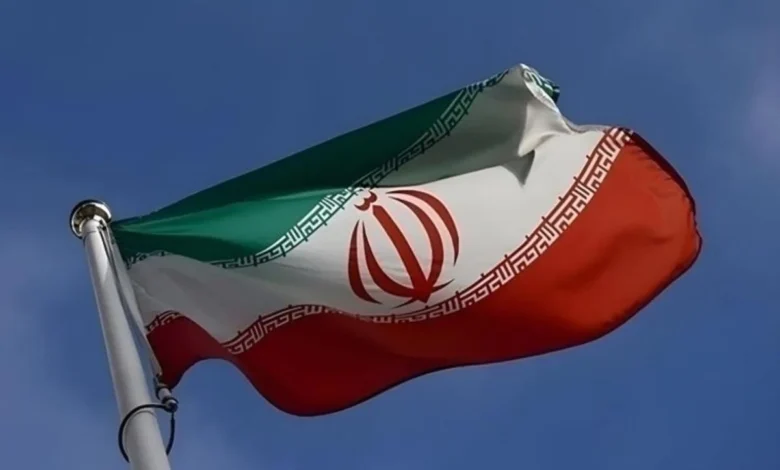
The Iranian currency, the rial, has recently been thrust into the global spotlight, a consequence of escalating geopolitical tensions and evolving international economic policies. The United States, under President Donald Trump, has implemented stringent measures, imposing tariffs of up to 25 percent on nations continuing to engage in business with Iran. This decisive action has triggered a cascade of reactions, significantly impacting Iran’s economic landscape and leading to a pronounced weakening of its national currency. In recent assessments, the Iranian rial has reportedly reached historic lows when converted to the euro, a stark indicator of the immense pressure bearing down on Iran’s economy, exacerbated by prolonged sanctions and persistent inflation.
However, a curious phenomenon unfolds upon visiting Iran’s bustling traditional markets or its modern shopping centers. The term "rial" is conspicuously absent from everyday transaction conversations. Locals overwhelmingly favor the term "toman" when discussing the prices of goods and services. This linguistic shift is not merely a matter of colloquialism but a direct response to the country’s extremely high inflation rate. To simplify pricing and circumvent the cumbersome use of excessively large numbers, Iran has adopted an alternative accounting system based on the toman.
This intricate interplay between the official currency and its popular derivative raises fundamental questions: What is Iran’s official currency, and what are the core differences between the rial and the toman, which often perplexes tourists and international economic observers alike? This in-depth analysis aims to unravel these complexities, drawing from a range of authoritative sources.
The Official Legal Tender: Iran’s Rial
Legally and administratively, the rial (IRR) is designated as Iran’s official currency. All banking activities, governmental documentation, and price listings in modern commercial establishments are conducted and denominated in rials. This legal framework underscores the rial’s status as the foundational unit of exchange within the Islamic Republic of Iran.
The De Facto Currency: The Toman and the Inflationary Divide
Despite the rial’s official standing, its practical application in daily life has been significantly overshadowed by the "toman." The term "rial" is rarely uttered by Iranians during their routine commercial interactions, whether in the vibrant chaos of bazaars or the more ordered environment of small shops. The preference for the toman stems from its inherent simplicity in representing monetary value, a direct consequence of pervasive inflation.
In practical terms, one toman represents a far more manageable denomination. It is equivalent to 10,000 rials, effectively a rial with four zeros removed. This system streamlines price discussions, allowing individuals to avoid the mental gymnastics of dealing with extensive numerical figures. While the rial remains the legal tender, the toman has emerged as the de facto unit of account for everyday transactions.
Historically and juridically, the rial is the legitimate currency, appearing on banknotes and in all financial records. However, the relentless pressure of inflation on the rial’s exchange rate has compelled the populace to adopt a more pragmatic approach, simplifying value representation through the toman. The underlying principle is straightforward: one toman is equivalent to ten of the "old rials."
This distinction can lead to significant confusion. For instance, if a merchant quotes a price of 60,000 tomans, the actual amount payable in rials would be 600,000. This discrepancy in how prices are quoted is a frequent source of bewilderment for foreign visitors to Iran.
A Historical Context of Currency Evolution
The dual system of rial and toman is not a recent development but has evolved over time, deeply intertwined with Iran’s economic history. The rial was first introduced in the early 20th century, replacing the Qajar-era silver coin. However, periods of economic instability, coupled with the significant devaluation of the currency due to various domestic and international factors, have repeatedly eroded its purchasing power.
The concept of the toman predates the rial as a unit of account. Historically, the toman was a unit of currency based on gold, but its modern iteration is a simplification born out of necessity due to inflation. The ratio of 10,000 rials to 1 toman has become deeply ingrained in the national consciousness.
The Redenomination Initiative: Towards a New Monetary Era
To address the long-standing confusion and to streamline the national financial system, the Central Bank of Iran (CBI) initiated a currency redenomination policy in 2020. This ambitious undertaking is being implemented in phases, with a broader rollout expected between 2025 and 2026. The core of this policy involves officially replacing the primary currency unit from the rial to a new version of the toman, effectively removing four zeros from the existing rial. Under this new scheme, 10,000 old rials will be equivalent to 1 new toman. The new toman will also be subdivided into smaller denominations, with 100 qirans making up one toman.
During this transitional period, older rial banknotes remain valid and circulate alongside the new currency. Newly issued banknotes feature reduced nominal values, often accompanied by ghosted zeros, serving as a visual cue to the systemic shift and facilitating gradual public adaptation. This comprehensive redenomination aims to simplify transactions, enhance the psychological perception of the currency’s value, and align Iran’s monetary system with international standards.
Factors Contributing to the Rial’s Weakness
The persistent weakening of the Iranian rial is a multifaceted issue, driven by a confluence of domestic and international factors.
Geopolitical Sanctions and International Pressure
The most prominent factor contributing to the rial’s decline is the imposition of international sanctions, particularly those enacted by the United States. These sanctions have severely restricted Iran’s access to global financial markets, limited its export capabilities, and deterred foreign investment. The threat of secondary sanctions, which penalize third-party entities doing business with Iran, has further isolated the country economically.
The recent imposition of tariffs by the US on countries trading with Iran, as mentioned in the initial report, is a direct manifestation of this pressure. These measures aim to cripple Iran’s economy by choking off its trade relations and financial lifelines.
Domestic Economic Challenges
Beyond external pressures, Iran grapples with significant internal economic challenges that exacerbate currency depreciation.
-
High Inflation: As evidenced by the widespread use of the toman, Iran has experienced chronically high inflation rates. This erodes the purchasing power of the rial and necessitates frequent price adjustments, creating economic instability. According to the International Monetary Fund (IMF), Iran’s inflation rate has been in double digits for years, significantly impacting the daily lives of its citizens. For instance, in 2022, inflation was estimated to be around 40%, and projections for subsequent years, while varying, remain elevated.
-
Government Spending and Budget Deficits: Persistent government budget deficits, often financed through printing money, contribute to inflationary pressures. High levels of government spending, sometimes driven by social welfare programs or defense expenditures, can outpace revenue generation, leading to monetary expansion.
-
Economic Structure and Reliance on Oil: Iran’s economy has historically been heavily reliant on oil exports. Fluctuations in global oil prices and disruptions to its oil sales due to sanctions directly impact government revenue and the overall economic health of the nation. When oil revenues decline, the government’s ability to manage its finances and stabilize the currency is compromised.
-
Lack of Foreign Investment: The combination of sanctions and domestic economic uncertainties has deterred significant foreign direct investment (FDI). A lack of fresh capital limits economic growth, job creation, and the modernization of industries, all of which contribute to a weaker currency.
-
Capital Flight: In times of economic uncertainty, individuals and businesses often seek to move their capital to safer havens, leading to capital flight. This outflow of funds further diminishes the demand for the rial and puts downward pressure on its value.
Implications of the Rial’s Weakness and the Toman Shift
The weakening of the rial and the shift to the toman have far-reaching implications for Iran and the international community.
Impact on Daily Life and Purchasing Power
For ordinary Iranians, the depreciating rial translates into a significant erosion of their purchasing power. Imported goods become prohibitively expensive, and even domestic products see frequent price hikes, making it increasingly difficult for families to afford basic necessities. This can lead to social unrest and a decline in living standards. The shift to the toman, while a practical adaptation, does not alter the underlying economic reality of diminishing value.
Trade and Investment Environment
The volatile exchange rate and the complexities of currency conversion create an unpredictable environment for international trade and investment. Foreign businesses may find it challenging to price goods and services, repatriate profits, and assess the true cost of doing business in Iran. This uncertainty further discourages foreign engagement.
The Redenomination’s Potential and Challenges
The CBI’s redenomination plan holds the potential to simplify financial transactions, boost public confidence in the currency, and facilitate international economic integration in the long run. However, its success hinges on the government’s ability to manage inflation effectively and maintain economic stability during the transition. If inflation continues unabated, the new toman could face similar devaluation pressures, diminishing the long-term benefits of the reform.
The transition period, with both old and new currencies circulating, requires careful management to avoid confusion and potential exploitation. Public education and clear communication from the central bank are crucial for a smooth adoption of the new monetary system.
Broader Geopolitical and Economic Ramifications
The economic struggles of Iran, reflected in its currency’s performance, have broader geopolitical and economic ramifications.
-
Regional Stability: Economic hardship within Iran can contribute to regional instability, potentially influencing migration patterns, exacerbating existing political tensions, and impacting neighboring economies.
-
Global Energy Markets: As a significant oil producer, Iran’s economic health is indirectly linked to global energy markets. Sanctions that curtail its oil exports can influence global supply and price dynamics, though the impact is often mitigated by the presence of other major producers.
-
International Relations: The economic pressures on Iran are a key element in ongoing diplomatic negotiations and geopolitical maneuvering. The effectiveness of sanctions as a tool of foreign policy is continuously debated, with Iran’s resilience and adaptations offering a complex case study.
In conclusion, the Iranian rial’s current predicament is a stark illustration of how intertwined geopolitical forces and domestic economic policies can be. The practical shift to the "toman" in everyday commerce highlights the profound impact of persistent inflation, while the government’s ambitious redenomination plan signals a forward-looking attempt to stabilize and modernize the nation’s financial infrastructure. The success of these endeavors will be closely watched, not only for its impact on the lives of ordinary Iranians but also for its broader implications on the regional and global economic stage.
Related posts: