Gowa DPRD Special Committee Concludes Inquiry into Bupati, Recommends Further Action Including Potential Impeachment Proceedings

The Special Committee (Pansus) for the Right of Inquiry (Hak Angket) of the Gowa Regency Regional House of Representatives (DPRD) in South Sulawesi has officially concluded its investigative duties. A comprehensive report detailing its findings, along with eight key recommendations, has been formally submitted to the DPRD leadership for further processing. This pivotal development could potentially pave the way for a "Right to State Opinion" (Hak Menyatakan Pendapat), a legislative mechanism that, in its ultimate stages, can lead to a proposal for the dismissal of the regional head, Bupati Sitti Husniah Talenrang.
Context of Legislative Oversight in Indonesian Local Governance
Indonesia operates under a decentralized administrative system, where regional governments at the provincial, regency, and city levels hold significant autonomy. The Regional House of Representatives (DPRD) serves as the legislative branch at each respective level, tasked with legislative functions, budgeting, and, crucially, oversight of the regional executive, led by the Governor (at the provincial level) or Bupati/Mayor (at the regency/city level). This system is designed to ensure checks and balances, promoting accountability and transparency in local governance.
The Hak Angket, or Right of Inquiry, is a powerful constitutional tool vested in the DPRD. It allows the legislative body to conduct investigations into specific government policies or actions that are suspected of violating laws or not being in line with public interest. The formation of a Pansus Hak Angket typically follows serious allegations of misconduct, maladministration, or policy failures by the regional executive. Its primary objective is to gather facts, examine evidence, and determine whether there have been any breaches of law or ethical conduct.
Should a Pansus Hak Angket conclude that there are indeed grounds for further action, the next legislative step can be the Hak Menyatakan Pendapat, or Right to State Opinion. This right allows the DPRD to express its collective view on the findings of the inquiry, potentially leading to a formal proposal for the impeachment or dismissal of the regional head. This process is inherently political and requires significant support from the DPRD members, often reflecting the political dynamics and alignments within the legislative body.
Chronology of the Gowa Pansus Hak Angket
The journey of the Gowa DPRD’s Special Committee on Inquiry into Bupati Sitti Husniah Talenrang’s administration has unfolded over several months, marked by escalating tensions and critical junctures. While the exact date of the Pansus’s formation is not specified in the initial report, such committees are typically established following preliminary discussions and the identification of significant concerns by a substantial number of DPRD members.
- Initial Concerns and Formation of the Pansus (Inferred: Early to Mid-2024): It is inferred that the Pansus was formed in response to growing concerns and complaints regarding certain policies and administrative practices within the Gowa Regency government. The most prominent issue highlighted by the Pansus was the "free school procurement program," which became the subject of alleged corruption indications. Such programs, while well-intentioned, can be susceptible to financial irregularities if oversight mechanisms are weak. The formation of the Pansus signaled the DPRD’s intent to thoroughly investigate these allegations and the broader conduct of the executive branch.
- Investigation Phase (Inferred: Weeks/Months leading up to July 2024): Throughout its mandate, the Pansus conducted an extensive investigation, which would have involved summoning various government officials, collecting documents, analyzing financial records, and interviewing relevant stakeholders. These sessions, often held behind closed doors or with limited public access, are crucial for building a factual basis for the committee’s findings. The committee’s diligence during this phase is paramount to ensuring the legitimacy and robustness of its final report.
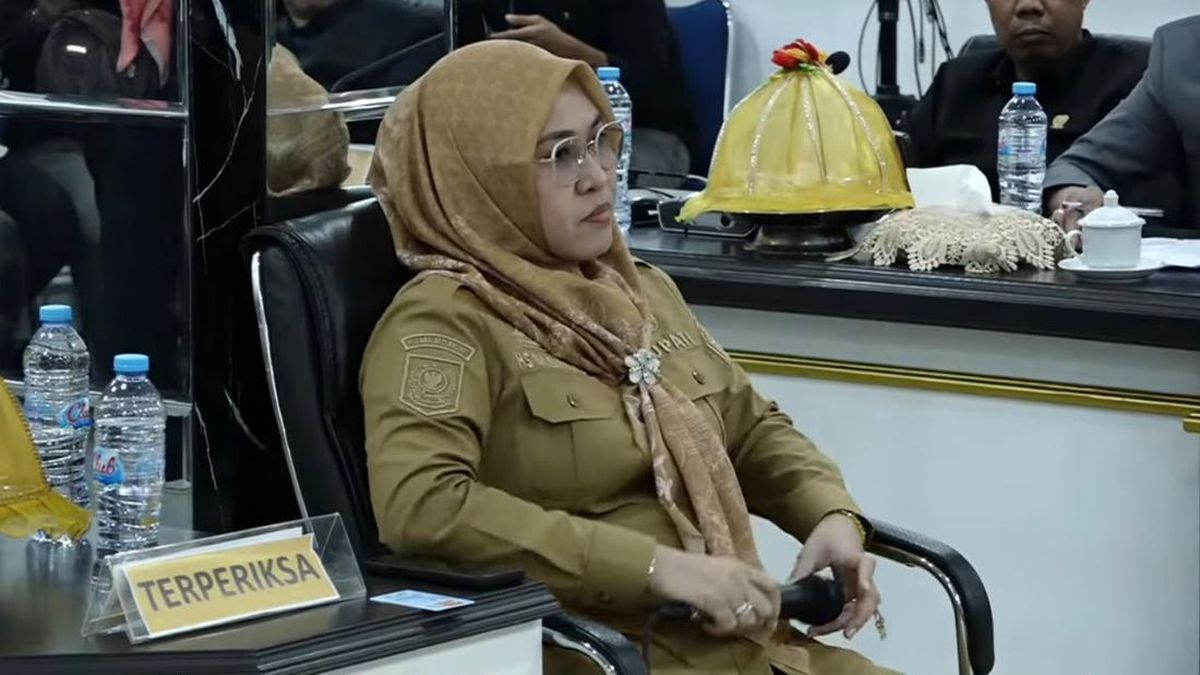
- Bupati’s Appearance and Walkout (Tuesday, July 14): A critical moment occurred when Bupati Sitti Husniah Talenrang was summoned to appear before the Pansus. Her attendance was a legal obligation, demonstrating a commitment to cooperate with the legislative oversight process. However, the session was marked by controversy when the Bupati, accompanied by her legal counsel, chose to walk out.
- According to her legal counsel, Amirullah Mappaero, the Bupati’s decision stemmed from the Pansus’s alleged failure to meet her procedural demands. Specifically, she requested that questions be submitted collectively rather than individually, and that her responses be provided in writing, focusing primarily on policy-related aspects. "Since the beginning, the Ibu (Bupati) was ready and had prepared everything related to the questions from the Pansus. But the Ibu requested her rights be fulfilled, namely that questions be submitted collectively and the discussion focus on policy matters. These requests were not met," Mappaero stated.
- Another legal representative, Arie Dumais, further argued that the examination process had not been fair, citing what they believed to be relevant legal provisions that allow for answers to be submitted either orally or in writing. He emphasized that the Bupati had shown good faith by attending the summons.
- In response, Pansus Chairman Kasim Sila asserted that the committee would proceed with its conclusions regardless of the Bupati’s walkout. He highlighted that the Pansus could reach conclusions even without the attendance of summoned parties, let alone when they had appeared. This stance underscored the DPRD’s determination to complete its mandate.
- Conclusion of Pansus Duties and Report Submission (Thursday, July 23): The Pansus officially concluded its investigative work and submitted its comprehensive report and recommendations to the DPRD leadership. Kasim Sila confirmed the completion of their tasks and responsibilities on this date. This handover marks the transition from the investigative phase to the deliberative phase by the entire DPRD.
Key Findings and Eight Recommendations
The Pansus’s final report includes eight crucial recommendations, strategically directed at three distinct entities: law enforcement agencies (Aparat Penegak Hukum – APH), the Gowa Regency Government, and the DPRD Gowa leadership itself. This multi-faceted approach indicates that the committee’s findings likely encompassed various aspects of governance, from potential criminal acts to administrative shortcomings and the need for internal legislative follow-up.
- Recommendations to Law Enforcement (APH): A significant portion of the recommendations is directed towards law enforcement bodies, specifically the police. This indicates that the Pansus uncovered evidence pointing to potential criminal offenses. Kasim Sila explicitly mentioned one such recommendation: "We recommend to the police matters related to indications of alleged corruption in the free school procurement program." This specific allegation, if substantiated by law enforcement, could lead to a full criminal investigation and prosecution, holding individuals accountable for misuse of public funds. The "free school program" is a common initiative in Indonesia aimed at reducing education costs for families, but its procurement processes can be vulnerable to graft if not managed with stringent transparency and oversight.
- Recommendations to the Gowa Regency Government: While not explicitly detailed in the initial report, recommendations to the local government typically involve directives to improve administrative procedures, enhance transparency, address identified policy shortcomings, or implement corrective measures for governance issues. These could range from improving budget management, strengthening internal controls, reviewing procurement policies, or enhancing public service delivery. The aim here is to rectify systemic issues and prevent future recurrences of misconduct.
- Recommendations to the Gowa DPRD Leadership: These recommendations would likely pertain to internal DPRD actions, such as initiating further legislative processes (like the Hak Menyatakan Pendapat), establishing new oversight committees, or reviewing local regulations to strengthen accountability frameworks. This ensures that the DPRD itself takes ownership of the inquiry’s findings and continues its role as a robust check on the executive.
The Path to Hak Menyatakan Pendapat and Potential Impeachment
Following the submission of the Pansus report, the process now moves to the full DPRD. Kasim Sila outlined the next critical steps:
- Distribution to DPRD Members: The DPRD leadership will distribute the Pansus report to all 45 members of the Gowa DPRD for their individual study and deliberation. This period allows each legislator to understand the findings, weigh the evidence, and consider the implications.
- Decision on Hak Menyatakan Pendapat: All DPRD members will then collectively determine whether the Pansus’s findings warrant the continuation to the Hak Menyatakan Pendapat. This decision requires a majority vote. "If colleagues consider our report worthy of continuation to the right to state opinion, then they will propose to the leadership for the use of the right to state opinion," Kasim explained.
- Implications of Hak Menyatakan Pendapat: Kasim Sila clearly articulated the gravity of the Hak Menyatakan Pendapat. "If it’s to state an opinion, it’s not far from impeachment or dismissal," he stated. This underscores that the process is a direct precursor to potentially removing the regional head from office. The legal framework for this process involves several stages:
- If the DPRD approves the Hak Menyatakan Pendapat, it forms a new special committee or assigns a relevant commission to draft a formal proposal for the Bupati’s dismissal.
- This proposal is then submitted to the Supreme Court (Mahkamah Agung) for a legal review, particularly to ascertain if the alleged violations indeed constitute grounds for dismissal under existing laws.
- If the Supreme Court affirms the grounds, the DPRD can then formally propose the dismissal to the President, through the Minister of Home Affairs. The President ultimately issues the decree for dismissal.
Political Landscape and Anticipated Outcomes
The political climate within the Gowa DPRD suggests a strong likelihood of proceeding to the Hak Menyatakan Pendapat. Kasim Sila noted the prevailing sentiment: "It’s almost certain that colleagues will proceed to the right to state opinion, but I don’t want to preempt their decision." This indicates that the Pansus’s findings have resonated strongly with a significant portion of the DPRD members, building momentum for further action.
The decision to pursue Hak Menyatakan Pendapat is not merely a legal one but a profoundly political one. It requires a sustained consensus among DPRD factions, which often involves complex negotiations and alignments. The political implications for Bupati Sitti Husniah Talenrang are substantial. Facing a potential impeachment process can severely undermine her authority, disrupt her administration’s agenda, and damage her political career. Even if the impeachment process does not culminate in her dismissal, the public scrutiny and the formal declaration of a Hak Menyatakan Pendapat can significantly erode public trust and confidence in her leadership.
Broader Impact and Implications
The Gowa DPRD’s rigorous pursuit of its oversight function through the Pansus Hak Angket carries significant implications beyond the immediate fate of Bupati Sitti Husniah Talenrang.
- Strengthening Local Governance and Accountability: This case serves as a critical example of the DPRD actively exercising its constitutional mandate to provide checks and balances on the executive. Such actions reinforce the principle of accountability in local government, sending a clear message that regional heads are not beyond scrutiny and must adhere to legal and ethical standards in their administration. It can encourage greater transparency and better governance practices across the regency.
- Public Trust and Engagement: The transparency and thoroughness of the inquiry process can either bolster or diminish public trust in democratic institutions. If the process is perceived as fair, objective, and driven by a genuine commitment to justice, it can enhance public confidence in the DPRD’s ability to protect public interests. Conversely, if it is seen as politically motivated or procedurally flawed, it could lead to public cynicism. The public in Gowa will be closely watching the subsequent steps, particularly concerning the allegations of corruption in the "free school program," which directly impacts citizens.
- Precedent for Other Regions: Successful or even vigorously pursued inquiries like this one can set a precedent for other regional legislatures across Indonesia. It may embolden other DPRDs to more proactively investigate suspected irregularities in their respective executive branches, fostering a healthier environment of legislative oversight nationwide.
- Political Stability: While a process like impeachment can be politically turbulent, it is a constitutionally sanctioned mechanism for resolving serious disputes between the legislative and executive branches. Its proper execution, adhering to legal procedures, is vital for maintaining political stability and upholding the rule of law. The outcome in Gowa will be keenly observed by political actors and governance experts as a measure of the effectiveness of Indonesia’s decentralized democratic system.
As the Gowa DPRD prepares to deliberate on the Pansus’s recommendations, all eyes remain on the political landscape of South Sulawesi. The decision to proceed with the Hak Menyatakan Pendapat will not only shape the future of Bupati Sitti Husniah Talenrang but also significantly influence the standards of accountability and governance within Gowa Regency and potentially beyond.
Related posts: