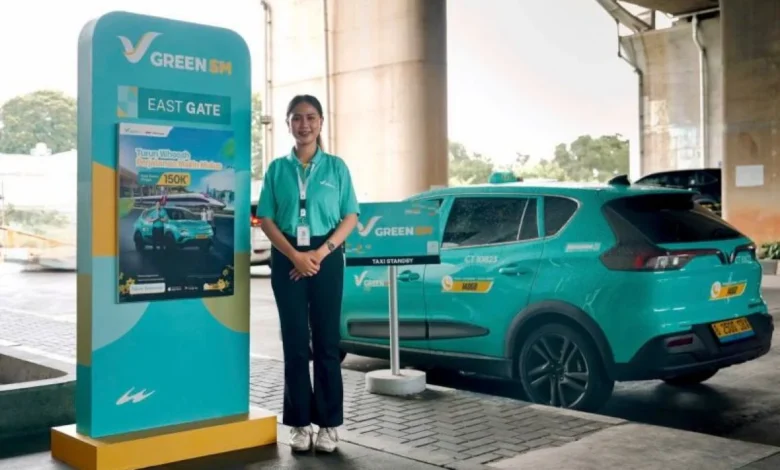
The arrival of Green SM Bike in the Indonesian capital represents a strategic expansion for the Vietnam-based ride-hailing giant, which has already established a footprint in the local market through its electric taxi services. By introducing an all-electric motorcycle fleet, Green SM is positioning itself at the forefront of the country’s push toward decarbonizing urban transportation. Indonesia serves as the first international market for the company’s two-wheeled division, signaling a high-stakes entry into one of the world’s largest motorcycle-dependent economies.
Strategic Market Entry and Operational Scope
The launch, effective September 16, 2026, initially targets key high-traffic districts in Jakarta, specifically covering Jakarta Selatan, Jakarta Barat, and Jakarta Pusat. This selection is calculated to address the densest corridors of urban commuting where demand for ride-hailing is at its peak.
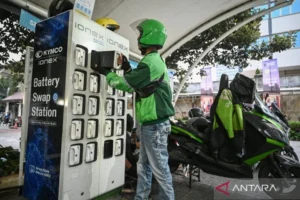
To power this fleet, Green SM has deployed the VinFast Evo and Feliz II models. These scooters are specifically engineered for urban environments, offering a balance between range, agility, and maintenance efficiency. Beyond the deployment of vehicles, the company is actively developing a proprietary infrastructure network consisting of battery-swapping stations and rapid-charging hubs. This ecosystem approach is essential to mitigate range anxiety—a common barrier to the widespread adoption of electric vehicles (EVs) in public transport.
Flexible Economic Models for Driver Partners
A core component of Green SM’s entry strategy is its flexible financial model for drivers, designed to lower the barrier to entry for prospective partners. The company has introduced two primary pathways: a "Rent-to-Own" scheme and a traditional short-term lease.
The "Rent-to-Own" program is arguably the most ambitious, allowing drivers to acquire ownership of a VinFast motorcycle after a two-year operational period. With a daily cost starting at IDR 39,000, the program is structured to be accessible to those who might otherwise struggle to secure traditional financing. For drivers prioritizing flexibility over asset acquisition, Green SM offers three-, six-, and 12-month lease contracts, requiring a modest security deposit of IDR 150,000.
These schemes are accompanied by an income-stabilization strategy, which includes a guaranteed daily income of IDR 160,000 during the first two months of the program, supplemented by performance-based bonuses. By providing these financial guardrails, Green SM aims to professionalize the gig economy sector while ensuring that the transition to EVs is economically viable for its workforce.
The Evolution of Green SM in Indonesia: A Chronology
The introduction of Green SM Bike is the latest chapter in a broader narrative of rapid expansion. Since entering the Indonesian market, the company has faced a dynamic regulatory and operational environment:
- Early 2025: Green SM establishes its Indonesian subsidiary, focusing initially on four-wheeled electric taxi services.
- Mid-2025: The company encounters logistical and safety challenges, necessitating closer collaboration with the Ministry of Transportation and the National Police (Korlantas) regarding vehicle safety and operational procedures.
- Late 2025 – Early 2026: Preparations for the two-wheeled fleet begin, involving rigorous testing of VinFast hardware under tropical weather conditions and high-density traffic patterns.
- September 2026: Official launch of Green SM Bike in Jakarta, supported by a recruitment drive that emphasizes safety, professional training, and eco-friendly mobility.
This timeline highlights the company’s iterative approach. By learning from the regulatory scrutiny surrounding its taxi operations—including incident investigations—the company has seemingly prioritized safety training and institutional partnerships ahead of its two-wheeler rollout.
Regulatory Oversight and Safety Initiatives
The expansion of Green SM into the motorcycle sector has not occurred in a vacuum. It follows a period of heightened scrutiny regarding the safety of electric vehicle fleets in Indonesia. Following various incidents involving EV infrastructure and public transport, the Ministry of Transportation and the Indonesian National Police (Korlantas) have actively engaged with the company.
Korlantas has specifically pushed for collaborative safety programs, resulting in mandatory training sessions for all prospective Green SM Bike drivers. These training modules cover not only defensive driving techniques but also the specific operational nuances of electric motors, such as torque management and silent-operation awareness. This proactive stance is intended to set a new industry standard for safety in the ride-hailing sector, moving away from the "growth at all costs" model that has characterized the industry in previous years.
Economic and Environmental Implications
The implications of Green SM’s entry into the Indonesian market are twofold. Environmentally, the shift toward electric motorcycles is critical. Indonesia has one of the highest motorcycle ownership rates globally, and the internal combustion engine (ICE) fleet is a primary contributor to urban air pollution. Replacing even a fraction of these with EVs represents a tangible step toward meeting the government’s emissions reduction targets.
Economically, the model offers a shift in the gig economy paradigm. Traditional ride-hailing models often rely on the driver providing the vehicle, which can lead to high maintenance costs and debt traps. By offering a fleet-managed approach where the company provides the assets—and in some cases, the path to ownership—Green SM is essentially de-risking the profession for its drivers.
However, the success of this model depends on the density and reliability of the supporting infrastructure. The transition will require continuous investment in battery-swapping technology. If the network of charging stations fails to keep pace with the number of motorcycles on the road, the operational efficiency of the drivers will inevitably suffer, leading to lower earnings and potential driver churn.
Recruitment and Standards
To maintain service quality, the recruitment process for Green SM Bike is stringent. Candidates must be between 21 and 54.5 years old and possess a valid Indonesian driving license (SIM C). Beyond basic documentation, such as the SKCK (Police Clearance Certificate) and KK (Family Card), candidates are tested on their ability to navigate Jakarta’s complex road network using digital mapping tools.
The absence of a registration fee lowers the entry hurdle, but the requirement of a security deposit ensures that the company mitigates risks associated with fleet management. This dual approach—low barrier to entry coupled with high operational standards—is designed to attract a reliable pool of professional drivers.
Looking Ahead: National Expansion Potential
While the initial operations are confined to the capital, the company has signaled that it does not intend to stop at Jakarta. The success of the "Rent-to-Own" and leasing models in the capital will likely serve as a blueprint for expansion into secondary cities such as Surabaya, Bandung, and Medan, where the demand for affordable, green transportation is equally high.
Analysts observe that Green SM’s strategy is a direct challenge to incumbent ride-hailing platforms that currently dominate the market with petrol-based motorcycles. By differentiating through "green" credentials and institutionalized support for drivers, Green SM is betting that both the consumer and the workforce are ready for a shift toward sustainable, managed fleet services.
Ultimately, the launch of Green SM Bike in Jakarta is a pivotal moment for Indonesia’s mobility sector. It forces a conversation about the viability of electric mass transport, the role of corporate responsibility in the gig economy, and the necessity of state-private sector collaboration in infrastructure development. As the fleet grows in the coming months, its performance—both in terms of service reliability and the financial well-being of its drivers—will likely dictate the pace of electrification for the rest of the nation’s massive motorcycle fleet.